Pruning Tips – How Much of a Tree Can You Cut Without Killing It?

Pruning Tips – How Much of a Tree Can You Cut Without Killing It?

To keep a tree alive, you should prune it only at certain times and follow certain guidelines. You should also avoid cutting off the top of the tree. Trees can bear a loss of about five to twenty percent of its volume without killing them. However, if you cut off more than this, the tree will die.

Pruning Mistakes to Avoid

Pruning shrubs and trees is a difficult task that requires careful planning to prevent unnecessary damage. People prune trees and shrubs for many different reasons, including reducing the size of the plant, opening the canopy, removing dead or damaged growth, and improving the overall shape. When cutting a tree or shrub, there are some common mistakes that people should avoid.

One of the most common mistakes people make when cutting a tree is cutting the branch off with just one cut. Cutting off a large branch all at once results in torn bark. Instead, experts recommend making several cuts through the branch, including a shallow cut on the underside. After pruning the branch, leave a stub that is two to four inches long.

There are two main types of branches to prune: main and lateral. They are also known as old wood and young wood. There are also inner and outer branches. Cutting the outer branch too close to the trunk is known as “flush cut” and removes the “branch collar” – a small swelling that covers the branch where it meets the trunk. This pruning mistake can make the wound more difficult to heal and can lead to disease.

Don’t Chop Off Tree Tops

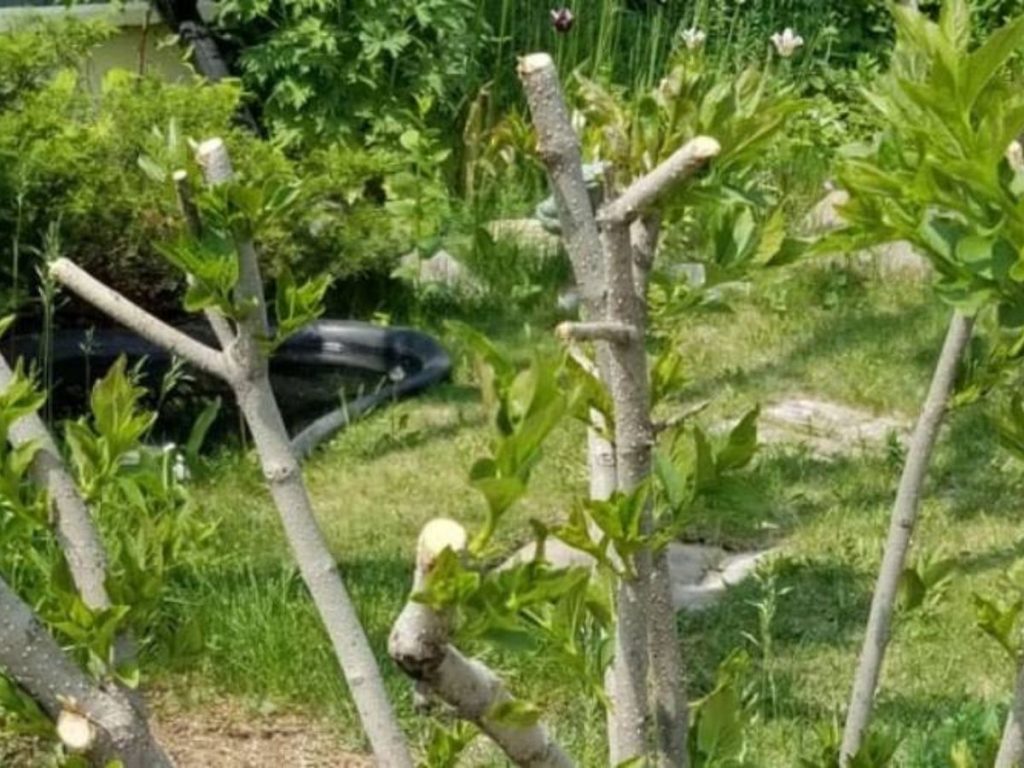
Chopping off the top of a tree is a common backyard practice that can harm trees. This practice, also known as pollarding, dehorning, or heading, is a crime against nature. A group called Plant Amnesty has spent decades trying to end this practice.

Trees need large leaves and a large surface area for food. Cutting the top off depletes stored reserves and disrupts the tree’s food-making capacity. This method also encourages the growth of unwelcome “water sprouts” – dense upright branches that sprout out of the tree’s crown.

Only Prune Trees at Specific Times

Pruning is important to the health of your trees, but you need to be careful not to kill them. The process of pruning should only be performed by a Certified Arborist, who is skilled at climbing and possesses the proper equipment and insurance to avoid harming the tree. Pruning a mature tree should only be done during the dormant season, as pruning a tree at a different time will cause it to lose its vital energy and may result in disease and insect entry.

Winter is an ideal time to prune trees. This is when new growth forms, and it is much easier to visualize the structure of the branches. It is also easier to see where to cut a tree’s branches than in other seasons. Remember to prune before the weather warms up, so you don’t cut into the new growth.

Young trees need a helping hand as they grow, and early trimming can give them a firm foundation and a desirable aesthetic. You should focus on pruning only broken or dead branches at this early stage. You should wait at least two years before performing any heavy pruning, as this will ensure that the tree has fully established itself and will not be overly stressed from transplanting.
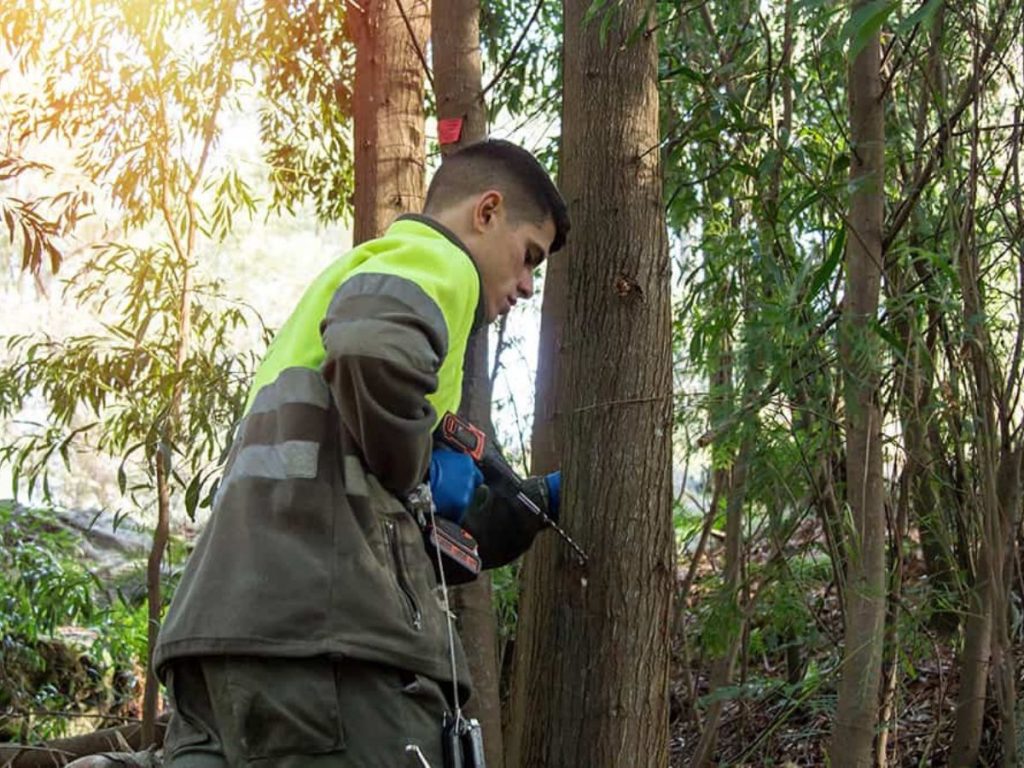
Understanding Correct Trimming Techniques

Proper pruning is an important part of landscape maintenance. If you do not understand proper tree care, you could damage or kill a tree. Incorrect pruning techniques can also lead to pest and disease problems. When cutting a tree, always cut only a small portion of the living limb. Check the shape of the tree from all sides before you make any cuts.

For thick, heavy branches, you should cut them flush with the trunk. A branch’s collar is a tissue area that contains a chemically protected zone. This protective layer will keep decay from spreading downward, and when a branch is cut at this point, the decayed tissue is walled off. This process allows the branch to fall away and regenerate in the spring.

Proper pruning should be done in the winter. Winter pruning is less stressful on trees, reduces the risk of infection, and promotes new growth in the spring. However, do not attempt to prune a tree when it is dormant. Doing so can kill a tree that has taken decades to grow.

Don’t Over-Prune Trees

Pruning trees is a natural part of tree care, but it can have harmful effects. Incorrect pruning can cause a tree to die. Trees should only be pruned between five and twenty percent of their crown at a time. Anything beyond this can trigger a stress response that produces unwanted growth. This growth uses up the tree’s energy reserves and requires more pruning. In addition, over-pruning can kill your tree, especially if it is already declining.

Pruning trees during certain times of year can cause them to be susceptible to airborne diseases and insects. Beetles, for example, are attracted to open wounds and can spread Dutch elm disease and oak wilt. This is why it is important to avoid pruning during warm months.

You can also protect your trees from sunburn by covering their trunks with shade boards. This is a temporary solution and should be removed after a season.

Lion Tailing

While it may sound like an easy way to cut a tree without killing it, lion tailing poses a danger to the tree. This method concentrates the weight of the branch on the ends, which causes the branch to sway and possibly break. It also leads to a weak, unhealthy tree.

Lion tailing is the opposite of proper pruning, which is done to create an attractive tree without killing it. This practice is detrimental to the tree’s health and structure, and should never be attempted unless you’re certain you don’t want to kill it. It also results in unbalanced limbs, which weakens the root structure, and eliminates the dampening effect of interior limbs. Consequently, lion tailing is generally not recommended by certified arborists. Instead, certified arborists prune trees carefully to ensure the tree’s health and safety.

Lion tailing involves the removal of interior branches to expose more of the crown. As a result, trees look unnaturally open, and their foliage-filled canopy appears like an umbrella. This makes the tree vulnerable to wind and sun damage. Furthermore, it can increase the appearance of water sprouts, which is a sign of stress.

Take Care of Clustered Branches

If you have clustered branches on your tree, there are a few steps you can take to keep them looking their best. First, prune them in the direction you would like them to grow. Usually, you will want to prune the branches on a north-south orientation so they will continue to grow in that direction.

Call Arborist

Trees are a vital part of our ecosystem, but many go unnoticed until they are cut down or destroyed. The amount of trimming that can be done to a tree depends on the species and the size of the tree, and should only be performed by a certified arborist. ISA certification and membership are mandatory for professionals in this field, who can provide expert advice on proper pruning techniques.

The first step in removing trees is to identify the location and size of the roots. You should use pruning shears to cut small roots that are fewer than one inch in diameter. Next, use a trowel or a shovel to dig up the remainder of the root. Once the roots have been removed, fill in the hole with earth. Then, monitor the tree closely for any signs of distress.

Despite the obvious safety risks, it is possible to cut a tree without killing it. The main rule is not to cut off too much of the tree’s root system. In general, you should only cut 25 percent of the root system. To determine this number, measure the diameter of the trunk at four feet off the ground. Multiply this number by six to determine the exact distance from the trunk you can cut off 25% of the roots.

from AAA Tree Lopping Ipswich https://ift.tt/kxEuHcr
via IFTTT
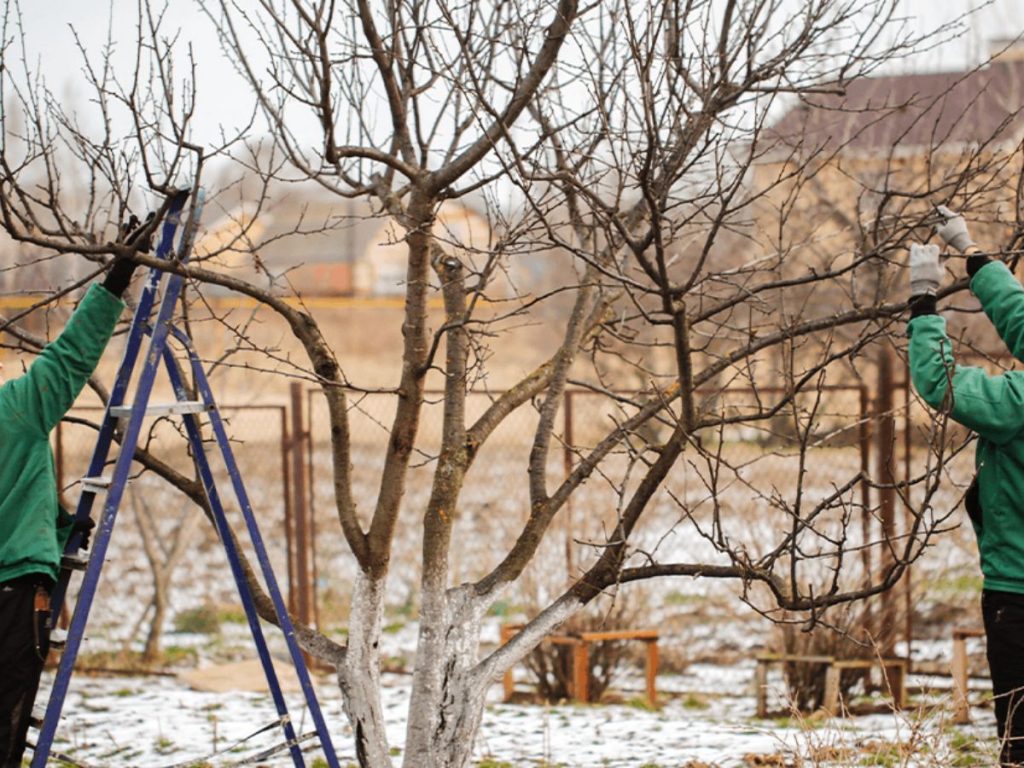
Pruning Trees and Evergreens in Winter

Pruning Trees and Evergreens in Winter

Winter is the ideal time to prune major trees and shrubs. This pruning will remove dead and diseased branches, as well as clutter. Also, winter pruning will allow you to cut major branches that are heading toward your windows or in a direction that you prefer. It’s also much easier to do when the tree’s branches aren’t covered in snow or ice.

How to Trim Trees in the Winter?

Pruning trees in the winter is beneficial for many reasons, including the appearance and health of the trees. The process also promotes a healthy burst of new growth and better blooming in the spring. The winter months also offer less chance for diseases and insects to cause damage to trees.

Pruning should be done flush to the trunk, not with tiny stubs. This helps to avoid damaging the tree’s structure and allows more light to enter. Horizontal growth is less secure and struggles to hold fruit, while upward growth holds the fruit more securely. It is also important to trim back last year’s growth, as this will strengthen the tree and conserve nutrients.

Evergreen trees and shrubs should be pruned during late winter to remove overgrown or smaller branches. This helps prevent rubbing branches that can cause wounds and allow disease to enter. However, it is important to avoid pruning too early, as this can reduce flower production during the blooming season.

When to Prune?

When to prune trees in the winter can help prevent energy loss and reduce stress on trees. During the winter, trees are not actively trying to regrow limbs and are instead conserving energy to survive the winter. This allows the trees to rest and heal. Newly planted trees should not be pruned until they are two years old. However, trees that are older than two years old can be pruned in the winter.

Winter pruning helps maintain the structural integrity of the tree and can facilitate easy removal of branches. In addition, it also minimizes the risk of insects and disease transmission. Trees that are pruned in the winter can be invasive in natural areas, so it is important to research which plants to prune and when.

Ideally, pruning trees in the winter should be done after the temperatures have reached 50 degrees. This gives the tree time to “heal” before warmer weather starts. Warmer temperatures can bring out destructive insects and pathogens that can wreak havoc on trees. Tree pruning during the winter is also beneficial for fruit-bearing trees because it boosts the fruit production. However, it is not necessary to prune all types of plants in winter. For example, plants that produce blossoms on new growth should be pruned in winter while those that produce flowers on old growth should be pruned in late spring.

What plants can be pruned now?

Pruning in the spring and early summer is essential to the health of many plants. Some shrubs, like hydrangeas, will benefit from pruning now as their flower buds are still open. You can also prune summer-flowering trees in the winter and early spring, and these shrubs will bloom again on new growth.

The exact time to prune a plant depends on its growth habit, blooming season, and other factors. Generally, pruning should be performed in late winter to early spring. However, it should be noted that pruning an evergreen is stressful as it will interfere with its internal processes. Pruning a tree will remove any dead, dying, or damaged branches, as well as water sprouts.

Perennials and vines can be pruned frequently. This helps them become bushier and encourages new growth. You can also pinch new growth to keep the plant compact and full.

Can I prune during the growing season?

Pruning trees during the growing season can be dangerous and not the best idea. The tree can become infected with disease and decay if the branches are cut too soon. Pruning should only be done after the tree has grown one year. This is especially true for newly planted trees.

If pruning is done in spring, the plant will lose some of the food it has stored in its stems and roots. It will need to produce new foliage to replace the food it has used up. It may also result in dwarfing. This can be prevented by carefully planning your pruning.

Before pruning, you must first examine the tree. Examine its size and shape to determine how much you need to cut. If some branches are too long, prune them with thinning or heading cuts. If the tree is still growing vigorously, you can prune it by removing only a few large branches at a time. The rest should be left for the next year. This is a good practice to ensure the health and growth of your tree.

When to Prune Trees and Evergreens?

When to prune trees and evergreens in winter is dependent on the type of evergreen. Some types should only be pruned in the winter, while others should be pruned in the early spring. It is important to prune carefully to avoid damaging the evergreen’s growth and inviting diseases. The method of pruning will vary depending on the type of evergreen and its location. For example, broadleaf evergreens have leaves that do not have needles, while conifers have needled, flat-scaled foliage, such as cypress or arborvitae.

The best time to prune trees and evergreens is in the winter, when the leaves and branches are still dormant and the temperatures are still cold. Trees tend to slow down, similar to how hibernating animals store their energy for the winter. This means that pruning trees and shrubs in the winter will not disrupt their growth patterns or stimulate new leaf growth, so you will be able to better observe their structure and health.

Proper pruning will enhance a tree’s appearance and health, and will also keep it safer for people and animals. Proper pruning will also prevent the spread of certain tree diseases, including bacterial, fungal, and parasitic diseases. The good news is that most of these pests and diseases are dormant in the winter, so winter tree work is less likely to spread them.

General Cold-Weather Pruning Tips

General Cold-Weather Pruning tips include pruning trees during the coldest part of the year. Pruning is necessary to encourage good shape and health, and it also reduces the risk of damage from frost. During winter months, you can prune your plum tree to eliminate dead wood, shorten longer shoots, and promote a healthy, uniform size.

It is best to prune trees during the dormant phase of their growth in late winter, before new growth emerges. In the Mid-Atlantic, this means pruning six to ten weeks before the average last frost. This allows you to inspect branch structure more easily. However, avoid pruning too early in the season. This can lead to damaging spring blooms.

Why It’s important to trim trees?

Many tree care professionals recommend pruning trees in the winter to encourage a vigorous spring growth. They also recommend pruning off dead, diseased and damaged branches so that nutrients and water can reach healthy parts of the tree. As a result, trees trimmed in the winter will look much healthier and produce more fruit.

Proper pruning helps young trees develop a strong foundation and desired aesthetic. The early trimming should focus on pruning away dead or broken branches and avoid heavy pruning until two years after planting. This allows the tree to establish itself and prevent stress during transplanting. Also, it allows you to work with the tree without risking damage.

Another benefit of pruning in the winter is that the cuts are smaller and won’t disturb the neighboring plants. Winter pruning also reduces the risk of soil compaction.

Conclusion

Winter is an excellent time for tree trimming. However, it is important to use the right equipment and tools to prevent any accidents. Using professionals is also a good idea to avoid any time-consuming mistakes. It is also a more economical way of trimming trees. Here are some of the best tips for trimming trees in winter.

Winter tree trimming can boost new growth, stimulate the tree to use nutrients better, and make it more resistant to damage from extreme weather. However, there are some varieties of trees that will not benefit from this practice. Early-flowering trees, for example, will unfurl their buds in the winter. Trimming these trees in the spring can set them back and prevent new growth.

Pruning trees in winter can also help reduce the risk of spreading tree diseases. Tree diseases are spread by insects, fungi, and bacteria, and they usually lie dormant during the winter season. In the summertime, the insects are active and pose a greater risk of damaging trees.

from AAA Tree Lopping Ipswich https://ift.tt/Oj3vsHb
via IFTTT

What Is a Tree Arborist?

What Is a Tree Arborist?

If you decide to have a tree examined by a certified arborist, you will be hiring a professional with years of experience. They have taken and passed an examination to become certified arborists. If you want to know more about this profession, read on. This article will give you an overview of why you should hire an arborist and what services they provide.

Why Choose an Arborist for Your Tree Care?

When choosing a tree service provider, make sure that the arborist you hire has a valid license and insurance. It is also a good idea to check their references to see if they have any local clients. Additionally, you should ask to see any proof of liability insurance and worker’s compensation insurance. In addition, it is important to check if they are members of a professional association and have received any necessary certifications or training. These credentials will help you separate reputable companies from fly-by-night companies.

Choosing a professional tree service provider will ensure that your trees receive the care they need. An arborist is trained to understand the nuances of trees and can recommend species suitable for a particular area. They can also provide plant health care and preventive maintenance. These services may include cabling to support a weak branch, root system or soil aeration to promote root growth.

Trees add tremendous value to a property. They not only provide abundant shade and cooling, but they also absorb air pollution and sequester carbon. However, in order to provide these services, the trees must be kept in good health. Dead or diseased branches can be an eyesore and can become a liability. Certified arborists know how to care for trees safely and ethically.

Why Choose an Arborist for Your Tree Care?

When selecting an arborist, you want someone who has the proper training and experience to handle your trees safely. This includes knowing the proper tools to use and being certified by the International Society of Arboriculture. Arborists also have extensive training in first aid and preventing injuries and illnesses. In addition, arborists have the knowledge to prune trees precisely and maintain them in good health. This includes keeping your trees free of disease and insects.

Before hiring an arborist, you should make sure that they are licensed, insured, and have references you can check. It’s also a good idea to hire a TCIA-accredited company, as these are equipped with industry knowledge and safety procedures. Also, a reputable company should have references and reviews from satisfied customers. And if you’re unsure about their qualifications, you can always check online reviews to see what other people have to say about the company’s work.

Make sure the arborist you hire is insured and bonded. This is important because uninsured arborists can cause damage to neighboring property. Make sure to ask for proof of insurance, especially for property damage and workers’ compensation insurance. In addition, ask the arborist to provide local references. Lastly, make sure the arborist is a member of a professional association. This can help you identify reputable arborists from fly-by-night companies.

When Should I Hire an Arborist?

Hiring an arborist is an important decision for your property. Trees are an investment in your property, and you need to ensure their health and safety. It is important to find a professional with the proper training and credentials. It is also important to make sure the arborist has liability insurance and workers’ compensation.

An arborist’s services are not cheap. You may need to sign a contract before hiring them. You should avoid trying to cut corners and focus on other factors. For example, if you’re not sure about the hardness zone for your area, you should do some research yourself. You’ll need to find out which trees are best suited for your region.

The best arborists are insured and bonded. They are also qualified and licensed to practice their trade. A good arborist will show you all of their insurance documents. You don’t want to risk your property and finances. Besides liability insurance, the arborist should have worker’s compensation and workplace safety insurance. This insurance covers them if their workers become injured on your property. They should also carry unemployment insurance.

What services do they provide?

Tree arborists are highly skilled individuals who specialize in the care, maintenance, and diagnosis of trees. They often work as self-employed professionals or as part of a tree care company. There are also governmental agencies that employ arborists and urban foresters, who are trained in tree care and typically work in parks and recreation departments. In addition to providing tree care services, arborists also offer advice on how to care for trees.

Trees require regular attention and maintenance, especially in an urban landscape. An arborist can assess if the tree needs pruning or other treatments to maintain its health and structure, or if it needs to be moved for aesthetic reasons. An arborist can also prune trees to make them easier to walk under or to keep them away from wires and other obstructions. The timing and method of treatment depends on the type of tree and its species.

Tree arborists are also known as tree doctors because they use their knowledge of trees to diagnose and treat various tree diseases. They also offer specific services for different types of trees, including fertilization, drought mitigation, and pest and disease control. They can also assist homeowners and commercial property owners with the planning and maintenance of trees.

How much does it cost to hire an arborist?

The cost of hiring an arborist will depend on the type of work you need done. The cost of tree removal, for example, can cost several thousand dollars. However, the cost of tree trimming can be much lower than that of tree removal. In fact, stump removal can cost less than $200. An arborist’s fee will depend on how long they need to work on your property and the specific task.

The first step in hiring an arborist is getting quotes from several companies. It is vital to make sure that you are getting a competitive price. You should also check if the arborist has adequate insurance. A reputable arborist will be happy to show you their insurance documentation. Without liability insurance, you could end up being held financially responsible if something goes wrong on your property. Additionally, make sure that your arborist has workers’ compensation and workplace safety insurance. This way, if an accident occurs on your property, they will be able to pay for your medical bills. Lastly, make sure that they carry unemployment insurance and other insurance for their employees.

Costs vary widely. Tree removal services can cost as little as $100 or as much as $62,000, depending on the type of tree and the extent of work needed. If you are looking to save money, you might consider getting two quotes to compare costs. A tree removal quote should include the cost of the removal of the tree and the cost of the removal of the stump. The arborist will also know what equipment to bring, so you won’t have to pay double.

How long does it take to become an arborist?

While the exact length of time to become an arborist varies from person to person, there are a few common routes. If you have a passion for trees and are interested in getting your hands dirty, you can look for entry-level jobs and internships in the field. You can also shadow an arborist, as this will give you invaluable experience. As a beginning arborist, you will likely be performing hard labor and climbing trees, but this will help you build a solid knowledge base. Ultimately, this training will help you become a certified arborist, which can lead to a higher paying job.

In order to become an ISA Certified Arborist, you must have two to three years of experience in tree care. This experience should include planting, pruning, fertilization, and disease management. Additionally, you must complete a program that requires 30 continuing education units (CEUs). CEUs are earned by attending conferences and continuing education classes. In addition, you can earn CEUs by taking quizzes in the monthly Arborist News publication and signing up for webinars.

How dangerous is it to be an arborist?

An arborist must protect himself from the hazards of working with trees. These risks include heights, decaying wood, and falling debris. During an arborist’s work, he must also ensure the safety of his crew and surrounding neighbors. Some trees release poisonous fluids that can cause damage to people and property.

Being an arborist is not an easy job. You must be experienced and trained. It’s important to follow safety procedures and industry best practices. Tree work is dangerous and only qualified arborists should do it. According to the U.S. Bureau of Labor Statistics, arborists experience at least one fatality every two days. Injuries can result from falling trees, contact with power lines, and even electrocutions.

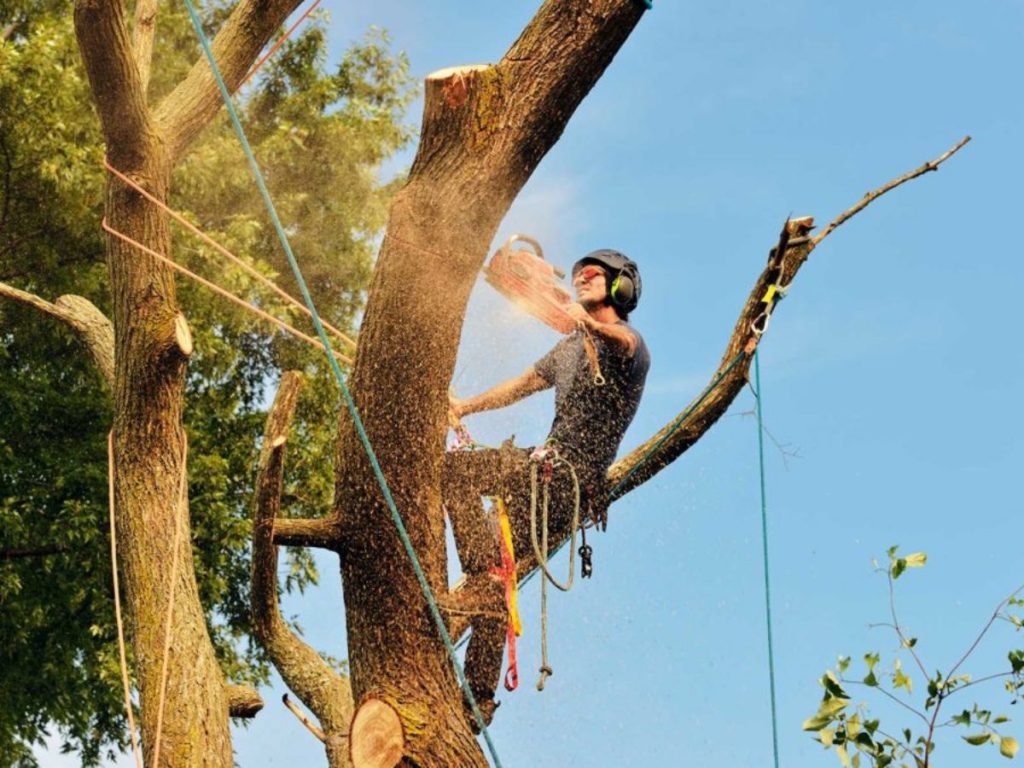
Working around power lines is particularly dangerous. They can knock people over or hit them in the head. As a result, arborists are required to use specialized safety equipment while working in close proximity to power lines. In addition to harnesses, arborists must wear glasses, chainsaw pants, and hard hats.

Conclusion

A tree arborist’s job is to maintain a healthy tree. Failure to do so can cause property damage and personal injury. There are a number of reasons that trees fail, including old-age, decay, and natural disasters. As a tree ages, it can become more hazardous. In some cases, trees are too close to structures that could collapse, posing a fire or other risk to people or property. In such cases, a tree arborist will recommend a corrective procedure.

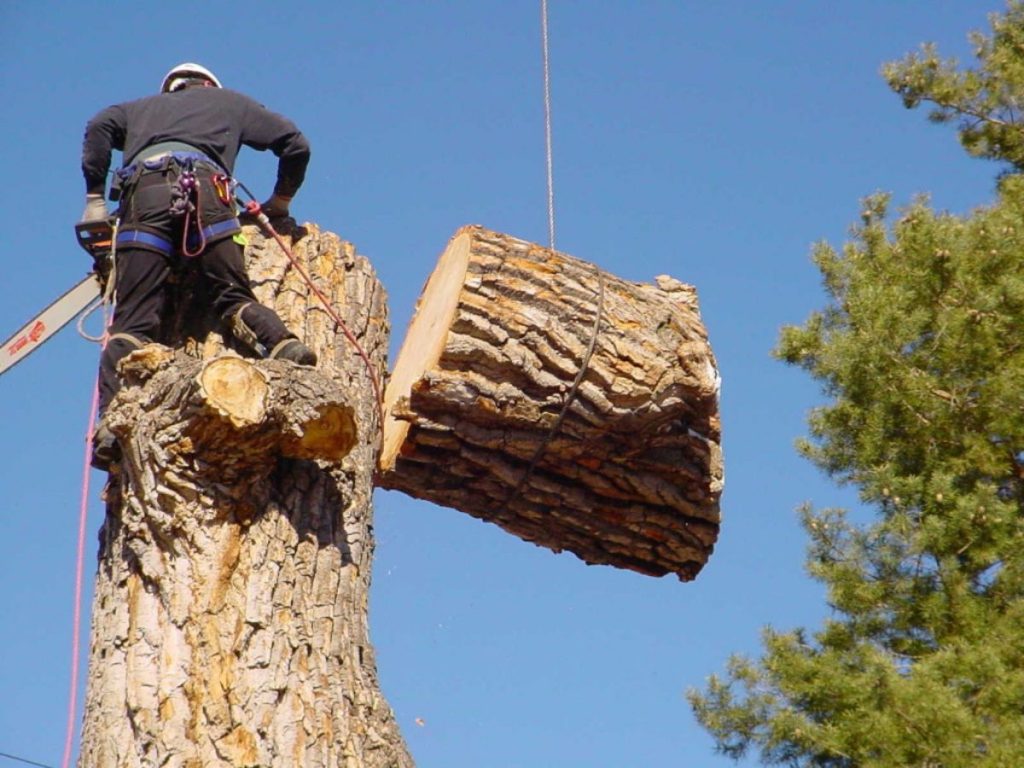
A tree arborist uses specialized tools and equipment to safely maintain a tree. This equipment includes hand saws, rigging equipment, and pruning equipment. They also use climbing gear and safety gear. They are trained to handle hazards and minimize damage to properties. Tree removal can be a major job, requiring specialized knowledge and equipment.

Hiring an arborist is an excellent way to protect your landscaping investment. Many people spend time and money on landscaping and would not want to lose it. However, if they do not know how to properly care for their plants and trees, they may not achieve the results they want. A certified arborist will help ensure that your plants thrive and your landscaping stays beautiful.

from AAA Tree Lopping Ipswich https://ift.tt/KLYdpix
via IFTTT

How to Stop Wood Rot From Spreading

How to Stop Wood Rot From Spreading

Wood rot is one of the most destructive forces that can affect your home. If left unchecked, wood rot can spread quickly and cause extensive damage to your property. The good news is that there are a few things you can do to stop wood rot from spreading. In this blog post, we’ll discuss a few of those things so that you can keep your home in tip-top shape.

Wood rot is caused by a fungus that deteriorates the wood fibers. Wood rot is a common problem in humid climates and can be difficult to spot until it’s too late. The good news is that there are some things you can do to prevent wood rot from spreading and mitigate the damage it has already caused.

Causes of Wood Rot

There are two main types of fungi that cause wood rot: brown rot and white rot. Brown rot fungus feeds on cellulose, which is a major component of wood. This type of fungus typically affects outdoor furniture and decking because it needs oxygen to thrive. White rot fungus, on the other hand, feeds on lignin, another component of wood. This type of fungus typically affects indoor wooden structures like cabinets and flooring.

Common Signs of Wood Rot

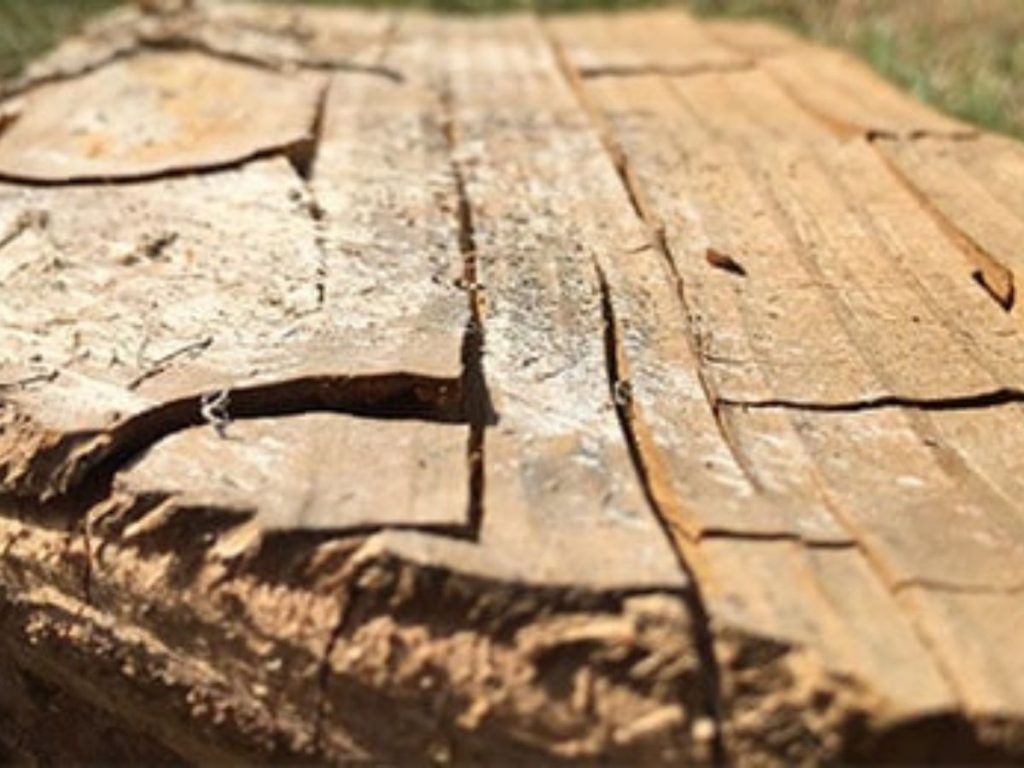
The most common sign of wood rot is a musty smell. This is because the fungi release spores into the air as they feed on the wood. These spores can cause respiratory problems in humans, so it’s important to be on the lookout for them. Other signs of wood rot include discoloration, flaking, and crumbliness.

Preventing Wood Rot

One of the best ways to prevent wood rot is to make sure that your home is well-ventilated. This will lower the humidity level, which will make it harder for fungi to grow. You should also avoid using chemical cleaners on your wooden surfaces as they can damage the finish and make the wood more susceptible to rot. Instead, opt for gentle, pH-neutral cleaners. If you have any damaged or decayed wood in your home, be sure to repair or replace it as soon as possible.

Fixing the Source of the Problem

Wood rot is one of the most common problems that homeowners and tradesman face. It’s unsightly, dangerous, and can be extremely costly to fix. The good news is that there are a few simple steps you can take to prevent wood rot from spreading.

The first step is to remove any affected areas of the wood. This includes any loose or flaking paint, as well as any soft or spongy areas of the wood itself. Once you’ve removed these areas, you’ll need to treat the wood with a fungicide to kill any remaining spores.

The next step is to seal the wood. This can be done with a variety of products, but we recommend using a product like Perma-Seal. This will not only help to prevent future rot but will also extend the life of your wood.

Finally, you’ll need to repaint or refinish the area. This will not only improve the appearance of the wood but will also provide an additional layer of protection against future rot.

Wood rot can be a serious problem, but it doesn’t have to be. By taking a few simple steps, you can prevent wood rot from spreading and save yourself time, money, and headaches down the road.

Improving Ventilation

Another way to stop wood rot from spreading is to improve ventilation in the affected area. If possible, open up windows and doors to allow air to circulate. This will help to dry out any damp areas and prevent further damage from occurring. You should also consider running a dehumidifier in the affected area as well. This will help to remove any excess moisture from the air, which will also help to prevent wood rot from spreading.

There are a few things you can do to improve ventilation and stop the wood rot from spreading.

  • Inspect Your Home for Leaks: The first step in stopping wood rot is to inspect your home for leaks. Check all of the windows and doors in your home, looking for any gaps or cracks where air can seep in. If you find any leaks, seal them up with caulk or weatherstripping.
  • Install Vents in key Areas: Another way to improve ventilation is to install vents in key areas of your home, such as the attic and crawl spaces. These vents will help circulate air and prevent moisture from building up and causing wood rot.
  • Check out Your Gutters and Downspouts: Your gutters and downspouts play a crucial role in preventing wood rot by directing water away from your home. Make sure they are clean and free of debris so they can do their job properly. Also, check the ground around your home to ensure that the water is draining away from the foundation.
  • Repair any Damaged Wood ASAP: If you do find any signs of wood rot, it’s important to repair the damage as soon as possible. Remove all of the rotten wood and replace it with new lumber. Be sure to use a paint or sealant that is resistant to moisture to protect the new wood from rotting.

Wood rot can be a serious problem, but there are a few things you can do to prevent it from spreading. Inspect your home for leaks, install vents in key areas, check your gutters and downspouts, and repair any damaged wood as soon as possible. By taking these steps, you can help keep your home in top shape for years to come.

Repairing Damaged Wood

If you have already noticed some damage from wood rot, it’s important to repair it as soon as possible. The longer you wait to repair damaged wood, the worse the damage will become and the more difficult it will be to repair. When repairing damaged wood, be sure to remove all of the rotten wood before replacing it with new wood. Otherwise, you run the risk of reinfecting the new wood with rot fungi.

Whether it’s a loose door handle, a cracked windowsill, or a broken piece of furniture, dealing with damaged wood can be frustrating. Luckily, there are a few easy ways to repair damage and restore your wooden surfaces to their former glory. In this blog post, we’ll show you how to fix common problems like dents, scratches, and water damage. Keep reading to learn more!

  • Dents: Dents in wood are usually caused by heavy objects being dropped on the surface. To fix a dent, start by sanding away any rough edges. Then, apply wood filler to the area and let it dry. Once the filler is dry, sand it down until it’s flush with the rest of the surface. Finally, stain or paint the area as needed.
  • Scratches: Scratches in wood can be either superficial or deep. Superficial scratches can be removed with a little elbow grease and a damp cloth. First, rub the area with the cloth to remove any dirt or debris. Then, use a fine-grit sandpaper to gently buff out the scratch. Repeat this process until the scratch is no longer visible. For deep scratches, you’ll need to use wood filler. Simply apply the filler to the area and let it dry overnight. In the morning, sand down the filler until it’s level with the rest of the surface. Then, finish by staining or painting as necessary.
  • Water Damage: Water damage is one of the most common problems faced by homeowners. If your wood surfaces have been damaged by water, start by sanding away any roughed-up edges. Next, use a damp cloth to wipe away any mold or mildew that has begun to form. Once the surface is clean and dry, apply wood filler to any areas that are cracked or peeling. Let the filler dry overnight then finish up by sanding and staining/painting as necessary.

Dealing with damaged wood can be frustrating but luckily there are a few easy ways to fix common problems like dents, scratches, and water damage.

Conclusion:

Wood rot can be a serious problem for any homeowner. However, by taking measures to fix the source of the problem, improve ventilation, and repair damaged wood, you can stop wood rot from spreading and keep your home in good condition for years to come.

from AAA Tree Lopping Ipswich https://ift.tt/rhEBmP1
via IFTTT

How Much Is Tree Service Insurance and What Are the Benefits?

How Much Is Tree Service Insurance and What Are the Benefits?

If you’re considering starting a tree service, one of the first questions you’ll need to answer is how much insurance you’ll need. This type of insurance protects you and your employees from liability in the event of an accident, and it’s an important part of any business.

Tree service insurance is designed to protect homeowners and businesses from financial loss in the event that something goes wrong during a tree removal or trimming project. For example, if a tree service company damages your property while removing a tree, their insurance policy would cover the cost of repairs. Tree service insurance also covers injuries that occur on the job, as well as any damage caused by falling trees or branches.

The Pros of Tree Service Insurance

The biggest pro of tree service insurance is that it protects you from financial loss in the event that something goes wrong during a tree removal or trimming project. If a tree service company damages your property while removing a tree, their insurance policy would cover the cost of repairs. Tree service insurance also covers injuries that occur on the job, as well as any damage caused by falling trees or branches.

Another pro of tree service insurance is that it gives you peace of mind. Knowing that your tree service company is insured will give you confidence that they will take care of any problems that may arise during the course of their work.

The Cons of Tree Service Insurance

One of the potential cons of tree service insurance is that it may be expensive for some companies to purchase coverage. As a result, some companies may choose to work without insurance, which could put you at risk if something goes wrong during their work on your property.

Another potential con is that some companies who are insured may not be as careful as they should be since they know they’re covered financially if something goes wrong. This could lead to shoddy workmanship or even accidents.

Tree service insurance is a vital part of keeping your business safe. Not only does it protect your employees and equipment, but it also covers any damage that might be caused by your work. Here’s a look at how much tree service insurance costs and what benefits it can provide. But how much does tree service insurance cost, and what are the benefits?

How Much Does Tree Service Insurance Cost?

Tree service insurance is a type of liability insurance that covers property damage and personal injuries resulting from tree-related activities. This can include tree removal, trimming, and pruning. If you own a home with trees on your property, it’s a good idea to have some form of tree service insurance in case of an accident. But how much does this type of insurance coverage cost?

The average cost of tree service insurance is $919 per year. However, the price you pay will depend on a number of factors, including the size and type of your business, the number of employees you have, your location, and the amount of coverage you need.

For example, if you have a small tree removal business with just a few employees, you can expect to pay less for your insurance than if you have a large tree trimming company with dozens of employees. The same is true if your business is located in a rural area as opposed to a major city.

Another factor that will affect the price you pay for tree service insurance is the amount of coverage you need. If you only need basic coverage for property damage and personal injuries, you can expect to pay less if you need more comprehensive coverage that includes protection against third-party lawsuits.

The cost of tree service insurance will vary depending on your business’ size, location, and the amount of coverage you need. However, on average, you can expect to pay $919 per year for this type of insurance. If you own a home with trees on your property, it’s a good idea to have some form of tree service insurance in case of an accident.

What Are the Benefits of Tree Service Insurance?

When it comes to tree service, most people only think about the physical risks involved. But there are other risks to consider as well – like financial risks. That’s why tree service insurance is so important. Not only does it protect you from potential liability claims, but it can also save you a lot of money in the long run.

Most people are aware that tree service comes with its fair share of risks. After all, working with heavy machinery and large trees is not for the faint of heart. And while most tree service companies have safety protocols in place to minimize the risks, accidents can still happen. That’s why tree service insurance is so important. It protects you from potential liability claims, and can also save you a lot of money in the long run.

There are two types of tree service insurance: workers’ compensation and liability insurance. Workers’ compensation covers your employees in the event that they are injured while working on your property. Liability insurance, on the other hand, protects you from lawsuits that may arise from damages caused by your employees while they are working on your property. It’s important to have both types of insurance, as they each provide different levels of protection.

One of the biggest benefits of tree service insurance is that it can help you avoid costly lawsuits. If one of your employees damages someone’s property while working on your behalf, you could be sued for thousands of dollars – even if it was an accident. With adequate insurance coverage, your insurer will cover the cost of the lawsuit, saving you from having to pay out of pocket.

Another benefit of tree service insurance is that it can help you attract and retain good employees. In today’s litigious society, many people are hesitant to work for companies that don’t have adequate insurance coverage. By carrying both workers’ compensation and liability insurance, you’ll be able to assure potential employees that they’ll be protected in the event of an accident. This will give you a competitive advantage when recruiting new talent.

Tree service is a risky business – but it doesn’t have to be. By carrying adequate insurance coverage, you can protect yourself from potential liability claims and attract and retain good employees. In the long run, tree service insurance will save you time, money, and peace of mind.

Conclusion:

Tree service insurance is an important part of any business. The cost varies depending on a number of factors, but you can expect to pay anywhere from $500 to $5,000 per year for a policy that provides adequate coverage. There are several benefits to having tree service insurance, including peace of mind, protection for your employees, and protection for your business. In the event of an accident, insurance can help cover medical expenses, lost wages, and property damage. It can also help prevent legal action against your business. If you’re starting a tree service, make sure you get the coverage you need to protect yourself and your business.

from AAA Tree Lopping Ipswich https://ift.tt/VgfKZHM
via IFTTT

What is Tree Crowning and Why Should You Do It?

What is Tree Crowning and Why Should You Do It?

Most people are familiar with the basic tenets of tree care: water, fertilize, and prune. But there’s one important tree care practice that often gets overlooked: tree crowning. In this article, we’ll explain what tree crowning is and why it’s so important for the health of your trees. Keep reading to learn more!

What is Tree Crowning?

If you’ve ever seen a tree that looks like it’s been topiary-ed, then you’ve seen the result of tree crowning. Tree crowning is the process of trimming and shaping a tree’s branches and leaves to create a more aesthetically pleasing appearance. In addition to improving the look of your yard, tree crowning also has several practical benefits. Read on to learn more about the benefits of tree crowning.

Pruning Dead Branches

One of the most important benefits of tree crowning is that it helps to get rid of dead branches. Dead branches can be unsightly, but they can also be dangerous. Dead branches can fall and damage property or injure people. By pruning away dead branches, you can help keep your property and your family safe.

Improving Airflow

Another benefit of tree crowning is that it can help improve airflow around your home. This is especially important in the summer months when you’re trying to keep your home cool. By trimming away some of the branches and leaves, you can allow air to circulate more freely around your home. This will help keep your home cooler and improve your energy efficiency.

Preventing Storm Damage     

Yet another benefit of tree crowning is that it can help prevent storm damage. Overhanging branches can be ripped off in high winds, which can damage your roof or break windows. By trimming away these overhanging branches, you can help protect your home from storm damage.

As you can see, several benefits come with tree crowning. If you’re looking for a way to improve the look of your yard and make it safer at the same time, then tree crowning is a great option for you.

Why Is Tree Crowning Important?

There are several reasons why crowning is so important for the health and well-being of your trees. For starters, it helps to improve the tree’s overall appearance by giving it a more balanced look. Additionally, crowning can also help to increase the amount of sunlight and air circulation that the tree receives. This is important because it can help to prevent mold and mildew from growing on the leaves, as well as pests and diseases.

Another reason why crowning is essential is that it helps to keep the tree strong and stable. When branches are left unchecked, they have a tendency to grow in all different directions. This can cause the tree to become lopsided, making it more susceptible to damage during high winds or storms. By regularly crowning your trees, you can help them stay strong and stable for years to come.

Finally, crowning can also help to prolong the life of your trees by preventing problems before they start. For example, if a branch is starting to grow too close to power lines or your home, trimming it back will help to avoid any potential damage down the road.

As you can see, there are many good reasons why crowning is so important for your trees. If you have trees on your property, be sure to have them crowned regularly to keep them healthy and looking their best.

How Often Should You Crown Your Trees?

The trees in your yard are a vital part of your landscape and play an important role in the health of your property. To keep them looking their best, it’s important to have a regular pruning and maintenance schedule. But how often should you crown your trees?

The crown of a tree is the uppermost portion, made up of the branches and leaves. Properly maintained, the crown should be symmetrical and evenly distributed. Crowning helps to control the shape of the tree, promotes new growth, and prevents damage from wind and storms. Trees that are not regularly crowned can become top-heavy and unstable, posing a danger to your home and property.

How often to crown your trees depends on the type of tree, but as a general rule, most trees should be crowned every 3-5 years. Some trees, such as fruit trees, may need to be crowned more frequently to maintain their shape and produce high-quality fruit. Other factors that will affect how often you need to crown your trees include storm damage, disease, pests, and other injuries.

Conclusion:

Tree crowning is an important but often overlooked part of tree care. By regularly removing dead or diseased branches from the top of your trees, you can improve air circulation within the canopy, encourage new growth, and make your trees safer for yourself and your property. Most trees should be crowned every 3-5 years; however, the frequency with which you need to crown your trees will depend on several factors. If you’re unsure how often you should be crowning your trees, reach out to a certified arborist in your area for expert guidance.

from AAA Tree Lopping Ipswich https://ift.tt/LQk19yc
via IFTTT

Beware of Pruning Too Early!

Beware of Pruning Too Early!

Spring is in the air, and that means it’s time to get out into the garden and start sprucing things up! But before you grab your pruning shears and start hacking away, there are a few things you need to know. Namely, beware of pruning too early!

Pruning is a crucial part of plant maintenance, but timing is everything. If you prune too early in the season, you risk damaging new growth or even killing your plant. So when is the right time to prune? Read on to find out!

What is Pruning?

Many people think that pruning is simply the act of cutting back on plants. However, pruning is a horticultural practice that has many different purposes. When done correctly, pruning can promote plant health, encourage fruiting and flowering, and improve the overall appearance of your plants. Read on to learn more about the different types of pruning and when they should be carried out.

There are four main types of pruning: heading, thinning, shearing, and rejuvenation. Heading cuts are made to remove the tips of branches to encourage the plant to branch out. Thinning cuts are made to remove entire branches to increase air circulation and light penetration. Shearing cuts are made to create a uniform shape or hedge. Rejuvenation cuts are made to remove old or diseased growth to encourage new growth.

Pruning should be carried out in late winter or early spring while the plant is dormant. Heading, thinning, and shearing can be done at any time during the growing season. However, rejuvenation pruning should only be done in late winter or early spring while the plant is dormant. This is because rejuvenation pruning removes a large amount of growth, which can shock the plant if done during the growing season.

Pruning is an important horticultural practice that has many different purposes. When done correctly, pruning can promote plant health, encourage fruiting and flowering, and improve the overall appearance of your plants. There are four main types of pruning: heading, thinning, shearing, and rejuvenation. Pruning should be carried out in late winter or early spring while the plant is dormant.

Why You Shouldn’t Prune Too Early

Pruning too early in the season can be disastrous for your plants. For one thing, winter damage may not be immediately apparent, so you could end up removing perfectly healthy branches. Read on to learn more about why you should wait to prune certain plants and what types of plants fall into this category.

1. Pruning too early can stimulate growth.

You might think that stimulating growth would be a good thing, but in reality, it’s not always what you want. If you prune a plant too early in the season, you might unintentionally stimulate growth when the plant should be focusing its energy on other things. For example, if you prune a plant in early spring, it might start growing new leaves and stems when it should be flower buds. This can cause the plant to produce fewer flowers later on in the season.

2. Pruning too early can make a plant more susceptible to disease and pests.

Pruning a plant too early in the season can also make it more susceptible to disease and pests. This is because when you cut into a plant, you’re creating an open wound. If the plant isn’t fully healed by the time pests and diseases start attacking, it will have a harder time fending them off.

3. Not all plants benefit from being pruned in late winter or early spring.

Contrary to popular belief, not all plants benefit from being pruned in late winter or early spring. In fact, some plants actually suffer from it. Plants that bloom on last year’s wood, for example, should only be pruned after they’ve flowered. Otherwise, you run the risk of cutting off next year’s flowers! So, before you reach for the pruning shears, make sure you know which types of plants benefit from being pruned at which time of year.

As you can see, there are several good reasons to wait until late spring or summer to prune certain types of plants. So next time you’re tempted to get a head start on your gardening chores, resist the urge! Your plants will thank you for it later on in the season.

When Is the Right Time to Prune?

Tree pruning is an important part of maintaining a healthy, attractive landscape. But when is the best time to prune? The answer may surprise you.

Most people think that winter is the best time to prune trees, but that isn’t always the case. In fact, there are three main factors to consider when deciding when to prune your trees: tree type, pruning purpose, and time of year. Here’s a more in-depth look at each of these factors:

Tree Type: The first factor to consider is the type of tree you’re dealing with. Each type of tree has different needs and responds differently to pruning. For example, evergreens should only be pruned in late spring or early summer, while deciduous trees can be safely pruned at any time of year. Not sure what type of tree you have? Check with your local nursery or arborist for more information.

Pruning Purpose: The second factor to consider is the purpose of pruning. Are you trying to shape the tree, remove dead or diseased branches, or promote new growth? The answer to this question will determine how much and where you prune. For example, if you’re trying to shape the tree, you’ll want to make cuts closer to the trunk; if you’re trying to promote new growth, you’ll want to make cuts further out on the branches.

Time of Year: The third and final factor to consider is the time of year. As mentioned above, evergreens should only be pruned in late spring or early summer, while deciduous trees can be safely pruned at any time of year. But there are other considerations as well. For example, if you’re trying to encourage flowering, you’ll want to wait until after the flowers have bloomed; if you’re trying to prevent sap bleeding, you’ll want to wait until late fall or winter.

As you can see, there are a lot of factors to consider when deciding when to prune your trees. But don’t let that discourage you—pruning is an important part of maintaining a healthy landscape. Just take your time, do your research, and ask for help if you need it.

Conclusion:

So next time you’re tempted to head out into the garden with shears in hand, take a step back and make sure it’s the right time of year for pruning! A little patience now will pay off later when your plants are healthy and flourishing.

from AAA Tree Lopping Ipswich https://ift.tt/t8bDXTG
via IFTTT

How Old Should a Bonsai Tree Be Before Pruning?

How Old Should a Bonsai Tree Be Before Pruning?

Bonsai trees are aesthetically pleasing, low-maintenance plants that make for beautiful home décor. Because of their size and shape, bonsai trees require regular pruning to stay healthy and prevent overgrowth. But how old should a bonsai tree be before pruning? Keep reading to find out.

Pruning a bonsai tree is essential to its health and longevity, as it helps to control the tree’s growth and shape. For newly planted trees, it is important to wait until the roots have settled in before pruning; this generally takes 1-2 years. Once the roots have settled, you can begin to carefully prune the tree as needed.

Pruning also encourages new growth, which is why it’s important to prune regularly. As a general rule of thumb, you should prune your bonsai tree every 1-2 months. However, this will depend on the type of tree and its rate of growth. Some trees may need to be pruned more frequently, while others may only need to be pruned once or twice a year. If you’re not sure how often to prune your particular type of bonsai tree, consult a professional or do some research online.

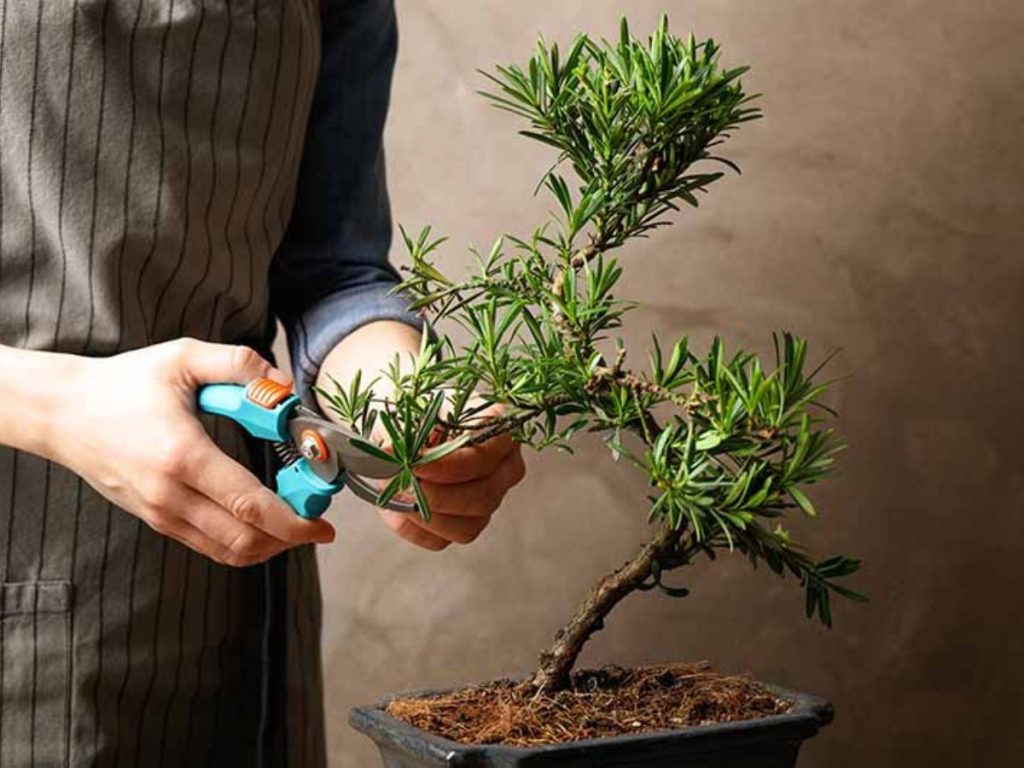
When it comes to tools, there are a few different options you can use depending on the size and type of tree you have. For small branches and leaves, you can use sharp scissors or shears. For larger branches, you will need a saw. And finally, for extremely thick branches, you may need an electric saw or even a chainsaw! Again, if you’re unsure about which tool to use, ask a professional or do your research ahead of time.

There are two main types of pruning for bonsai trees:

Root pruning is done to reduce the size of the tree’s roots. This type of pruning is necessary if you want to keep your bonsai tree in a pot.  If the roots are not pruned, they will continue to grow and eventually break the pot. Root pruning is also done to encourage new growth.

There are two ways to root prune your bonsai tree:

1) Air-layering: This method is used when you want to create a new tree from an existing one. It is also used to propagate bonsai trees. Air-layering involves wounding the bark of the tree and then wrapping it in moist sphagnum moss. The moss will encourage new roots to grow. Once the roots have grown, you can cut the new tree away from the old one and pot it up.

2) Root cutting: This method is used to encourage new growth on an existing tree. It is also used to control the size of the roots. To root cut, you will need to dig up the tree and cut away some of the roots. The roots that are left will grow back stronger and thicker.

Branch pruning is done to shape the tree and control its growth. Both types of pruning are important for maintaining a healthy bonsai tree.

Pruning is done to shape the tree and control its growth. Both types of pruning are important for maintaining a healthy bonsai tree.

There are two types of pruning: formative and maintenance. Formative pruning is done to shape the tree as it grows. Maintenance pruning is done to keep the tree healthy and control its growth.

Formative pruning is done to shape the tree as it grows. This type of pruning is important for creating the desired shape of the bonsai tree. Formative pruning is done on young trees, before they have reached their full size.

Maintenance pruning is done to keep the tree healthy and control its growth. This type of pruning is important for maintaining the desired shape of the bonsai tree. Maintenance pruning is done on mature trees, after they have reached their full size.

Pruning is an important part of bonsai tree care. Both types of pruning are necessary for maintaining a healthy bonsai tree

Conclusion:

Pruning is essential for keeping your bonsai tree healthy and preventing overgrowth. Newly planted trees should be left to settle for 1-2 years before being pruned; after that point, you can begin carefully trimming the tree as needed every 1-2 months. The type of tree and its rate of growth will determine how often it needs to be pruned. When it comes time to do the trimming, there are a variety of tools you can use depending on the size and type of tree; if you’re unsure which tool is best suited for your needs, seek professional help or do some research online ahead of time.

from AAA Tree Lopping Ipswich https://ift.tt/VcipCgP
via IFTTT

How to Identify Root Flare on Trees

How to Identify Root Flare in Trees

Many tree species have flared roots at the base of the trunk. This flare is an important structural component of the tree and helps to anchor the tree in the soil and resist tipping over in strong winds. The root flare also helps to facilitate water and nutrient uptake by the tree’s roots. Unfortunately, many trees are planted too deeply, which can cover up the root flare and cause problems for the tree. In this blog post, we’ll discuss how to identify root flares on trees.

What is Root Flare?

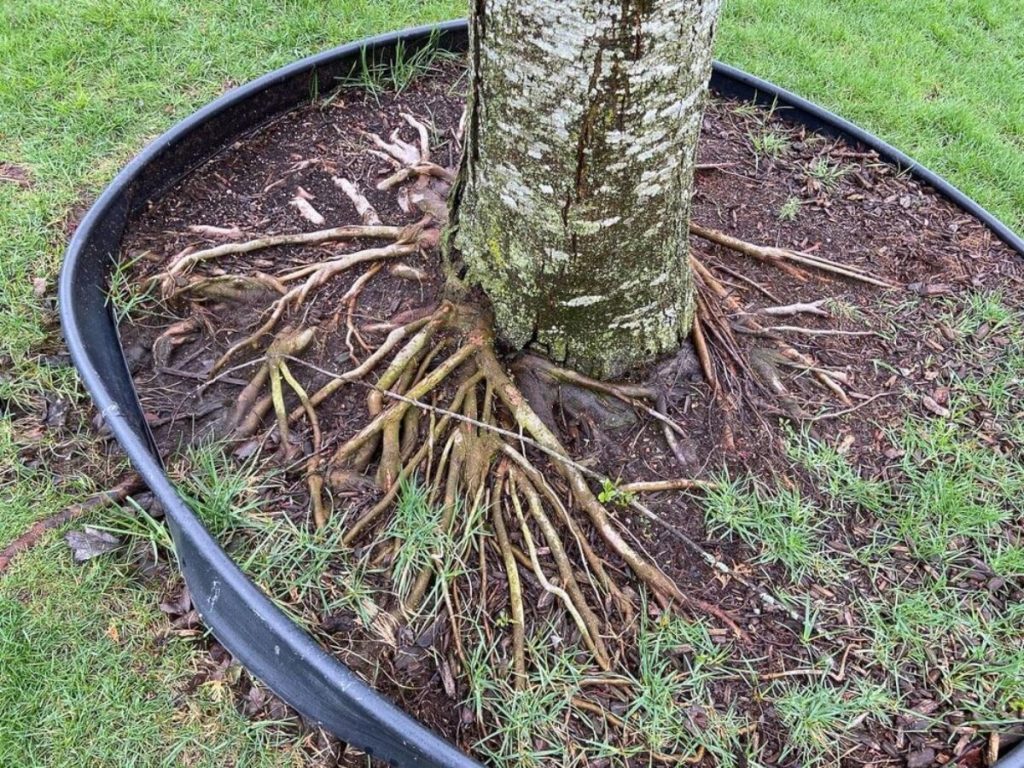
Root flare is the area of a tree’s trunk where the roots begin to spread out from the trunk. The root flare should be visible at ground level when the tree is planted at the correct depth. If the root flare is buried, it can cause problems for the tree, including difficulty taking up water and nutrients, decreased anchorage, and increased susceptibility to wind damage.

How to Identify Root Flare in Trees

There are a few ways that you can identify root flares on trees. One way is to look at the trunk itself. The root flare should be visible as a bulge or swell just above where the roots begin to spread out. Another way to identify root flares is by looking at the tree’s leaves. If the leaves are yellowing or dropping more than normal, it could be a sign that the root flare is buried and the tree is not able to take up enough water and nutrients. Finally, you can try digging around the base of the tree to see if you can expose any of the roots near the trunk. If you can’t find any roots near the trunk, it’s likely that the root flare is buried.

The root flare is an important part of the tree’s anatomy. It helps to support the tree and provides a transition area between the roots and trunk. A tree with an exposed root flare is not only more susceptible to damage, but it can also be a sign of underlying problems. If you think your tree might need a root flare excavation, here are some things to look for.

Signs that a Tree Needs a Root Flare Excavation

The most obvious sign that a tree needs a root flare excavation is if the roots are visible at the base of the tree. This can happen for a number of reasons, including poor planting practices, erosion, or compaction of soil around the base of the tree. If you see roots poking out of the soil, it’s time to call in a professional.

Another sign that your tree might need a root flare excavation is if the tree is leaning. This can be caused by many factors, including pests, disease, or simply inadequate support from the roots. If you see your tree leaning, it’s best to call in a professional arborist to assess the situation and determine if a root flare excavation is necessary.

A third sign that your tree may need a root flare excavation is if the bark is peeling or cracking at the base of the trunk. This can be caused by many factors, including insects, weather damage, or disease. If you see this happening to your tree, it’s best to call in a professional arborist to assess the situation and determine if a root flare excavation is necessary.

Conclusion:

Identifying root flares on trees is important for tree health. If you think that a tree may not have a visible root flare, there are a few things that you can do to check, including looking at the trunk for a bulge or swell just above where the roots begin to spread out, checking for yellowing or dropped leaves, or digging aroundthe base ofthe treeto see if you can expose any roots near the trunk. If you’re still having trouble findingtheroot flare,you can always consult a professional arborist or arborist who will be able to help you determine iftheroot flareis indeed buried. Thanks for reading!

from AAA Tree Lopping Ipswich https://ift.tt/Wfgy9nU
via IFTTT

How to Become a Certified Arborist

How to Become a Certified Arborist

Let’s face it, the trees are big. They can live for centuries, and some species grow to be over 100 feet tall. With all that size comes a lot of responsibility. That’s why there’s a profession dedicated to their care: arboriculture. Arborists are trained professionals who understand the science behind tree growth and pruning. They also know how to spot potential problems, like disease or pests, and take steps to mitigate those risks.

Becoming an arborist is a great way to combine your love of nature with your desire to help others. As a certified arborist, you’ll be able to work with homeowners and businesses to ensure that their trees are healthy and look great. Plus, you’ll have the satisfaction of knowing that you’re helping to preserve some of our planet’s most important resources.

If you’re thinking about becoming an arborist, here’s what you need to know.

Get a Degree in Arboriculture or Forestry

The first step on the road to becoming an arborist is to get a degree in arboriculture or forestry from an accredited university. This will give you the basic knowledge you need about trees and their ecology. Many Arborist companies prefer applicants with at least an Associate’s Degree, but a Bachelor’s Degree will give you a more comprehensive education and make you more competitive for jobs.

Complete an Internship or Apprenticeship

While completing your degree, you should also look for opportunities to gain hands-on experience in the field. Many arborist companies offer internships or apprenticeships for students who are interested in learning more about the profession. These programs can last anywhere from a few weeks to a year, and they’ll give you valuable experience working with trees and clients.

Get Certified

Once you have your degree and some experience under your belt, the next step is to get certified by the International Society of Arboriculture (ISA). To do this, you’ll need to pass an exam that covers topics like tree biology, safety, pruning, and risk management. Once you’re certified, you’ll be able to use the designation “ISA Certified Arborist” after your name. This certification will show potential employers that you’re serious about your career and that you have the skills they’re looking for.

Stay Up-To-Date on Industry Trends

The field of arboriculture is always changing as new research is published and new technologies are developed. To be successful in this career, it’s important to stay up-to-date on industry trends so that you can provide the best possible service to your clients. One way to do this is by joining professional organizations like the ISA or the American Society of Consulting Arborists (ASCA). These organizations offer continuing education opportunities that will help you learn about new developments in the field of arboriculture .

 Finding a Job

Once you have your degree, experience, and certification , it’s time to start looking for a job . You can search for open positions on job boards or websites like Indeed , Glassdoor , or Craigslist . You can also reach out directly to companies that interest you and inquire about open positions. When applying for jobs, be sure to highlight your education , experience , and certifications on your resume so that potential employers can see that you’re qualified for the position.

Conclusion:

Becoming a certified tree arborist is a great way to start a career in an industry that’s both rewarding and necessary. Trees play an important role in our ecosystem and our economy, so there’s always going to be a demand for qualified professionals. And with the right training and certification, you can be one of them!

from AAA Tree Lopping Ipswich https://ift.tt/QpyBgrN
via IFTTT