A pole saw can come in handy for easy to reach limbs that need a quick trim, but knowing where to draw the line on DIY tree work can be a bit more complicated. We want you and your trees healthy and happy that’s why we created a Do’s and Don’ts list when it comes to do-it-yourself tree work!
Tree Care – DIY Or Call A Pro?
Did you know that – just like human
beings — trees can feel stress? Newly planted young saplings or any
trees growing in an urban setting are especially vulnerable. And a
stressed-out tree is not a healthy tree. So keep the trees on your
property with a hearty helping of TLC. If you’re the green-thumbed type,
you may want to do a lot of tree care yourself, although some of the
work is better left to an arborist or professional landscaper. Read on
to find out which tree care tasks you can DIY … and when to call a tree
service pro.
Planting
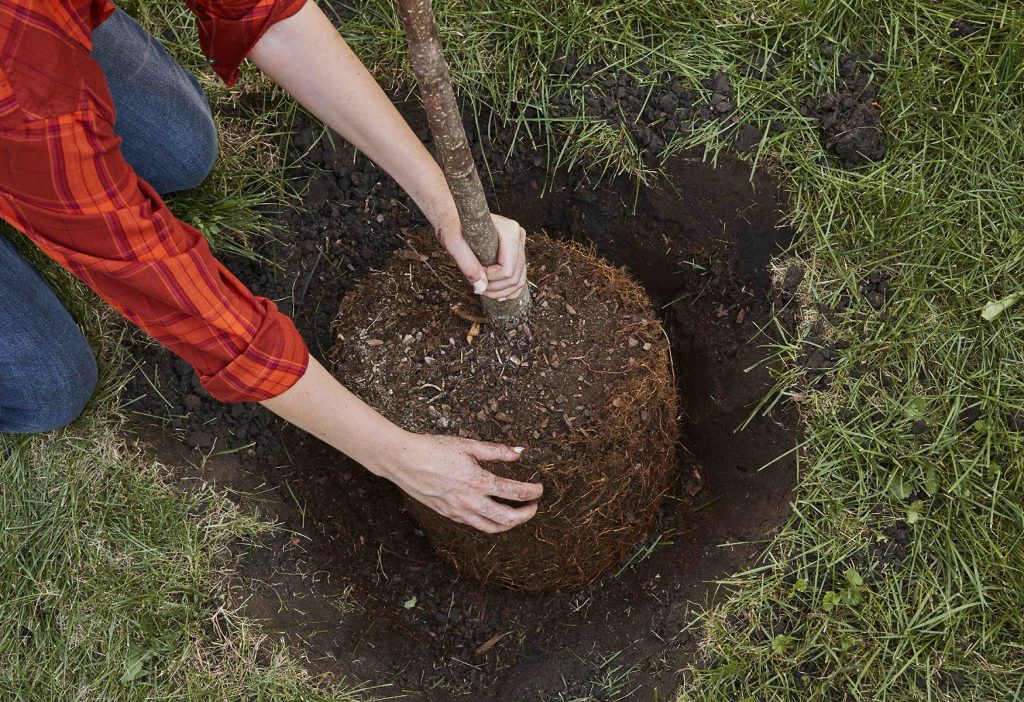
DIY: Selecting and planting a young tree
is a fun and rewarding DIY task. There’s something about planting a
tree in your very own yard that says, “This is my home.” Get the kids on
board and take plenty of photos. TIP: Before you dig a hole for your
new tree, contact a one-call number to make sure you won’t be hitting
any underground utility lines.
Call a Pro: For large-scale planting, such as when you’ve just moved into a new house with a lot of outdoor space,
call a pro. Experienced landscape contractors have both the know-how
and the equipment to install trees and other plants quickly and well.
Even before planting begins, a professional landscaper will be able to
remediate construction-damaged soil to ensure healthy growth.
Feeding and Watering
DIY:
It’s not only garden plants that need fertilizer treatment. Trees also
benefit from occasional feeding. Fertilize once annually, in April-May
(after the last frost) or October for healthier, hardier trees, which
will stand up better to storms and winds. As a DIYer, you can feed your
trees by either broadcasting fertilizer or inserting a spike in the
soil. You’ll have to water, as part of your tree care program, until
young trees have been established for 2 years. Excessively dry weather
may make watering older trees necessary, as well.
Call a Pro: Consult a landscaping expert
to find out the right kind of fertilizer for your trees and soil type,
as well as the best application method. Ask about when to water or use
other methods of keeping roots moist, such as mulching. If you are busy
(or forgetful!), consider setting up an ongoing tree service plan with
your landscaper.
Protection
DIY:
We humans are not the only tree lovers; many animals enjoy them too …
as a tasty meal! Protect tender tree trunks from hungry deer and rodents
with a store-bought plastic tree guard or a homemade version, fashioned
from chicken wire or bark cloth. Shelter young trees and bushes from
winter snowfalls with teepee-like frames or burlap wrappings.
Call a Pro: You’ll
be better off enlisting the help of a pro when it comes to safeguarding
your trees from ruthless insect pests, such as the emerald ash borer or spider mites.
Another type of tree protection to ask your landscaper about is
preventing collisions by mowers and other lawn care equipment.
(Surrounding each tree with a circle of mulch and some form of barrier
is often advised.)
Trimming and Thinning
DIY: As
a home gardener, you might want to try your hand at Tree Trimming 101.
Don’t just charge in there, though, or you may do your tree more harm
than good. Slow down and start by learning the basic cuts. Tackle only pruning work that you can do standing safely on the ground.
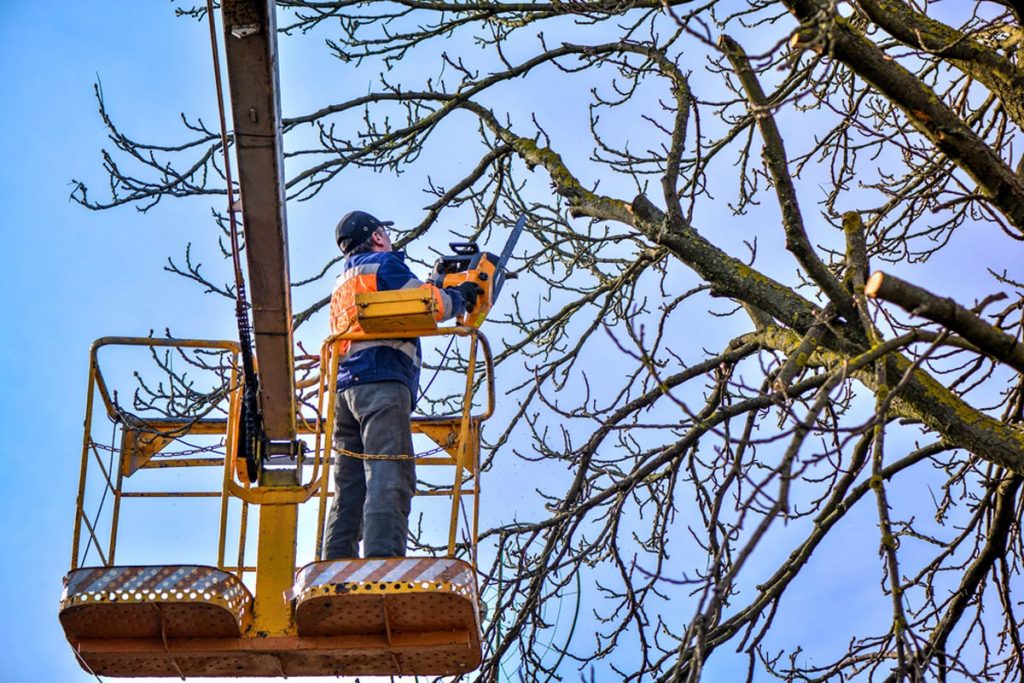
Call a Pro: Leave major tree trimming jobs
to the experts. A good rule of thumb is that any tree trimming work
which requires a ladder — or a lift — is a job for tree service pros.
Besides branch trimming, fruit and nut trees need a special kind of tree care. They should be thinned every year in early summer; that means removing a certain amount of unripe fruit so that the remaining apples, plums, or pears will mature to a good size and flavor. We recommend having a pro do this at least the first time. If you watch and learn, you can try it yourself next year.
As the weather gets colder, it is the time of year to be aware of major snow events and understand the impact that these storms can have on your trees. The buildup of snow, and precipitation that turns to ice, can be too heavy for some trees and can produce the dreaded “crack” resulting in critical damage.
Protect Your Trees From Freeze
Temperatures below 32 degrees over a sustained period of time are
cold enough to freeze your trees’ buds/blossoms, fruit, leaves, and/or
twigs.
Trees most susceptible to damage:
Citrus, Jacaranda, Catalpa, Oleander, Eugenia, and other
tropical/sub-tropical plants are most likely to sustain damage. Tender,
new growth is also easily injured by freezing temperatures.
Acute action before freezing weather:
Protect your trees and plants:
Cover susceptible trees and plants with burlap, sheets, tarps, etc.,
that extend to the ground to trap in the earth’s accumulated warmth.
Use a frame or stakes to minimize contact between the cover and the
foliage.
Bring potted plants and trees to more protected locations.
Keep plants well-watered:
Moist soil will absorb more solar radiation than dry soil, and will re-radiate heat during the night.
If you have a large tree that needs protection, running sprinklers
at the coldest time of the day (usually between 4:00AM and 6:00AM) can
give it a slight edge. The strategy makes use of latent heat released
when water changes from liquid to a solid. When ice crystals form on
the leaf surface they draw moisture from the leaf tissue. The damage
from this dehydration will be less severe if the plant is not already
drought-stressed.
Advanced planning for freeze
Remove turf/weeds from under trees’ canopies—bare soil absorbs and reflects heat best.
Wood chip mulch prevents soil moisture loss and insulates roots.
Plant frost-sensitive plants near sources of reflective heat (like buildings, walls, etc).
Action after a freeze
Help trees recover:
Do not prune anything off immediately. Wait to see what sprouts in the spring; the damage is often not nearly as bad as it initially looks, and new growth may come out of tissue that you thought was dead.
If dieback is severe enough and your tree has lost “shade,” protect the now-unshaded portions of the trunk/branches from the sun, with a physical cover or with whitewash (1:1 ratio of latex paint and water).
Remove frosted/mushy fruit while still salvageable, for snacking on or juicing.
Hiring a professional to trim just one tree can cost $80 to $1,000+, with $250 to $500 being the typical price range for tree trimming. If the trimming is straightforward, you could be quoted $80 for a small tree under 25 feet tall, or $175 for a medium-sized tree 25 to 50 feet, and $300 to $1,000 for a big tree over 50 feet. Keep in mind that those prices cover a one-time service for just one tree. If you’ve got several trees around your house that need trimming, the bill will go up accordingly.
2020 How Much Does an
Arborist Cost?
How much does an arborist cost? Arborists have many skills, ranging from tree consulting, tree reports to tree surgery, or removing trees from properties. Here’s what you need to know about what arborists do and how much their services will cost.
What does an arborist do?
Arborists can do almost anything related to trees. Some of the
jobs arborists typically do include:
Tree consulting and tree reports
Tree removal
Stump grinding
Tree pruning
Tree surgery
Log splitting
Root management
Each of these jobs is a separate service and will come with a
separate cost. For example, if you want to have a tree removed, it probably won’t
include stump grinding or stump removal.
Root management includes cutting roots back or creating a barrier
so a root cannot impede on a driveway or house slab. Log splitting can be done
if you have a wood fireplace and want the timber for burning. Tree pruning and
tree surgery are slightly different. Tree pruning can remove limbs that
overhang the house or dead limbs, while tree surgery involves removing diseased
limbs to keep the tree healthy.
In general, arborists charge around $70 per hour, but their hourly
rate may not reflect the cost of the job. The cost will depend on other factors
and the number of workers who need to be on the job. If other equipment is
needed, such as a truck hoist to reach tree branches, it will cost extra. Truck
hoists usually cost around $170 per hour and the hoist may be needed for longer
than one hour.
How much does tree consulting and reports cost?
Tree consulting and tree reports are two services an arborist can
provide. A tree consultation will give information about a variety of things:
Is the tree diseased and can the disease be cured?
Advice on what types of trees to plant.
Valuation reports tell how much a tree is worth.
Public liability and public safety reports can tell you if a tree poses a danger to the public or a neighboring property.
Root mapping can find out if a tree’s roots pose a danger to underground pipes or a home’s foundation
Tree surveys help identify how to best maintain trees.
Tree reports can be a little different than a tree consultation, though the terms are often used interchangeably. Tree reports may be submitted to the council if you want to remove a tree from your property. Many trees in Australia are protected, but different councils protect different trees. A tree report can identify the tree and submit reasons for its removal to the council.
In general, an arborist consultation or report will cost:
$75 to $100 for one to five trees
$25 for each additional tree
$35 for submission to council fee
The cost may vary depending on circumstances, but these are the
basic costs for a consultation or report.
How much does tree removal cost?
Tree removal will depend on a variety of factors:
The size of the tree
The condition of the tree
The location of the tree
Ease or difficulty of access
Needed safety precautions
Transportation and tipping fees
A large tree will cost more because it has to be cut from the top down. If the tree is in poor condition, extra steps will be needed to ensure safety. The location of the tree is an important factor because trees that hang over neighboring properties or over a roof will need to be cut carefully and branches cannot be allowed to fall. If a tree overhangs a roof, for instance, the branches will need to be secured so they don’t fall on the roof. If any safety precautions are needed, they will factor in the cost.
Because of the complexity of tree removal, the cost can be
anywhere from $300 for a simple job to $10,000 or even more. An arborist will
have to inspect the tree before they can give a quote. While $10,000 can seem
excessive, it can be necessary in some cases when a large tree must be removed
from the top down and branches cannot fall to the ground.
How much does stump removal cost?
Like tree removal, stump removal will depend on the size of the
job, access problems, and other factors. Special stump grinding equipment is
used, but an extensive root system may also require some digging. Stump removal
can cost up to $800 or more depending on the project. On average, stump
removalists charge around $35 per hour. A small job may only take two or three
hours to complete. A larger job can take much longer and if more than one stump
needs to be removed, that will factor into the cost as well. On average, stump
removal costs between $350 and $800, but smaller jobs will cost less.
Keep in mind that stump removal is not usually included in the
cost of tree removal. If you want both, ask for quotes for both tree removal
and stump removal. It can save you money because the arborist will come with
equipment for both jobs instead of having to return to do the stump removal.
Also, remember that stump grinding and root removal maybe two different jobs. Stump grinding usually involves getting rid of the exposed stump, while root removal involves taking out the whole root system. Root removal can cost more than stump grinding, but an arborist will have to inspect the tree before they can give a quote.
How much do tree pruning and tree surgery cost?
As with everything an arborist does, tree pruning and tree surgery
will depend on the size of the tree. For smaller trees, they may charge an
hourly rate of $35, but you will also need to pay for travel and setup time.
For larger trees, the cost can be much higher, with costs between $500 and
$2000. The reason for the high costs can be because the arborist will have to:
Climb the tree to remove branches
Take personal safety precautions
Remove branches without letting them drop to the ground
There may also be accessibility problems and other factors that
affect the cost. If tree surgery is needed, you may also have to pay for an
initial consultation.
Choosing an Arborist
Arborists do not require licensing, so you should be careful when choosing an arborist. Their job can be dangerous to the public and the arborist, so should carry public liability insurance and personal insurance. They should also hold a Certificate II or III in Horticulture (Arboriculture) and be a member of a recognized organization such as Arboriculture Australia.
The arborist should be well established in the area and have a
good safety record. They may be able to supply you with references. Check their
references and find out if the arborist knows what they’re doing and has a good
safety record. Choose the best arborist you can find, especially if you have
large trees that need pruning or removing. An expert will be able to do the job
safely and efficiently. Don’t trust any job to an amateur.
*Costs and prices in this article are indicative and should only
be used as a guide. They also vary locally and are subject to market forces.
Tall trees are magnificent structures that provide ample shade, as well as a large habitat for many varieties of animals. Like all trees, tall trees must be trimmed and pruned occasionally to keep them in optimal health, and also for safety reasons. If one of the tree’s limbs dies or becomes too heavy, it could break away from the trunk, causing injury to nearby persons and damage to property. While it is recommended that you hire a tree-trimming company to deal with extensive tree trimming for safety reasons, you can perform small pruning tasks yourself.
HOW
TO TRIM LARGE TREE BRANCHES
If you’re trimming heavy tree limbs, you have to be extra
careful not to damage the bark or interfere with the tree’s natural healing
response. Doing it right is actually no more difficult than doing it wrong,
particularly if you think ahead to how much work it would take to remove a dead
tree!
Here’s how to cut large tree limbs in your yard in three simple
steps.
How
Trees Heal
The truth is, trees don’t actually heal as we do. When you cut off a tree branch, the tree forms a special callous tissue (like a scar) that covers over the wound to keep out disease and decay. That scarred part of the tree will be there forever, sealed off so that the rest of the tree can keep growing. It’s very important to prune trees correctly so that we don’t interfere with this process – incorrect pruning will leave the tree weak and vulnerable to disease.
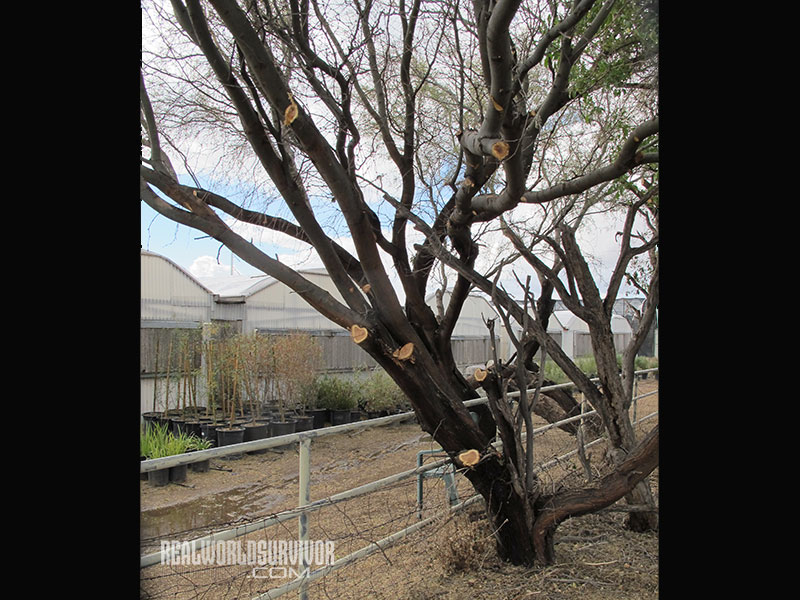
In the top photo, you can see the evidence of several large pruning cuts. The bumps show well-healed pruning scars, most of them completely covered over. The “donut” shaped scar is normal, too. The callous tissue grows from the outside edges toward the center, so it’s still in the process of sealing over.
How to
Cut a Tree Limb
Proper pruning of large tree limbs involves three cuts:
Cut #1,
Notch Cut: Cut a small notch in the bottom of the limb, 2-3 feet away
from the trunk, and about a quarter of the way through. This notch will keep
the bark from splitting when you make the next cut.
Cut #2,
Relief Cut: Just outside the notch, make a relief cut completely
through the branch. This removes the weight of the branch, so that you can make
your final cut without the branch splitting and falling.
Cut #3,
Final Cut: This is the one that matters! Your final cut should be
right where the branch collar (that swollen bump) transitions to smooth branch
bark. Follow the slant of the branch collar. If you can’t fit your saw into the
crotch at the right angle, then cut it from the bottom up.
Common Tree
Trimming Mistakes
Cutting the Branch Too Short: We used to think that branches should be cut off flush with the trunk – boy, were we ever wrong! The branch collar is responsible for forming the scar tissue. If you cut into the branch collar, the tree will have a very hard time recovering. When you see rotten holes in tree trunks, or seeping wounds, you’re looking at the aftermath of cutting off the branch collar.
Leaving the Branch Too Long: The branch collar on the truck can only do its job of allowing the wound to heal if all of the branch that it has to cover over has been removed while leaving the branch collar itself intact. In the photo on the right, you can see how the branch stubs that were left too long are interfering with and actually preventing the healing process from taking place.
Failure to Make the Relief Cuts: If you fail to make the relief cuts and remove most of the weight of the limb before trimming the branch back to the trunk, you run the risk of having the branch split off. This can cause substantial damage to the trunk, as seen in the photo at right. This can make the wound on the trunk susceptible to disease and insect infestation and take much longer to heal.
Proper planting is essential for healthy, vigorous growth of ornamental plants in the landscape. It assures rapid plant establishment by providing a favorable environment for the developing root system.
Planting involves more than merely digging a hole and sticking a plant in it. Giving careful consideration to the preparation of the planting site, the time of year for best plant establishment, and the handling requirements of different nursery stock will help you avoid problems later on.
Why Soil is important
for Tree health
There are numerous factors that can affect your plant health, one of which is soil. It’s easy to overlook soil for tree or shrub health when planting, we become so caught up with tree care above ground that we forget what’s happening below ground is just as important. Soil for tree health is essential, especially in urban settings.
Soil guides
the species of trees that can thrive in your area. Planting a tree that isn’t suitable for the area is senseless. Neglecting proper
soil for your tree can be detrimental to a tree’s health, and even cost you
your tree. By understanding a few soil basics, you can select trees that will
thrive in your soil.
Get to know your Soil
Soil is
comprised of many things: nutrients, minerals, water, liquids, air, and gases.
What works for one tree won’t necessarily work for another. Each tree requires a different soil.
There are
numerous soil varieties, but the most common soils are sandy, silt, clay,
peaty, loamy, and chalky. Soils vary from one location to the next, but one
thing they share is their visible layers or horizons. The composition of soil
is identifiable by how it settles. When you don’t have healthy soil available, you can mix soils together to change the
texture, creating a soil for trees that is more suitable for planting.
Sandy – rough texture and dries easily. Since the soil base is loose, it’s harder to retain moisture, making it harder for plants to access nutrients.
Silt – it is comprised of fine particles and has a smooth, slippery texture. Its tight compaction can serve as an advantage in retaining moisture and nutrients, or a problem if planted with the wrong tree.
Chalky – usually stony and lays on top of limestone or bedrock. It will require more nutrients to support plant growth.
Clay – feels lumpy and sticky when it’s very wet. It is the most tightly packed soil with little air space, making it difficult for air and moisture to penetrate the soil.
Loamy – the most ideal soil. It drains well, full of nutrients, and holds water.
Peaty – has a much higher proportion of organic matter because of the soil’s acidic nature. There are fewer nutrients, but it holds water well.
Soils can even vary on the same property. An easy way to identify your type is to fill a small jar with soil from your yard or place you want to plant your Bios Urn®, shake it, and let the soil settle overnight. The following day you should notice distinct layers. Sandy soil tends to settle at the bottom, clay at the top, and silt in the middle.
Why does soil for tree health matter?
Soil performs five essential functions; using the wrong type of soil or unhealthy soil can impede tree health by constricting roots from accessing the water and nutrients necessary. Soil helps regulate water, supports biodiversity, filters pollutants, provides physical support, and cycles nutrients. You can understand why attempting to plant a tree that requires less soil saturation may not thrive if it’s planted in silt or clay soil. Trees show signs of stress, possible signs that the soil isn’t healthy to include leaf discoloration, brittle limbs, and even stunted tree growth.
It’s also
important to dig a hole deep enough for tree roots to grow. Planting in shallow soil makes tree roots more susceptible to
exposure which can lead to tree stress and even toppling from wind
gusts. If you have bedrock near the surface of your soil that prevents you from
digging deep, consider mixing in top soil to add depth.
Soils are complex organisms, that’s why there is a whole field of study dedicated to the soil. Plant growth is directly influenced by soil conditions. That’s not to say that if your plants show these signs that it’s a result of poor soil. Several varying factors go into tree health, but soil care is a key component to growing healthy trees.
When you plant new trees in your yard, it very important to give the young trees excellent cultural care. Watering a newly transplanted tree is one of the most important tasks. But gardeners have questions about how best to do this: When should I water new trees?
How much to water a new tree?
Healthy trees can grow anywhere, including cities, provided they receive enough water, soil, and sunlight. Research shows that vigorous urban trees keep people healthier, cool cities in summer, warm homes in winter, help kids learn better, decrease car accident rates, raise real estate values, and decrease crime dramatically. Even with these myriad benefits, recent heat and droughts in many parts of North America (and elsewhere) raise an uncomfortable but necessary question: how do you maintain a healthy tree when there is a shortage of water?
San Antonio, TX is an interesting place to look for an answer to this question because the San Antonio Water System (SAWS) has higher current water needs than what’s available in its system. As a result, they have had to start purchasing water outside of their regional watershed, well-shed, and river-shed – and this has driven then to develop an efficient watering system that enables them to give trees what they need while minimizing the economic and environmental burden of purchasing water.
Mark Peterson,
formerly of the Texas Forest Service and now with the San Antonio Water
Department, was tasked with creating watering guidelines that would provide
enough water for young trees to survive and grow, but not use any more water
than absolutely necessary. Mark’s approach is what I’ll be sharing here.
Simple, But Not Easy
No matter how drought-tolerant, native, or local a tree species is, almost all young to trees (typically 1 to 3 years old, or up to 5 years in Type I, Type II and especially arid regions) in man-made landscapes must be watered by people during the summer to survive and become established. The complete extent of young tree roots in the first few years after planting is limited to the soil volume that the tree was last grown in (for example, a pot or container). Mature, established trees generally require less consistent care, but during droughts, every tree must be monitored and watered adjusted accordingly.
If you are
caring for young, recently planted trees, here are some good rules of thumb to
follow (your mileage may vary depending on climate and tree species). Here is
Mark’s watering regimen for newly planted trees.
Watering as a Science
Year
Amount
Frequency
YEAR
1
First month of planting
Trunks smaller than 2” (5
cm): 1 gallon per inch of trunk diameter.
Trunks larger than 2” (5cm): 2 gallons per
inch of trunk diameter.
Water three (3) times a week over the root ball.
Second month of planting
Trunks smaller than 2” (5 cm): 1 gallon per inch of
trunk diameter.
Trunks larger than 2” (5cm): 2 gallons per
inch of trunk diameter.
Water two (2) times a week over the root ball.
Third month of planting
Trunks smaller than 2” (5 cm): 1 gallon per inch of
trunk diameter.
Trunks larger than 2” (5cm): 2 gallons per
inch of trunk diameter.
Water once (1) per week over the root ball.
Fourth to ninth month of planting
Trunks smaller than 2” (5 cm): 1 gallon per inch of
trunk diameter.
Trunks larger than 2” (5cm): 2 gallons per
inch of trunk diameter.
Water twice per month over the root ball.
YEAR
2
Hottest months
Trunks smaller than 2” (5 cm): 1 gallon per inch of
trunk diameter.
Trunks larger than 2” (5cm): 2 gallons per
inch of trunk diameter.
Water twice per month over the root ball only. During a
drought, water once weekly.
Cooler months
Monitor and respond
YEAR 3
Hottest months
Trunks smaller than 2” (5 cm): 1 gallon per inch of
trunk diameter.
Trunks larger than 2” (5cm): 2 gallons per
inch of trunk diameter.
Water twice per month, twice the width of the root ball.
During a drought, water once weekly.
Cooler months
Monitor and respond
YEAR 4
Hottest months
Trunks smaller than 2” (5 cm): 1 gallon per inch of
trunk diameter.
Trunks larger than 2” (5cm): 2 gallons per
inch of trunk diameter.
Water twice per month, twice the width of the root ball.
During a drought, water once weekly.
Cooler months
Monitor and respond
YEAR 5
Hottest months
Trunks smaller than 2” (5 cm): 1 gallon per inch of
trunk diameter.
Trunks larger than 2” (5cm): 2 gallons per
inch of trunk diameter.
Water twice per month, twice the width of the root ball.
During a drought, water once weekly.
Cooler months
Monitor and respond
For young
trees, water the roots around the trunk (not the trunk itself, and not the area
outside the root ball). I also recommend creating and maintaining a 3-foot
wide, 1” to 3” (2.5 cm to 7.5 cm) deep organic (wood chip) mulch ring around
the trunk for its entire life, to help maintain soil moisture.
For mature
trees (>25 years), or those with a trunk more than 12″ (30 cm) in diameter,
water deep and occasionally. About 10 gallons per 1 inch (2.5 cm) of trunk
diameter per week (ex., a tree with 12″ DBH would receive 120 gallons) during
drought. If there is unlimited water, there are records of trees absorbing 150
gallons of water in a single day.
Watering as an Art
In addition to the (human-driven) watering recommendations described above, there are environmental and design decisions that can set trees in the built environment on a more secure course for getting their irrigation needs to be met.
Select tree
species that, over the long term in typical summer weather (not droughts), won’t require
supplemental watering.
The urban landscape is full of small humps, bumps, and pimples that don’t serve to gather and contain water runoff. By thoughtfully altering these forms via slopes, pipes, and berms, we can turn the entire previous landscape into a tool for draining water to tree planting areas. This would be a paradigm change for watering trees and managing stormwater worth billions of dollars, and billions of gallons of water, nationwide.
All trees need water during droughts. DeepRoot published some thoughts about this last summer that are worth re-reading. Trees that have access to larger volumes of loamy soil will be able to withstand dry periods better because of the water reserves the soil can contain (remember that sandy soils will drain quickly and require more frequent irrigation). Evergreens need heavy watering going into the winter and need watering during winter droughts.
Sometimes
annuals or bulbs can look nice planted under a tree. But the tree is paying a
price in root damage (caused by planting and removing flowers) and water
competition for that temporary beauty. After tree establishment, I do not plant
anything under trees within 10 feet of the trunk.
Watering Tools
There are a
great number of available tools for watering trees depending on your needs,
budget, and other site considerations.
Passive
Slow-release watering bags (e.g. Gator Bags).
Rain leaders, or scuppers, can be directed towards tree trunks or below ground into the tree soil mass.
Flexible downspout extender can be directed towards tree trunks.
Clean 5-gallon bucket. Fill with hose and time speed of fill – this will tell you how many gallons per minute are being applied. A typical municipal fill = 5 gallons un 2-5 minutes
Rain barrels with flexible hoses attached.
Active
Automatic irrigation can be great for watering hard-to-get-to trees and can be set to run occasionally for long periods of time using drip, bubbler, or soaker hose.
Harvest cisterns – sump pump.
It’s important,
particularly with mature, established trees, to water the entirety of the soil
volume, even the part under paving. If there is no automatic tree watering
system (bubblers, drip), I suggest using a soil watering needle with a watering
hose connected.
Timing
Effective tree
watering always takes place relatively slowly. (For this reason, pop-up rotary
sprinkler head systems for lawns, that only turn on for a few minutes a few to
several times a week, are not the best type of watering for trees). If
you use automatic irrigation to water your trees, set them to run for much
longer periods of time using drip, bubbler, or soaker hose.
Still not sure?
The above are
just guidelines; you should use your own experience, common sense, and (if
appropriate) input from a professional when applying these to your site. Some
simple questions can help you assess how much and how frequently to water your
trees. Think about the following as a place to get started:
Are the trees young and newly planted, or mature and established?
How much precipitation does the area receive? How intense and frequent are the storms?
How warm is the average daily|high temperature in the hot season?
How much soil is the trees planted in?
What type of soil are the trees planted in?
Are the trees growing in a street, median, parking lot, lawn?
What moisture conditions does the tree prefer?
How does water get into the tree opening?
If you’re
wondering what trees do with all that water, on hot or windy days in the
summer, a whopping 95 percent of the water that the tree consumes, when
available, is turned into mist by the leaves (a process called
evapotranspiration). The remaining 5 percent is used to photosynthesize to
manufacture sugars for food.
When it comes to tree maintenance, you may think that tree trimming is one of these tasks that can easily be done without the help of a professional. While it may be true that you can conquer tree trimming on your own, there are several important things to consider before beginning. Often homeowners are unaware that there is, in fact, a proper way to trim trees, resulting in some common tree trimming mistakes. Without training or extensive tree knowledge, it is important to do some research on how to properly trim your trees during your planning phase to help avoid these mistakes.
Biggest Pruning Mistakes
The myth of the “maintenance free” landscape is easily debunked
when DIY landscapers realize that plants never stop growing. Pruning, if only
of the rare, occasional variety, is essential for every functioning landscape.
While incidents of permanent pruning damage seldom occur, there are right and
wrong ways to go about the business of pruning.
Not Pruning
One major pruning mistake that flies under the radar for a long time is a failure to prune. Not pruning at all can cause its own set of problems. Look for plants that have outgrown their allotted space or become “leggy.” Some blooming plants will harbor old flower heads or seedpods that may be undesirable. Neglected plants can be reshaped, but often they will require rather extended time, and in some instances, several follow-up prunings, to grow back into a desirable shape again.
Cutting Off the Flowers
Ever wonder why your hydrangea doesn’t bloom? It could be that you pruned the buds off. This is an example of another big pruning mistake: pruning at the wrong time of year. Most spring and early summer bloomers set their flower buds on the previous year’s growth. If they are pruned too late in the summer or before bloom time in the spring, it is likely that they will not bloom well, or at all. Limit pruning of these early bloomers to a window of time within a month of the end of their bloom cycle.
Excessive Shearing
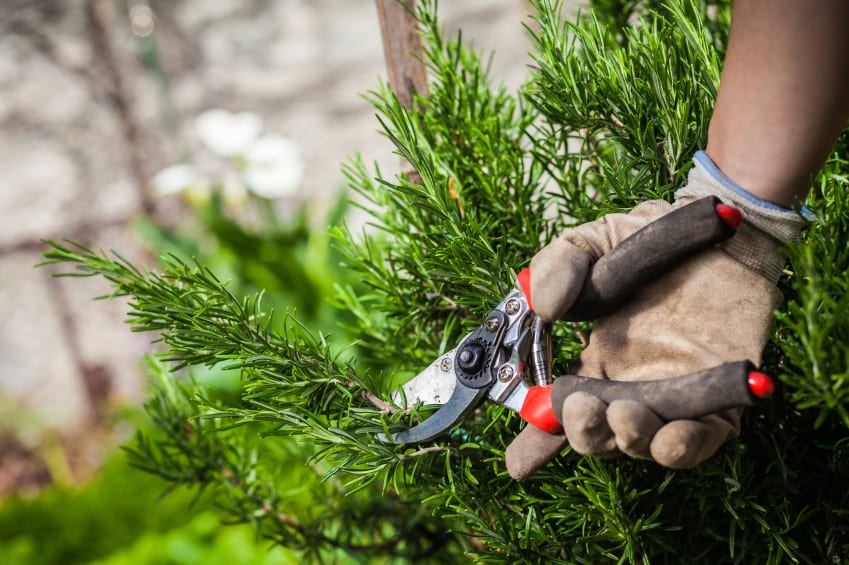
Hedges, foundation plants and topiaries are normally sheared to maintain a tightly groomed appearance. Problems can arise, however, when shearing is the only approach used to attend these plants. A thin layer of dense leaves with little thickness will leave them looking like hollow green shells. The best way to both prevent and correct this pruning mistake is with occasional thinning. Use handheld pruners or loppers to remove up to ten percent of the branches bearing the surface foliage in order to allow sunlight to penetrate deeply into the plant. Thinning will promote deep branching and greater sunlight penetration will stimulate lush, deep foliage.
Out of Shape Plants
When hedges are cut inward toward the bottom, it becomes increasingly more difficult for them to regenerate foliage at the base. Ultimately the bottom of the plant will be bare. For the consistently best look and long-term health, hedges and other groomed plants must be wider at the bottom and taper slightly toward the top. This shape will provide good sunlight exposure for the whole foliage surface, leading to good leaf production throughout.
Topping
Tree and shrub varieties should be researched before planting to ensure that they will grow to an appropriate size for their allotted space. Removing the top of a tree stimulates one or more secondary leaders that will naturally grow in the same way as the original but with weaker structure, resulting in a net negative effect. A tree that has outgrown its space should be removed. A large, well-established shrub may be “renewal” pruned in late winter or early spring. Simply cut the shrub to the ground (or within a foot or so of the ground), allowing it to regenerate from the suckers that will form in spring. Ultimately, it is best to replace too-large landscape plants with right-sized ones.
Poor Technique
Simply cutting branches off of trees and shrubs will not necessarily give the desired effect. Doing it the wrong way may result in unsightly cut ends showing for a long time, heavy production of water sprouts producing an unbalanced look, oversized scars, etc. When removing branches, always make the final cut at the top of a branch collar (the swollen area where the branch meets the main stem) or at a node (where leaves or lateral branches generate from the branch you are cutting). Conifers take a long time to regenerate new growth when cut beyond the growing tips. Hard cutbacks should be avoided if possible, but when necessary these cuts should be made where the cut will be carefully hidden within surrounding foliage. Large, heavy branches should be slightly undercut before removing to prevent the bark from tearing when the wood breaks midway through cutting.
Junky Tools
Dull blades, stiff, loose or rusty moving parts can lead to all sorts of problems from ugly, ragged cut edges to spread of disease, and possibly to injury of the user. Keep pruning tools sharp, clean, well oiled and in overall good working order. Properly repair or replace them if they become damaged. Store them in a dry location.
Attention to Detail
The difference between a well-pruned landscape and one riddled with big pruning mistakes is often a matter of detail. The effort and expense involved is comparable in the short term, and far less in the long run when good pruning practices are employed over questionable ones. Always work patiently and methodically. When in doubt, take a little time to research the specific plant or issue in question before proceeding. Remember, after it’s cut, you can’t put it back. With forethought and practice, pruning mistakes will become a thing of the past.
Cutting down a fully grown tree can be an unsafe thing to do, so it ought to be managed by appropriately educated and also outfitted experts whenever feasible. If you are incapable to employ a professional as well as require to dropped the tree yourself, after that these tree cutting pointers might help everything go efficiently.
Your tools must all remain in excellent repair and you must test it prior to utilizing it on a tree. The adhering to list covers the main pieces of equipment that would certainly be needed to reduce a fully grown tree on your residential property. Chainsaw: This is perhaps the most crucial piece of devices you’ll require.
The bar size indicates the deepness that the blade can pass through, so 20 inches need to be adequate to lower most trees. Shatterproof Glass: Lots of individuals forget the importance of utilizing shatterproof glass when doing work like this. Nonetheless, the truth is that flying debris can seriously hurt your eyes when cutting with a power saw.
It is recommended that you use either knee-high security boots or use hefty leg protectors. 1000 LB Test Rope: The rope must be about three times longer than your tree is high. It will certainly be made use of as a security backup in case there is a concern. You need to look over every one of your equipment prior to you start to see to it it is all in excellent working order.
Not just will they be able to help guide the loss of the tree, however they will also be about in situation something goes wrong. While it’s not recommended to reduce a tree on your own, if you’re going to continue, the initial point you ought to do is analyze the threat of the tree dropping on anything aside from the ground.
Does Trimming A Tree Help It Grow?
When you are all set to go, you can start adhering to these steps to securely lower your tree. Identify just how tall the tree is. Based on the elevation of the tree, choose on the instructions you desire the tree to fall. Clear the area in the fall-zone from any kind of particles or anything that might be damaged.
Hand the various other end off to your good friends and have them stand beyond the fall-zone at a safe distance. Cut a v-shaped notch right into the tree on the side you desire the tree to fall. The notch must go to approximately knee-height, ought to cut to the center of the tree and also ought to resemble a shallow “v”.
When the tree starts to drop, rapidly bow out the tree at a 45 level angle. If the tree doesn’t fall over completely or obtains caught on another tree, have your pals start pulling on the rope until the tree finally falls. We very suggest hiring a specialist tree cutting solution or arborist to reduce your tree for you.
You can discover additional tree reducing and dropping tips below. Never ever stand directly behind a falling tree. The stump can break and also send out the tree sitting back toward you triggering massive injuries. Do not approach the tree with the power saw if it falls short to fall. Just draw it with the rope.
If you’re stressed reducing a tree might not be for you, reviewing our price overviews can aid you evaluate the expense and also budget plan for a specialist service provider or arborist:.
Does Trimming A Tree Help It Grow?
September 10, 2018 To establish the technique, one should use for a certain tree, one requires history information concerning its category or family. This includes exactly how it expands, just how it is impacted by the periods, and how it responds to pruning. Additionally, every leafed branch that is gotten rid of from a tree during pruning equates to much less energy manufacturing for the tree in its entirety.
In this blog we are going to discuss two of the more radical trimming techniques, pollarding as well as tree topping, that are frequently mistreated as well as can finish up being detrimental for your trees. By Famartin, from Wikipedia Commons Topping a tree is decreasing the height of the crown to a restriction.
What is a heading cut you ask? A heading cut is when you trim the terminal part of a branch to a bud or a side branch that isn’t large sufficient to presume dominance of growth. This shocks the branch either triggering numerous dormant side buds to begin expanding (watersprouts) or killing the branch completely.
Topping as a trimming technique should just be employed under particular scenarios such as fixing a tree from severe tornado damages. Many things can go incorrect when topping a tree. Initially, getting rid of the top of a trees crown disrupts its capability to generate power. It also unbalances the root to crown ratio, disrupting the balance of carb production and also storage space.
You can likewise obtain info about the customized art of topiary. When done correctly, lopping can offer several objectives to protect and also boost your atmosphere. Your tree might remain in great condition, yet its area, form or dimension is in some way creating troubles on your building. It may provide a service to these issues without having to get rid of the whole framework.
You can cut branches to modify its size as well as form or shorten its elevation by reducing the trunk to a particular degree and letting it regrow from there. Sometimes lopping is made use of to cut sections that are growing also near a residence, light blog post or high-voltage line or any other area that positions a risk of mishaps in the event of a storm.
Tree Lopping can even be used for aesthetic factors, to offer your frameworks an extra pleasing form that conforms to the remainder of your landscape. Branches that have been damaged by lightning can be removed using lopping to offer the remainder of the framework a chance to grow. Tree loppers may be much more efficient with some types of trees than others.
Some vegetation kinds are not for considerable branch elimination and can suffer long-term damage when the treatment is refrained from doing appropriately. If you’re not cautious with the treatment you pick, you could create a lot more damages than great. Relying on the size and number of your trees, lopping can generate rather a collection of wood and debris.
Numerous homeowners have the branches cut for mulch or to offer as firewood. Otherwise the particles can be carted off by you’re the tree elimination business to make sure that your lawn is left cool as well as clean. Trimming involves cutting off dead or weak arm or legs and also minimizing leaf material to encourage healthy development and also advancement.
Normal pruning can be advantageous to your structures as it gets-rid of dead timber that can feat its growth and also expansion. Pruning additionally allows you form your structures the way you such as for a much more appealing appearance. In the instance of fruit trees, regular pruning can help them to birth even more fruit.
What Happens When You Cut The Top Off A Tree?
With their expertise of tree management as well as development, arborists are a lot more qualified of getting the job done right. Melbourne tree solutions are acquainted with the different sorts of trees in their location as well as recognize when and exactly how to trim these frameworks to acquire optimum outcomes. Your arborist will likewise have the appropriate devices for the job, which makes certain each structure gets appropriate having a tendency as well as treatment.
This includes worker’s settlement insurance coverage to cover personal injuries that might happen while working with your building. Furthermore, their insurance policy will certainly cover any kind of property damages you might incur because of accidents that take place during the training course of their task. Prior to working with a firm, you need to inquire as to the kind of insurance protection they have.
Accidents can take place despite having the very best of arborist services. Adequate insurance policy protection is a must, particularly if substantial services are to be done. Appropriate tree administration and like include lopping as well as pruning needs effort and time for the job to be done right. When you don’t have the time to invest in this undertaking, a capable arborist can provide you with the qualified solutions you need.
The tree lopping is not implemented and also recommended for all trees, but there are numerous scenarios when tree lopping is extremely essential. The tree lopping consists of cutting of numerous branches and also various other parts of trees. Mostly, the tree lopping is applied when the tree branches grow in an unwanted location, then it is required to cut these branches to restrict their growth in the limited location.
Though, tree lopping is not allowed based on the regulation in various cities because it is maybe hazardous for tree health. Sometimes, unacceptable lopping can cause tree conditions as well as even damage. As a result, it is really important to employ the specialist tree provider like tree lopping Sydney provider to execute a tree lopping strategy.
If this section is not removed, then it will contaminate the whole tree as well as often spread this illness to other trees in its surroundings too. The tree lopping will certainly help to avoid the spreading of this disease. The tree lopping calls for special skills and also experience, consequently, you must hire a skilled and also trained specialist for this work.
While reducing the contaminated components, it is necessary to protect against the branches from being up to the ground. Or else, it will spread the disease in the lawn. The tree lopping service additionally assists in boosting the healthy growth of trees. However, it is crucial to apply the lopping strategy in properly.
Watersprouts are inactive buds that get triggered and grow rapidly as well as unpredictably. They commonly grow vertically, defeating the purpose of the original topping cut and are normally inadequately affixed which makes them a threat for failure. If you have actually seen your tree has actually been topped and also a whole lot of watersprouts have been creating at the sites of the damages, do not fret, not all hope is lost.
The process is described as crown remediation. Crown remediation entails strategically removing watersprouts and also any type of dead branches while cultivating well put strongly connected watersprouts right into new branches. This process takes time as well as numerous prunings over a number of years yet will at some point renew and also reform your trees crown.
Pollarding is a trimming technique that is typically done to huge expanding, deciduous trees that grow readily after trimming. This specific approach of trimming should be begun while a tree is of a young age. The initial action of pollarding is to use heavy intermodal heading cuts on the subject.
Should You Seal Cut Tree Limbs?
Consequently, one have to eliminate the sprouts every year or every various other year. These areas will begin to develop handles or knuckles where the sprouts proceed to come from as well as time after time you have to continue removing the sprouts. The positioning of the cut is really important for this method to be successful.
An additional important variable that is crucial for the trees survival is the timing of the pruning. It is EXTREMELY vital that sprouts are removed throughout the dormant season. Typically, the dormant season is when the tree sheds all of its vegetation during the fall/winter months. This is essential since the tree needs its leaves to produce energy so it can resprout after pollarding.
Pollarding is a strategy that came from in Europe centuries earlier. Traditionally this method was made use of to generate a big quantity of tiny size branches, which could be utilized for gas or crafts, from a consistent source. By reducing branches back every year and also gathering the lengthy slim watersprouts, farmers had a good source of food for animals, fuel for the fire, and also structure product for baskets, fences and also frameworks.
In this scenario the method is made an application for the objective of keeping road trees in restricted areas. As opposed to allowing a tree to grow to complete dimension, which can trigger interference with electric energies and also frameworks, pollarding can maintain a tree healthy and balanced at a much smaller sized and convenient dimension. The most essential distinguishing variable between a pollarded and a topped tree is the large knuckles that develop with pollarding.
The knuckles can be pictured as big scars. Every time the small diameter watersprouts are gotten rid of, the tree has the ability to heal compartmentalizing the wounds and re-sprout from inactive buds in the surrounding tissue the next year. On the various other hand, topping does not cause knuckle development. Instead it results in a large un-healable wound that usually leads to the fatality of the tree.
Do you have a topped tree that you want to revitalize or are you thinking about pollarding your Sycamore? At Arborist Now we have competent arborists that know exactly how to stabilize your demands with those of your tree. Request for a consultation with us today so we can better discuss the health of your trees.
Is Pollarding Bad For Trees?
The maintenance of your lawn and garden will certainly contribute to the visual charm of your home. As a Melbourne property owner, it’s your obligation to keep your residential or commercial property looking neat and also attractive whatsoever times. Healthy vegetation and also trees will make your residential or commercial property attract attention and increase its value. In contrast, old or diseased foliage can take away from your building’s appearance and also minimize its worth.
By offering your frameworks the additional interest they require, you can prevent having to remove them in order to restore your landscape. Old and also unhealthy structures may require removal for security sake as well as to prevent the danger of contaminating various other vegetation on your property. Nevertheless, several trees can be saved and brought back by using the proper methods for their care.
Unless you are knowledgeable in tree monitoring, it is best to consult a specialist tree lopper prior to making any kind of choices on just how to treat your structures. A knowledgeable arborist can lead you into what treatments or techniques function best for the various kinds of vegetation on your residential or commercial property. Arborists are experts in their area; their counsel can prevent you from making expensive mistakes that can harm your garden as well as outcome in their elimination.


 AAA Tree Lopping Ipswich Blog