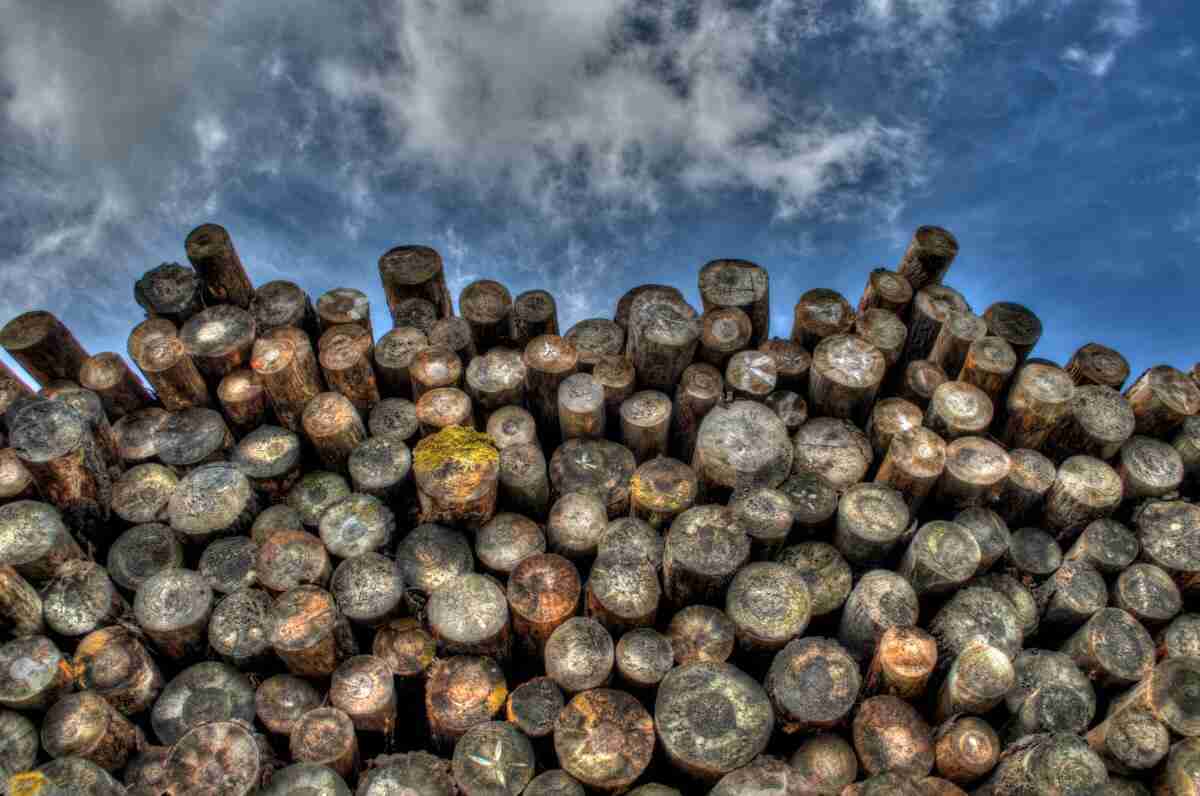
Little Known Facts About Trees

Written by Admin and published on https://www.aussietreesolutions.com.au/.

Trees have been a staple of the earth for more than 300 million years. They’ve served as food sources and housing for countless creatures throughout time. Trees have been shown to make us calmer, happier, and more creative. Of course, a healthy tree is likely to give a nice boost to our home’s value when it’s time to sell. But what about all the little-known facts about trees?

Interesting Facts About Trees

Trees are not only beautiful to
look at; they are essential to the existence of life. Trees produce
oxygen and absorb carbon dioxide, provide a home for teeming communities
of wildlife, give us timber for making an infinite number of products
and are in general, pretty incredible.

Here are some interesting things you may not know about trees.

  • Trees are the longest living species on earth – the oldest tree on the planet is thought to be over 5000 years old.
  • Trees help improve water quality by filtering rainfall.
  • There are over 60,000 known tree species on the planet.
  • Two mature trees can provide enough oxygen for a family of four.
  • Trees help to reduce noise, air and water pollution.
  • In a forest, trees can communicate through an underground mycorrhizal fungi network.
  • A large oak tree can drink over 350 litres of water a day.
  • Trees make us feel good. Studies indicate that being surrounded by
    trees can decrease your blood pressure, slow your heart rate and reduce
    stress levels.
  • Trees can help prevent soil erosion and flooding.
  • Mature trees are highly desirable and can significantly increase the value of your property.
  • Areas that have a high number of trees are thought to have less crime overall than those that are devoid of green spaces.
  • Dating a tree by studying its rings is called Dendrochronology.
    Interestingly, a tree’s rings don’t only reveal its age – they can also
    indicate the occurrence of natural disasters such as a volcanic eruption
    or a drought event.
  • The largest surviving tree in the world is said to be a giant sequoia (Sequoiadendron giganteum) called ‘General Sherman’ found in California, which has a Biomass of approximately 1487 cubic metres in volume.
  • The tallest trees in the world are the coastal redwoods (Sequoia sempervirens) – one particular tree called Hyperion in California is said to be over 115 metres tall!
  • Hospital patients with views of trees are reported to heal faster and spend less time in the hospital than those without.
  • The saying “knock on wood” comes from ancient pagan rituals where it was believed that good spirits lived inside trees.
  • Strategic planting of just four trees on your property can
    significantly reduce your energy bills – some say by up to as much as
    50%!
  • Trees are cool man. An area that is shaded by a tree can be much cooler than an area that is not shaded.

So, now you know how amazing trees are – why not plant one today?

Original post https://ift.tt/3kYuj7I.

from AAA Tree Lopping Ipswich https://ift.tt/2V3klaR
via IFTTT
Everything to Know About Pruning Your Tree

Written by Admin and published on https://blog.davey.com/.

Have you ever pruned your trees? Maybe you saw that the branches were becoming overgrown and thought it would be good to handle the matter yourself. As explained in this piece from the University of Minnesota Extension, “pruning is a horticultural practice that alters the form and growth of a plant.” Pruning can also be considered a strategy for preventive maintenance. Keep in mind that many problems can be prevented by correct pruning techniques during formative years for a tree or shrub. Keep reading as we dive deeper into tree pruning.

What is Pruning? The Importance, Benefits and Methods of Pruning

In the forest, trees are free to play by their own rules. They can
spread their limbs out, stretch their branches up as high as they’ll
grow, and send old, weak limbs down to the forest floor in a freefall.

The trees in our backyards and along our streets don’t have quite as
much freedom–and for good reason. Of course, we want our trees to look
natural while also ensuring they grow strong and don’t become a safety
risk.

…and that’s where pruning comes in! While you may have heard the term
and know it has something to do with trimming your trees, read on to
learn exactly what pruning is, why we do it and how it’s done.

What You Need to Know About Different Types of Pruning

What is the definition of tree pruning?

Pruning is when you selectively remove branches from a tree. The goal
is to remove unwanted branches, improve the tree’s structure, and
direct new, healthy growth.

What are the benefits of pruning?

Pruning is one of best things you can do for your trees. A proper
prune is both an investment in the long-term health of your plants and
in the overall look and safety of your property.

When you trim your trees, you get all these benefits!

  • Say farewell to dead, broken or damaged branches.
  • Save your property from potential damage from fallen branches.
  • When you remove old branches, you give trees the green light to put out healthy, new growth.
  • Train trees to grow on your terms so that branches won’t hang over the roof or stretch into power lines.
  • Give trees a clean, polished look that elevates your whole landscape.
  • Set the tree up with a good foundation for long-term health.

What are the different types or methods of pruning?

Different tree goals call for different tree trimming methods.

Here’s a breakdown of the most common types:

  • Reducing density removes limbs all the way back to
    their branch of origin. It’s a method used to free up a full canopy so
    that more sunlight can come through.
  • Maintaining health is like fine-tuning a tree.
    Simple cuts are used to clear out dead, diseased, and damaged limbs to
    give the tree a polished look.
  • Size management cuts reduce a tree’s height or
    width. This method typically shortens branches that are inching into
    utility lines or reduces a wide-spread tree.
  • Structural (subordination) cuts could involve one or more of the above methods to improve a plant’s structure and long-term health.

Original post https://ift.tt/2UMyCZg.

from AAA Tree Lopping Ipswich https://ift.tt/3fpIhOE
via IFTTT

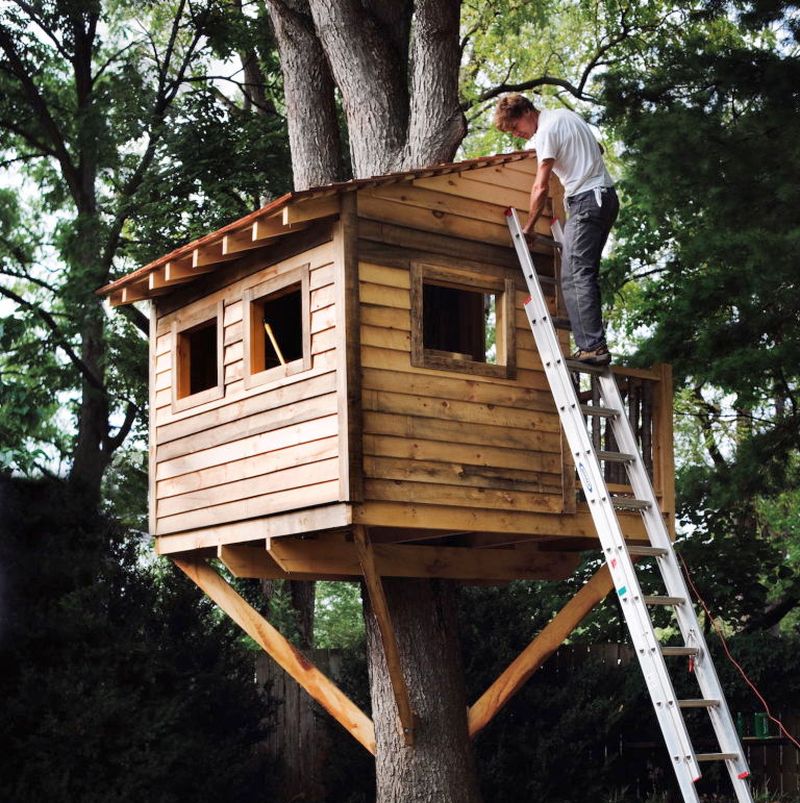
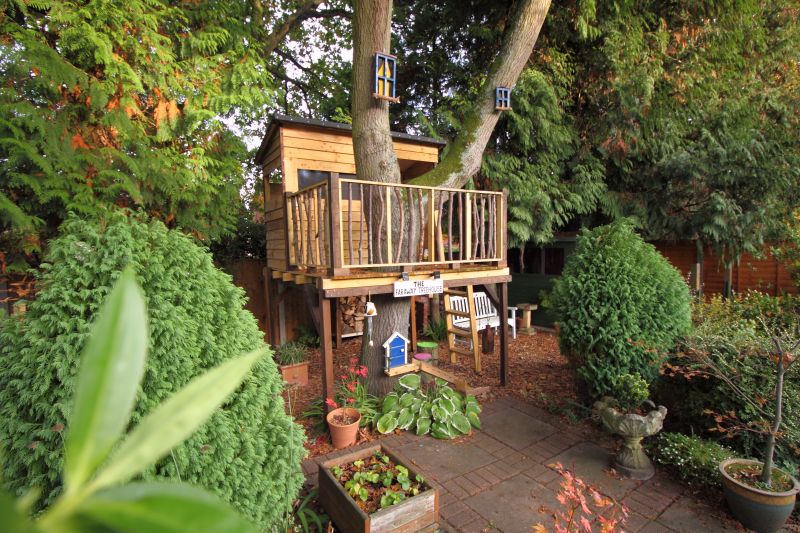
Tips for Building a Treehouse

Written by Megha Sharma and published on https://www.homecrux.com/.

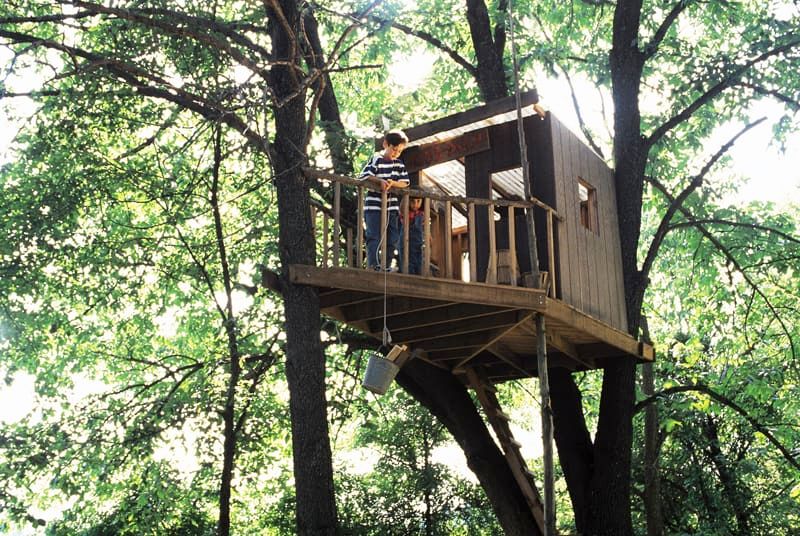
Did you ever have a treehouse as a kid? If so, then you had the freedom to immerse yourself in a completely different world. Maybe you remember the summer days in your treehouse, playing cards, reading books, and watching clouds. Recently, though, your child asked what it would take to build a treehouse. So you think to yourself, “Is it even possible?” The short answer is yes. The right tools coupled with a can-do attitude is all you need to build the treehouse of your child’s dreams.

5 Things you Need to Know Before Building a Treehouse

Do you sometimes get bored of living in your conventional family home? You may like the idea of building a small treehouse in your backyard to escape the normal life. Moreover, the idea will make your kids’ childhood memorable and fun-filled. Well, having a treehouse is no more a dream for your kids, as you can build one by yourself, keeping a few things in mind.

You don’t have to worry if
you don’t have a sturdy tree in your garden, you can still construct a
treehouse of your dreams using wooden panels for support. However, there
are a lot of things one should learn before building a treehouse. This
guide will tell you everything you need to know before making a safe,
long-lasting treehouse in your backyard.

Choose the treehouse design before cutting wood

Before
felling wood, it is important to think about the features you and your
children would like to have in your treehouse. Be clear, if you just
want to make it a playhouse for your kids or a rest house for your guest
with all important amenities to spend a night in. You should plan and
design the space you need in your treehouse, considering the size and
strength of the trees you have in your backyard.

Tips for Building a Treehouse

Involve a professional in planning 

It
is important to involve a professional from the very beginning in your
planning so that he can map if supporting branches and ground base is
suitable to carry the weight of your treehouse. Also, decide on the
space you need in your treehouse, as fitting the floor or platform into a
tree is the most difficult part of treehouse building. He will also
tell you about the material and tools you require to deck up the
structure the way you want.

Tips for Building a Treehouse

Choosing an ideal sight and sturdy tree

The
most important thing about building a treehouse is choosing an ideal
sight and a tree on which you want to construct it. Forget about the
ground for a while, the tree you are picking should be sturdy enough to
carry the weight of the entire dwelling. Well, it is not that your
ground does not play any role, as building a treehouse requires a solid
foundation. The ground should not be moist or uneven, and it should be
strong enough to bear the weight of the construction. Make sure the tree
you choose does not sway when it’s windy; this step will ensure your
treehouse stays firm in bad weather conditions.

Tips for Building a Treehouse

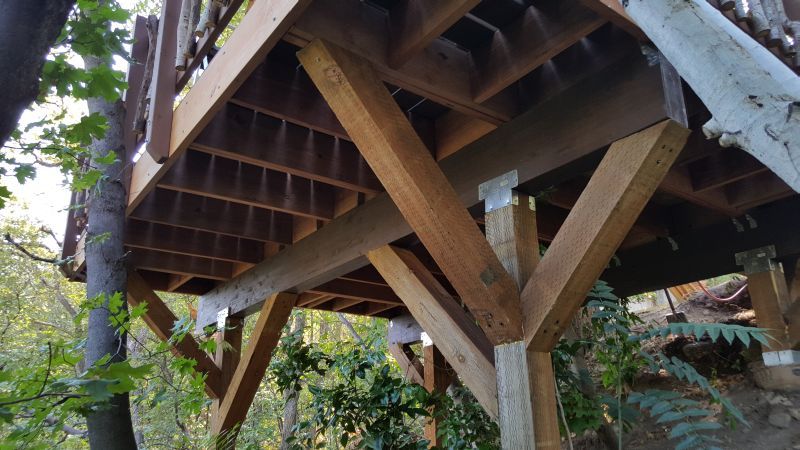
Consider a suitable method to support the treehouse

It
is also important to be aware of the different methods for supporting a
treehouse. Go with the one that can carry the weight of treehouse for a
longer time. There are mainly two types of treehouse supporting
methods, one is a rigid framework, and the other is floating framework
(floats slightly). Remember if your tree is not sturdy enough, you will
have to ensure there is proper support for dwelling by attaching
additional wood pallets or poles from the ground up.

Tips for Building a Treehouse

Bolting structure to the tree

Finally,
you must consider how you are going to join your house together with
the tree. Remember, trees are not happy with nails and screws, and
nailing a tree will only decrease its life. Instead of using nails and
screws use bolts and ropes to attach treehouse with the tree. Make sure
you are not placing bolts too close together (less than 12 inch), as
space in between two bolts can reduce strength dangerously due to
corrosion. Try to use the minimum number of joints to hold the
structure.

Original post https://ift.tt/3kjtW7n.

from AAA Tree Lopping Ipswich https://ift.tt/3fooOhF
via IFTTT

Do Treehouses Damage Trees?

Written by Admin and published on https://www.protreeservice.com/.

Today, we’re going to be looking at the impact treehouses can have on trees, as well as the methods by which we can reduce this impact.

Put simply, a treehouse will inevitably cause a certain amount of stress to a tree, and attempting to design a treehouse without sufficient understanding of tree anatomy can lead to problems. However, as living organisms, trees have ways of protecting themselves and recovering from damage. By understanding the mechanisms that a tree uses to protect itself, we at Blue Forest keep the impact on the tree to an absolute minimum, and cause little to no lasting damage.

Does Building a Treehouse Damage the Tree?

In our most recent blog post, we provided some tips for building a treehouse. Let’s consider a different treehouse topic now. Does building one do any sort of damage to the tree?

Keep reading to learn more.

Infections

Here’s the thing: bacteria and fungi
can have a negative impact on a tree. Over time, infections may cause
rot and even death. Keep in mind that a tree’s bark works to protect the
living layers underneath from such exposure.

If the bark is damaged in any way,
the tree becomes compromised. Basically, the living tissue is exposed
which increases the chances of infection.

How does this play into building a
treehouse? Well, avoid damaging the bark as much as possible. This might
seem like a small thing, but trust us when we say it allows your tree
to maintain good health.

Cutting the trunk or branches

It might seem like a good idea to cut
pieces out of the trunk so that supports fit better. However, this
exposes a significant amount of living tissue. Not ideal, right?

If you need to remove branches before
the treehouse construction, we recommend contacting a professional.
Again, the last thing you want is to put your tree in a lose-lose
situation just to make the treehouse work.

Bolts

Without question, bolts can wreak
havoc on a tree’s well-being. When it comes to fixing support, it makes
sense to fit a single, large bolt into a cleanly drilled pilot hole.

This decreases the number of puncture
points to a particular area and eliminates what tree experts call
compartmentalization. Maybe you’re thinking, “What the heck is
compartmentalization?” The short definition is when a tree becomes
damaged, it tries to reduce the spread of disease and rot by isolating
that particular section. Once a barrier layer grows around the damage,
nutrients no longer flower to the area (known as a compartment).  

Nails and screws

Trying to figure out how to fix the
supports? By no means should you turn to nails and screws. These should
be reserved for the flooring, framing, and wall panels only.

Slings, ropes, and cables

Have you ever seen anything tied
around the trunk or branches of a tree? Unfortunately, these
constricting objects will damage a large area of bark as the tree moves.

Granted, some trees have the ability
to grow over obstacles. But you’re taking a major risk when using
slings, ropes, and cables when building a treehouse.

What’s an effective alternative? We advise using webbing straps or slings because they put much less pressure on the bark.

A Tree Service You Can Trust

Now that you understand the kind of
damage a treehouse can do to a tree, what’s your next step? Frankly,
your best bet is to contact a local tree service. They will likely have
their own tips for constructing a treehouse without compromising the
tree’s health.

Pro Tree Service has been serving
Chicago and surrounding suburbs for nearly three decades. If tree
trimming is on your to-do list ahead of this project, we have you
covered.

Here are a few reasons why you might want to look into our tree trimming service:

  • Significantly dead, damaged, or diseased branches
  • Safety concerns (overgrown trees that may be encroaching on nearby properties, public-use spaces, and/or utility lines
  • Aesthetic concerns

There’s no question that tree pruning
requires utmost precision. Believe it or not, one innocent cut could
leave your tree in dire straits. That’s why it’s imperative to leave
tree care in the hands of the experts.

Pro Tree Service has been there and
done that. In this industry, new businesses seem to pop up out of
nowhere on a regular basis. What many homeowners don’t realize, though,
is that few of these businesses are properly licensed, insured, and
bonded.

At Pro Tree, we take pride in
ensuring a hassle-free experience for the customer. For one thing, there
are no hidden fees or gimmicks with our pricing. Plus, our operations
are open year-round.

Before getting started with your dream treehouse, we invite you to get in touch with Pro Tree Service. We handle everything from land clearing to tree removal.

Original post https://ift.tt/337kxtL.

from AAA Tree Lopping Ipswich https://ift.tt/3lW4Xc3
via IFTTT

3 Land Clearing Tips

Written by Admin and published on https://timberworksva.com/.

Take a long look at your residential
or commercial property. Are you really getting the most out of it? Or
are you limited in what you can do?

Here’s the thing: land clearing is the first step in making use of what might be a patch of unusable land at the moment. However, land clearing is usually anything but an easy task.

Land Clearing Tips

If you have a patch of unusable land that you want to make use of,
then land clearing is the first step in starting that project.

Whether you want to clear the land for a new house, a shed, hunting
trails, or just a yard, land clearing can be a monumental task.

Whether you have trees, brambles, furrows, rocks, or more on your land, we can clear it and make it usable for you.

Here are the top 3 land clearing tips from our professionals

Tip #1: Get Professional Help–Or At Least Equipment

The first thing to realize about land clearing is that it isn’t for the faint of heart.

Even on a small lot, the amount of work required to adequately clear land is enormous.

I can think of lots of do-it-yourself projects, but I have to be honest; land clearing would be either at the bottom of the list or left off on purpose. -excerpt from this article

While we strongly advise you to call a professional, especially for
the dangerous portions of the job, there may be cases where a DIY land
clearing job isn’t out of the question.

For most jobs, you will need, among other things:

  • Hand tools (shovel, pickaxe, crowbar, etc.)
  • Chain saw
  • Bulldozer / skid steer loader

Depending on the type of brush, trees, or rocks which need to be
removed, you can need anything from a couple of hours with a chainsaw to
several weeks are hard labor with a mid-sized excavator.

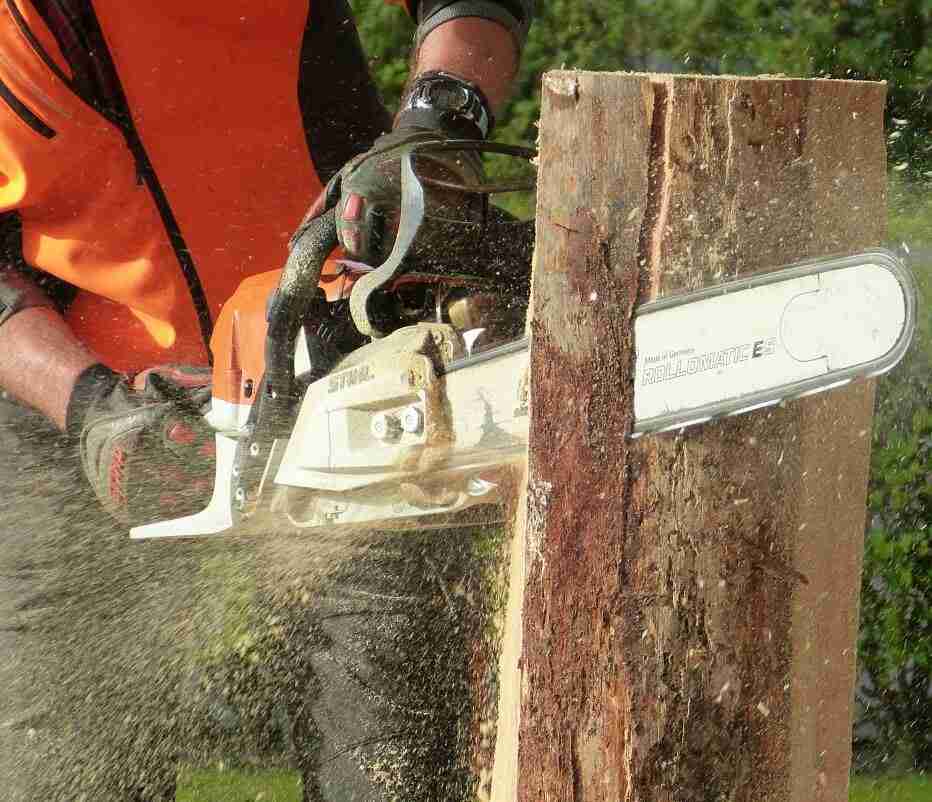
Chainsaw

Not only will you need a chainsaw with a sharp chain to fell the trees, but you will also need it to cut the tree into manageable logs to remove from the land you’re clearing. Make sure you have suitable training with cutting down trees, as it can be extremely dangerous. If you are even remotely unsure, call a local tree removal company.

Mid-Sized Excavator

If you’re clearing the land in order to use it, stumps cannot remain in the ground. Stump removal by hand is out of the question, and sometimes you have to clear land quickly, so you can’t use the rotting or burning methods. An excavator will do the trick. If you don’t have experience using heavy machinery, then be sure to call a professional.

Tip #2: Use The Trees, Don’t Just Timber Them

Before you clear your plot of land, be sure to inspect all the trees
for their value. If you have rare hardwoods on your property, there are
companies that will pay quite a bit of money to get their hands on that
wood.

If you have trees such as Eastern Red Cedar, Ash, or Black Walnut on your lot of a merchantable height, then you might want to consider timbering the land and selling the logs for profit to a timbering company. The price you will get for these logs depends on a variety of factors.

For non-valuable wood, there are several options. Some companies will buy it in order to grind it into wood chips to use for mulch or fuel. Additionally, some companies will purchase it to use for fuel in a wood-burning power plant. Or you yourself could use the wood for firewood!

Be mindful, though, that if you hire a company to remove the logs or a
timbering company purchases them from you, they will leave the leftover
branches for you to deal with yourself.

Tip #3: Get Your Permits

Land clearing is a very disruptive process to the environment, so it is important that it is done safely and responsibly.

In Virginia, if land clearing impacts wetlands or surface water, then a permit is required in order to clear land. Sometimes, an inspector from the Virginia Department of Environmental Quality (DEQ) will have to come out and approve your project.

Additionally, any land clearing projects which impact more than 2,500 square feet of land require a Land Disturbing Activity (LDA) permit, issued by the Virginia Erosion and Sediment Control Program.

Conclusion

If you think these land clearing tips have shown you that your
project needs more than just your set of hands involved, then don’t
hesitate to call a professional land clearing expert.

Timber Works Tree Care does it all: tree removal, stump grinding, and land clearing. Contact us with your questions, we will be happy to help you any way we can.

Original post https://ift.tt/3nMVWT7.

from AAA Tree Lopping Ipswich https://ift.tt/3nJPdJy
via IFTTT

Why Trees Shed Their Leaves in Autumn

Written by Jeanne Grunert and published on https://garden.lovetoknow.com/.

Autumn is a favorite season for many of us here in Chicago. After all, who doesn’t appreciate the cooler weather, football-filled weekends, and pumpkin-spiced everything? These aren’t the only reasons to appreciate fall, though.

Nothing beats going on a walk and noticing all the fall foliage around the city. But have you ever wondered why trees even shed their leaves in the first place? We answer that question and more in our latest post.

What Causes Plants to Shed Their Leaves in the Fall

What causes plants to shed their leaves in the fall? It is a complex
interaction among genetics, light and temperature. Starting in late
summer, many species of deciduous plants, including trees and shrubs,
turn brilliant colors and shed their leaves. To understand the mystery
behind this annual fall show is to uncover the magical factories inside
the plant’s leaves.

Factors That Signal to Plants That Fall Is Here

What causes plants to shed their leaves in the fall? The answer lies in the plant’s genetics and reaction to its environment.

Chlorophyll

Within each cell of a plant’s leaves is a substance called
chlorophyll. That’s what gives leaves their green color. The chemical
called chlorophyll interacts with water, carbon dioxide and sunlight to
create the simple carbohydrates plants need to grow and thrive.

During the spring and summer when sunlight is abundant and
temperatures are warm, the plants’ leaves contain plenty of chlorophyll.
It masks other colors or pigments found within the leaves. Depending
upon the plant, the leaves may contain varying amounts of two other
chemical pigments: carotenoids and anthocyanins.

Sunlight

As the summer days wane, the duration of daylight and the angle of
the sun’s rays change as the earth moves through space. Plants can sense
these minute changes day by day. As the days grow shorter, the lack of
sunlight starts to signal a slowdown of food production.

Temperatures

Along with less sunlight, temperatures begin to cool. As the
nighttime temperatures grow cooler, this also signals the plants to stop
or slow production of food. As chlorophyll production stops altogether,
the carotenoids and anthocyanins inside the plant’s leaves become
visible.

Falling Leaves

This combination of stopped chlorophyll production, less sunlight,
and cool temperatures acts like a switch within the plant’s genetic
system. It flips to the “off” position and signals the leaves to stop
growing and manufacturing food. First, chlorophyll production stops. The
masked anthocyanins and cartenoids are now visible, revealing the
leaves’ hidden coats of scarlet, crimson, ochre, and golden yellow.
However, as time goes by and no energy is produced in the leaves, the
plant releases them and leaves fall to the ground.

Leaf Differences in Evergreens

Deciduous trees and shrubs lose their leaves in the fall as a protective measure. Their leaves are tender, and cold temperatures would kill them. Water flowing through their tender leaves would freeze, stopping energy production. Evergreen trees and shrubs, or those that retain their green leaves through the winter, maintain a thick, waxy coating on each needle. This waxy coating protects the leaves against cold.

There’s a difference inside the leaves, too. Special chemicals act as a sort of antifreeze within evergreen needles to keep the liquids flowing through the plant from freezing. Thus evergreens can maintain their leaves (needles) throughout the harsh winter months while deciduous trees must shed them.

Original post https://ift.tt/372UogU.

from AAA Tree Lopping Ipswich https://ift.tt/35SiWtz
via IFTTT

The Best and Worst Trees For Your Yard

Written by Admin and published on https://blog.davey.com/.

There are countless benefits of having a tree in your yard. Not only do trees add a certain aesthetic appeal, but they save water, combat climate change, and even boost property values. But do you really know which one is right for your yard?

In this post, we thought it would be helpful to provide a list of the best and worst trees for your yard.

Let’s start with the ones to avoid:

The Best and Worst Trees to Plant Near a House (By Zone)

Young trees have a way of making our minds wander. One minute you’re
looking at a slender stalk with bare twigs, and the next you’re
imagining the tall beauty it will soon be.

And that’s a good thing! You want to envision just how big your soon-to-be tree will get and what that means for your home before you plant.

When you choose the right tree, you save yourself the future headache of roots damaging your home’s foundation or fallen leaves constantly at your front door. Make the stress-free choice by learning about the best and worst trees to plant near a house below.

How close can you plant trees to a house, anyway?

This question all comes down to tree size. After all, the wide-root
oak tree that’s 70 feet tall needs much more room than the modest
Japanese maple.

A good rule of thumb is to start at about 8 to 10 feet away from your
home for small trees and scale up to account for the tree’s mature
height and spread.

Worst Trees to Plant Near a House

The trees on this short list are deemed the worst because of their
widespread, invasive roots. These are just the top offenders, though!

Once you find a tree you like, do a little research to see how fast growing and destructive their roots could be.

  • White ash (Zones 2-9): A fast-growing shade tree with invasive, lateral roots that’s also susceptible to emerald ash borer!
  • Poplar (Zones 3-8): A tall tree with aggressive roots known for causing sewer and foundational damage
  • American elm (Zones 3-9): A full tree that has shallow roots that can disrupt your lawn, sidewalk or driveway
  • Silver maple (Zones 3-9): A tree with gorgeous, shimmery leaves that also has roots that often end up growing above the ground
  • Weeping willow (zones 6-8): A large shade tree that commonly invades sewer lines
  • Oak (Zones 8-10): A fast-growing, beloved tree notorious for causing foundational damage

Best Trees to Plant Near a House

These trees make the list because of their non-invasive roots or low-maintenance cleanup. Plus, it helps that they’re all beautiful trees!

  • Crabapple (Zones 3-8): A short, flowering tree that matures at about 20 feet tall. Be sure to pick a disease-resistant tree to avoid headaches later!
  • American hornbeam (zones 3-9): A slow-growing member of the birch family that’s small in size
  • Cornelian-cherry dogwood (Zones 4-7): An excellent small tree that puts on the best possible show of flowers when planted in front of a dark background
  • Japanese maple (zones 5-8): A popular scarlet-colored tree that’s ideal for planting at a curbside location or near a patio
  • Flowering dogwood (Zones 5-8): A delicate, flowering tree great for planting near walls
  • American holly (zones 5-9): A popular evergreen tree that’s low-maintenance

Original post https://ift.tt/3lWt4Hl.

from AAA Tree Lopping Ipswich https://ift.tt/2Hv2kPu
via IFTTT

Lifecycle of a Tree: How Do Trees Grow

Written by Admin and published on https://www.protreeservice.com/.

How does a seed become a tree? It seems like a huge journey so we’ve broken down the different stages in a tree’s life – from seed to snag.

A seed is a design used by trees for millennia to ensure the next generation of trees exists. Seeds have evolved into different sizes and shapes so they can be dispersed by wind, water or animals. Inside each seed is all the resources it needs to survive independently until it reaches a safe place to grow.

The Life Cycle of a Tree

It’s pretty amazing how a
tiny seed can eventually become a mature tree. In this post, we thought
it would be interesting to look at the different stages of a tree’s
life. Keep reading to learn more.

Sprout (Germination)

Every seed needs a safe place to
germinate. Basically, the primary root breaks through the seed, securing
the seed and providing water to the developing plant. Once this occurs,
the next stage in germination takes place.

Keep in mind that the shoot consists
of the shoot leaf and the two sections of the shoot located above and
below what are called cotyledons. Interestingly, the shoot can choose
how it develops. It can either grow from below the shoot leaf, pushing
the whole shoot up through the soil, or from above the shoot leaf,
pulling just the tip of the shoot up through the soil.

Seedlings

The shoot becomes a seedling once it
gets above ground. It’s during this stage when the tree is most
susceptible to diseases and damage. Up until the tree reaches three feet
tall, it’s considered a seedling.

Sapling

Curious what differentiates a sapling
from a mature tree? Well, let’s start with the fact that a sapling’s
trunk tends to be more flexible. Not only that, but a sapling’s bark is
often thinner and smoother.

So how long does a tree remain a
sapling? Frankly, it all depends on the species. For example, trees with
long lifespans such as oaks remain in this stage for much longer than
shorter-lived species.

Mature Tree

Once you notice a tree is producing
flowers or fruits, it’s entering the next stage of its life. Now, as
we’ve mentioned in previous posts, trees are hearty creatures. Let’s
take a closer look at just how long trees can live.

Take an English oak tree, which might
not produce acorns for 40 years. Fun fact: Oaks can be productive for
300 years and then rest for another 300 years before reaching the next
stage in their life cycle.

Ancient Tree

It’s impossible to label ancient
trees by their age. So what identifiable characteristics allow you to
tell if a tree is beyond maturity? Two giveaways are a small canopy and a
wide trunk.

Now, a tree may be called ancient
when it’s in its early hundreds like rowan or when it’s thousands of
years old like yew. It’s all species-dependent.

Decaying Tree (Snag)

A tree in the final stages of life is
called a snag. Both dead standing trees and dying trees fall into this
category. But don’t think that a dead tree has no use to the environment
whatsoever.

In fact, dead wood provides homes to
insects and a food source for bats, birds, and other small mammals. Of
course, such creatures also rely on dead trees for shelter during
storms.

The Leaders in Tree Removal

At Pro Tree Service in Chicago, we
love trees just as much as you do. Unfortunately, there comes a time
when tree removal might be the only option.

Do you notice natural splitting or
cracking at critical parts of the tree? Is there damage from wind gusts
or lightning strikes? Lastly, has your tree become a safety hazard to
you, your family, or your neighbors?

In any of these cases, tree removal makes sense. But with so many local tree companies to choose from, how do you know which is best? Well, you can feel comfortable knowing that Pro Tree Service has been Chicago’s choice for tree removal since 1989.

Whether you need us to remove a few
small bushes or an entire tree, you can count on us to get the job done
right. Plus, thanks to our Best Price Guarantee, there’s no need to
worry about tree removal breaking the bank. Just come to us with any
reasonable, written estimate and we will match or beat it by 10 percent.

Original post https://ift.tt/3kW8N3k.

from AAA Tree Lopping Ipswich https://ift.tt/3pQ4vhR
via IFTTT

Top Qualities of a Tree Services Company

Written by Admin and published on https://www.protreeservice.com/.

Tree removal services can ensure the health and safety of your family, as well as your neighbors, by getting rid of sick or dead trees. Therefore, choosing the right company to perform these services is crucial.

Unfortunately, not all tree service companies are the same. As a homeowner, you need to know what to look for in a tree removal company, so that you can get a high-quality service. Here’s what you need to look for.

Qualities of a Reputable Tree Service

Do a quick online search and you’ll
see there are a number of tree services in the Chicago area. With so
many options to choose from, how do you know which one is right for your
project? Let’s dive into some of the qualities of a reputable tree
service.

Experienced

We’ve touched on this in previous posts, but it’s worth mentioning again. There are times when you can maybe get away with hiring someone who doesn’t have much experience. Trust us when we say this is not one of those times.

Tree care requires extensive
experience to ensure the health of your trees. Not to mention, you need
someone who’s been there and done that to properly use the heavy-duty
equipment and precise tools. Don’t make the mistake of hiring an
inexperienced tree care specialist — opt for a seasoned professional
instead.

This is where Pro Tree Services comes
into play. Serving Chicago and surrounding suburbs for four decades,
we’ve seen just about everything imaginable with trees and bushes. Let
us put our experience to work for you!

Licensed, bonded, and insured  

You’d be surprised by the number of
tree maintenance experts who are not properly certified. Even in 2019,
when virtually everything about a business can be found online, people
are still trying to scam their customers.

Maybe you’re asking yourself, “What
difference does it make if a tree service is licensed and insured?” In
short, a tree care company that is licensed, bonded, and insured can
legally provide the services listed on their website. Of course, there’s
also a liability factor involved — if one of the workers is injured on
your property, the company is the responsible party and not you.

There’s no need to worry about running into an unexpected licensing or insurance snafu with Pro Tree Service. We are a fully licensed, insured, and bonded company, meaning we can legally perform tree removal, tree trimming, land clearing, and more.    

Customer-focused 

A tree care professional, similar to
home contractors, should go above and beyond to earn your business. This
means providing a detailed, written estimate, answering any questions
you may have, and cleaning up when the work is done. Why would you give
your hard-earned money to a tree service that cuts corners, does the
bare minimum, and fails to communicate with you throughout the process?

Here at Pro Tree Service, the
customer has been a top priority since we opened our business over 40
years ago. Whereas other tree care companies see their customers as just
another number in their queue for the day, we take the time to ensure
that every customer feels at ease regarding the entire process. You can
expect Pro Tree to treat you like family, regardless of the scope of
your project. 

Knowledgeable

This ties back to the aforementioned
point regarding experience. The longer a tree service has been in
business, the more knowledgeable they are. With a project as big as tree
removal, it’s imperative to hire someone who understands the industry
inside and out.

Pro Tree’s knowledge of the industry
is evident the first time you contact us. It’s our belief that the more a
customer is informed about tree care, the more comfortable they will be
working with us. 

Affordable

A major reason why homeowners put off
tree care is that they’re worried about the cost. Here’s the thing:
while it might not be cheap to have a tree removed, it shouldn’t break
the bank. Yet many local tree maintenance companies gouge their
customers with unfair, outrageous prices.

Pro Tree Service, on the other hand,
is committed to providing top-notch service at the most affordable
rates. With our Best Price Guarantee, we will match or beat any
reasonable, written estimate by 10%. You won’t find that kind of offer
anywhere else!

Original post https://ift.tt/3fopxzb.

from AAA Tree Lopping Ipswich https://ift.tt/3fpAqRa
via IFTTT

Benefits of Tree Trimming and Pruning

Written by Admin and published on https://mmtreecare.com/.

We love our trees, but sometimes we don’t do enough to show it. The reality is, most people don’t consider professional tree trimming services until overgrown or damaged branches jeopardize the safety of their property. Tree trimming and pruning services aren’t meant to be rescue operations, and they provide many benefits for trees and property owners, alike. In today’s post, we are going to discuss four benefits of tree trimming and pruning. If you are looking for professional tree care, Pro Tree Service is here to help. We offer fully licensed, bonded, and insured tree care services for our residential, commercial, and municipal clients.

The Benefits of Tree Trimming

Why is tree trimming and pruning important? Trees are the ornaments
of our yards, and homes for a variety of birds, squirrels and other
critters.  Trees embody growth and life, giving us peace, comfort, shade
and shelter.  When we take the care of trees seriously, we are
preserving their beauty and protecting the creatures that call them
“home.”  Trimming may seem like a minor detail in the grand scheme of
tree care, but it is more essential than you may think.

Types of Tree Trimming & Pruning

There are four main types of tree trimming:

  1. Fine Pruning:  Removing small limbs to improve the tree’s appearance.
  2. Standard Pruning:  Heavier cutting to enhance the tree’s branch structure.
  3. Hazard Trimming:  For trees that pose safety concerns.  Typically, branches that are two inches or more in diameter are removed.
  4. Crown
    Reduction Trimming:  Removal of major branches, and should only be done
    when there is significant storm damage, dieback, or when branches
    interfere with power lines.  In these cases, no more than one-third of
    the tree’s crown should be removed.

Benefits of Trimming Trees

Here are 6 benefits of tree trimming and pruning:

  1. Proper trimming improves tree health by eliminating
    dead or dying branches.  These branches are often somewhat dangerous, so
    removing them reduces the risk of harm to your family and damage to
    your property.  It also prevents further decay.
  2. Trimming
    improves the overall appearance and structure of the tree, which
    prevents the development of broad or weak branches.  It also keeps limbs
    from growing with weak crotches, or even crossing each other and
    competing for space in the crown.
  3. Tree trimming increases sun
    exposure and air circulation throughout the tree and underlying
    landscape, which improves the tree’s overall health.  (There is a
    condition known as sun-scald that affects leafless deciduous trees in
    the winter.)
  4. The pruning of fruit trees improves the size and
    quantity of the crop.  Fruit trees should be pruned in later winter for
    shape and to expose the center of the tree to sunlight. 
  5. Newly planted trees should be pruned to compensate for root loss and to begin training the tree for shape.
  6. Tree trimming and pruning can also open up your property and improve your view.
Pruning trees and bushes

Original post https://ift.tt/3pRgNXf

from AAA Tree Lopping Ipswich https://ift.tt/35TFbzF
via IFTTT