Mites are minute, plant-feeding arachnids that feed on chlorophyll, the pigment that gives plants their lovely green color. By removing chlorophyll, mites can cause plant foliage to appear bleached or bronzed. Because mites reproduce rapidly, damage to healthy foliage can occur within a relatively short period.One sign your plants might have mites (before a lot of damage is done) is webbing on and between leaves. A particularly damaging mite is the twospotted spider mite (Tetranychus urticae), which affects numerous species of broad-leaf trees and shrubs. Hot dry weather seems to increase mite populations, and drought-stressed trees are more likely to be attacked.
How to Identify, Manage and Prevent Spider Mite Damage
Identifying Spider Mites
Spider mites are plant-eating mites that look like tiny spiders. In cool climates, they spend the winter resting in soil, while in warmer regions, they live and feed year round.1 Most active in dry, hot conditions, spider mites use their needle-like mouth parts to feed on fluid extracted from individual plant cells. While they don’t bite humans or pets, these relatives of spiders and ticks can harm indoor and outdoor plants.
Because spider mites are pests to over 180 types of plants,1 gardeners and indoor plant enthusiasts are likely to encounter them sooner or later. Landscape plants, fruits, vegetables and herbs are susceptible to spider mites.
When present in the garden, lacewing larvae, adult ladybugs and other types of predatory insects can help control smaller mite populations.2 Houseplants, as well as hydroponic plants (plants grown indoors in water, not soil),3 are prone to spider mites because there is usually low humidity inside a home. Whether the problem is indoors or out, recognizing the early signs of spider mites can prevent infestations and keep your plants healthy.
Spider mites are so small that you need a magnifying glass to see them clearly. At less than 1/20 inch long,4 female mites are larger than the males. To the naked eye, they look like tiny moving dots, but the webs that spider mites spin are much easier to see. These webs distinguish spider mites from other type of mites and other microscopic pests, such as thrips and aphids, that can infest plants.4 When webs are noticed and tiny holes are visible in the foliage of plants,2 spider mites are present and feeding.
Before bringing houseplants inside for the winter, and before planting landscape plants, carefully check stems and leaves for webs and look at the undersides of leaves for mites. Check hydroponic and indoor plants at least once a month for signs of spider mites.
Managing Spider Mites
While beneficial insects can help control spider mites, mite populations large enough to create visible plant damage require immediate attention. For infestations of spider mites on outdoor plants, use Worry Free® Brand Insecticide and Miticide Ready to Use Dust. This product recommended for use on all types of plants; on edibles, it can be used up to the day of harvest. For decorative plants and hydroponics kept indoors, take plants outside to treat with Worry Free® Brand Insecticide and Miticide Ready to Use Spray. Spray the tops and bottoms of leaves and allow the product to dry before bringing plants back inside. Both products are naturally derived from chrysanthemum flowers and are effective on 250 types of insects.
Dealing with Spider Mite Damage
Plants with mite damage to only a few leaves will recover quickly and without special care, but those with more significant damage will become stressed and require extra attention. Make sure that all plants get the necessary amount of sunlight for the variety. Keep soil moist, but not soggy, and feed plants a quick-release fertilizer, such as Alaska® Fish Fertilizer 5-1-1, which gives plants an immediate nutrient boost. Until the plant starts producing new, healthy leaves, avoid transplanting or making any major changes to the plant environment.
The earlier you discover spider mites on your plants, the more quickly the problem can be resolved. With the help of Worry Free® Brand Insecticide and Miticide dust or spray, even large infestations can be managed.
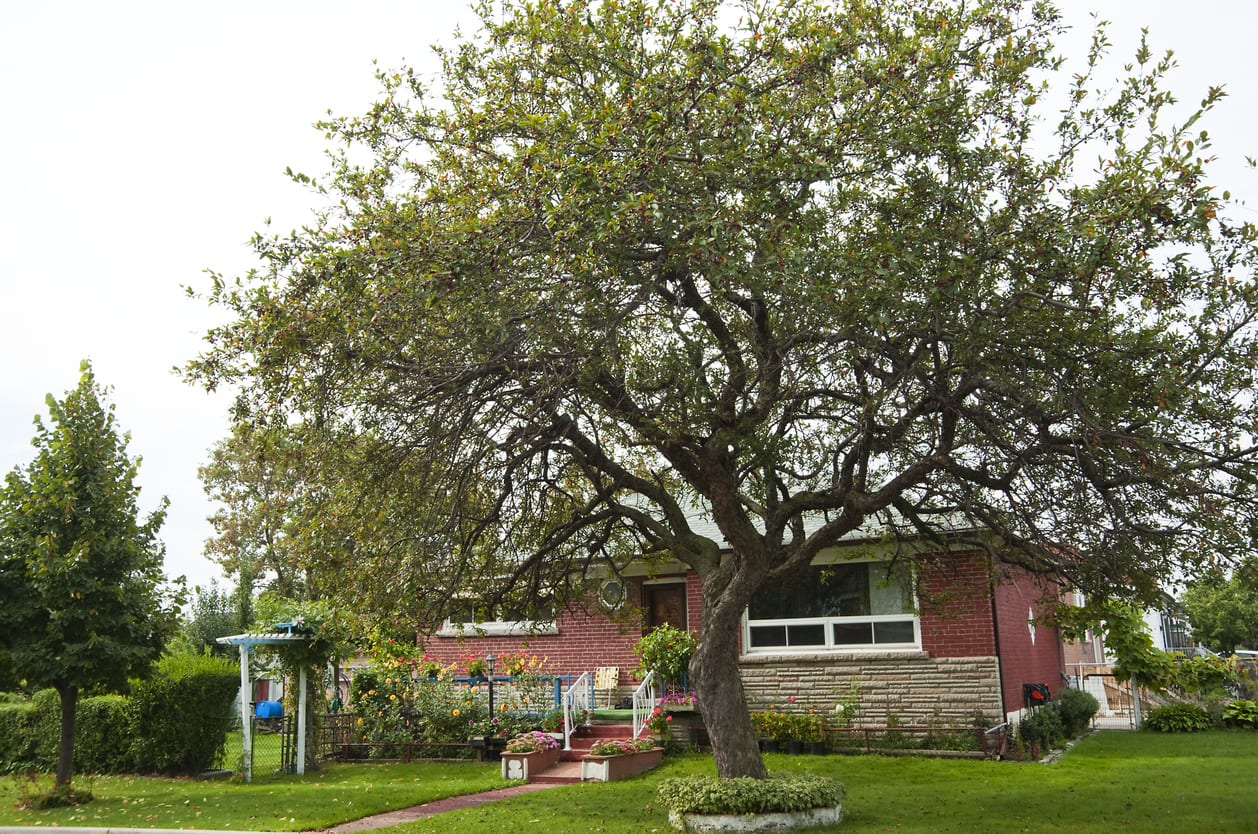
Everyone loves the look of a majestic tree in their front yard. They not only provide shade and beauty, but they also supply us with much-needed oxygen. But when they’re planted too close to the foundation, they can cause foundation problems. Sometimes, tree root damage can mean thousands of dollars in repair costs to buildings, plumbing systems, and pavements.
Can Tree Roots Damage Your House Foundation?
Trees growing near a home are often a source of worry to a homeowner, mainly because of the roots. And while tree roots can do damage to a home’s foundation, it’s probably not for the reason many believe. Those roots, in fact, won’t be able to push through the foundation, buckling it in spots. Rather, roots can rob the soil near the foundation of crucial moisture. Soil subsidence and loss of key foundation support then develops.
Foundations
House foundations depend on the surrounding soil for support to keep from bowing outward, for instance. Ideally, the soil was dense to begin with and then compacted when the foundation was laid, but it may not have been. Some soils have a lot of sand, which can mean they need moisture to maintain their solidity. When they’re deprived of that moisture, they can start settling, leaving the foundation in that area with less support.
Roots
The roots of a tree just aren’t able to push their way through foundation walls and are often easily turned away by simple barriers. However, they do remove a lot of moisture from adjacent soil. Also, as they grow larger over the years they can further loosen soil, heaving some of it out of their way. As a result, a pressure imbalance develops between the soil and the foundation, leading to outward bowing.
Location
In many cases, tree root systems that have managed to create soil settling or subsidence are within 16 feet or so of a home. Remember that tree roots grow outward to search for water. If you keep any trees, bushes and shrubs near your home properly watered, there’s little chance of them creating problems. Usually, those within 20 to 30 feet of your house will benefit the most from regular watering.
Warning
House foundations act as effective root barriers. However, roots will continue to search for water. And they may go after your underground water pipes if there are any leaks. Also, certain species of tree are more thirsty than others, especially if they’re larger types. These include oaks, which have extensive root systems. If you plant a tree near your house, try for at least slightly farther away than half the width of its maximum branch spread at maturity.
Factors such as frost and decay can cause you to have a newly fallen tree to clean up. You may be wondering, therefore, where to dispose of fallen trees. There are a variety of options to choose from, and you really just need to pick the one that works best in your area. First, however, here are some things to consider.
The Best Way to Get Rid of a Fallen Tree
Trees can fall suddenly for many reasons. Thunderstorms, tornadoes and hurricanes, even earthquake activity or wildfire, may contribute to toppling them. Sometimes they merely get old and fall apart naturally. Establishing the reason a tree falls is important, because most municipalities offer some removal aid in cases of natural or widespread disaster, while a rotten tree on your own property will likely be your problem alone. Start by determining where the responsibility for the tree lies before deciding what to do about the tree.
Determine Responsibility
If you live in the city or suburbs, you see trees along streets or in parks and public areas. Those trees are almost always maintained by the city or in some instances by county or state agencies. If a tree from one of those areas falls on your property, call your local officials to identify the responsible agency, then arrange with them for getting rid of it. If you are uncertain whether a tree is on your property, a public property or your neighbor’s property, consult your title survey or plat map. If the tree is definitely yours, you must remove it yourself or consider paying someone to do the job for you.
Firewood
Having a tree on the ground in your yard may seem like a disaster, but looked at in a positive light, it can be a boon. If you heat your home with wood or own a fireplace, you know that buying firewood is expensive. Think of your fallen tree as almost-free firewood — you still have to pay for a chain saw and fuel to power it. If you don’t need firewood, you can still save some of it for the backyard fire pit and sell the rest to someone who does use it. Better yet, save the hassle and expense of cutting it up yourself by offering it free for someone else to cut and haul. Do consider potential accidents, however. If your insurance policy doesn’t cover such things, make sure the person who does the cutting is clearly covered by his or her own policy or bond.
Landscaping
Depending upon your landscaping design, a large fallen tree — especially its trunk and bigger limbs — could be an asset. A section of the trunk situated in a woodland setting makes a wonderful natural bench, or you can cut short logs about 2 feet long to use as rustic stools. Another somewhat taller section makes a sturdy base for a garden table — all you need is a salvaged tabletop. Put branches in a brush pile to attract wildlife to the garden, or use appealingly shaped branches as accents for a rustic fence or an informal wildflower bed. Nature loves an old rotting log, so even if you don’t want it for your own use, consider letting it decay in an out-of-the-way corner as a home for insects, voles or chipmunks.
Lumber
Some trees are more valuable than others. If your tree is old, rotten or of poor quality, use it for firewood or brush piles. But if you are lucky enough to have a mature walnut, cherry, redwood or other furniture-wood tree in reasonably good shape, think about hauling workable sections to a mill for cutting it into lumber. Alternatively, rent a portable lumber mill, or hire someone to operate one for you, and mill the wood onsite. Season your lumber, and set it aside for future wood-working projects. To learn which wood has lumber value, contact your state forestry or conservation department or contact the U.S. Forestry Service and ask them to direct you to local forestry information sources.
Safety
Never operate a chain saw or other power equipment, such as a chipper-shredder, without a thorough knowledge of the operation of these dangerous tools. Always wear safety gear such as steel-toed boots, chainsaw chaps and gloves, and safety goggles, helmet and hearing protection. If you do not understand how to properly use a chain saw, don’t. Hire a professional.
Trees are frequently removed by cutting near the base of the trunk; this is commonly known as Tree Felling. This form of tree removal is physically challenging and can be dangerous if the process is not adequately planned and executed. In this article, we discuss tree felling and the importance of proper tree selection, inspection, work positioning, and tree felling techniques. The experts at Robson Forensic are frequently retained to investigate injuries and deaths involving tree felling operations. Experts involved in these matters may include structural engineers, materials scientists, or board-certified master arborists.
Felling a Tree
Felling a tree can be done safely by preparing carefully and cutting correctly.
Anyone can bring down a tree safely by preparing carefully and cutting correctly.
Cutting down trees can be dangerous work, especially in yards with buildings and power lines nearby. Even if you are cutting firewood out in the forest, you should prepare carefully before you begin sawing. Trees don’t always fall exactly where you intend, and if they bounce off neighboring branches, you could be injured if you are standing too close. Wherever you are cutting down a tree, having someone along to help or just watch is a smart thing to do.
To do the job well, you’ll need to establish a comfortable work area. First, clear out a place around the tree where you can get a firm footing and have enough space to work with a chain saw. Lop off any lower branches in your way. Before making any cuts, walk around the tree and study it. Are you sure this is a tree you want to eliminate-is it a nut or fruit tree; does it have nests in it; is it a rare species.
Judging the Fall
Once you have decided which tree to cut, think about where the tree will naturally fall. Which way is it leaning? Stand back and hold an axe in front of you by the tip of the handle. The handle will be plumb (straight up and down) because of the bottom weight, and by sighting along the handle, you can determine the lean of the tree. This is the most important indication of which direction the tree will go.
Next, look at the balance: If there are too many heavy branches on one side, it may pull the tree over to that side. Pay close attention to the top of the tree; if it is nodding in one direction when the wind blows, this will influence the way the tree will fall.
Check the trunk at about waist height-where you will be cutting-for rot. Look for holes in the trunk of the tree. Several large, dead branches on the tree may signify interior decay. Any rot can influence the direction the tree will fall. If you have reason to believe there is considerable rot in the trunk of the tree, get the advice of an experienced tree cutter before proceeding.
These four factors-lean, balance, wind and rot-will give you a good idea of where the tree will land. With that in mind, look for a clear space, or bed, into which to drop the tree, where it won’t damage anything valuable or get hung up in the branches of another tree. Never try to drop a tree up a steep slope-it could kick back at you when it hits the ground.
You now know where you want to drop the tree and where the tree wants to fall. But do you both agree? If you and the tree are within 45 degrees of each other, you can proceed without any special cuts. If you are unsure of where the tree will fall, you can direct it by tying a rope or cable as high on the tree as you can reach. Either make certain the rope is long enough that whoever is pulling does not end up under the tree, or put the rope around a tree out in front of the spot you want your tree to fall, so that your helper can pull from the side at a 90-degree angle. Also, create two escape routes so you can move away quickly as soon as the tree begins to fall. Fix the routes firmly in your mind.
Dropping a Tree
When you first try felling a tree, be prepared for the possibility that you will drop a tree in the wrong direction. Learn from your mistakes and eventually you’ll master the craft.
For small trees up to about 6 inches in diameter, you do not need any fancy cuts. When you have cut about three-quarters of the way through the tree, you can usually stand to one side and push the tree over into its bed. Pushing with a forked stick is particularly effective.
The traditional way of felling bigger trees is with an undercut and a back cut. It is possible to use an axe, but also dangerous. Chopping tends to dislodge weak branches, which can fall on your head, and the lack of precision with an axe cut makes it harder to predict where the tree will fall. Using a saw-such as a chain saw or tubular-frame bow saw-will make it easier to predict where the tree will fall, but you must exercise caution with these tools, too.
The undercut is the first cut you will make. It should be made on the side where you want the tree to fall. Begin at waist height with a horizontal cut, continuing to about one-third the distance through the tree. Pull out the saw and begin another cut, angling it downward, far enough above the first to cut out a 45-degree wedge of wood.
Make sure the horizontal cut is perpendicular to the direction of the fall. You can check this with a handmade sighting stick or with a straight-handled double-bit axe. Facing the cut, insert the axe head into the wedge, resting it on the flat, first cut. The handle then should point in the direction you want the tree to fall.
Once you are certain that the undercut is correct, you can begin the final cut, also known as the back or felling cut. Go around to the other side of the tree, opposite the undercut side, and saw into the tree about 2 inches above the base of the undercut. Keep the cut horizontal; don’t angle it down. Keep sawing, while paying careful attention to the hinge-the piece of uncut wood between the back cut and the undercut. The tree will topple before the saw cuts all the way through, and how it falls will depend largely on the hinge. As you saw, try to keep the hinge uniformly thick. If it is uneven, the tree may tear from the thin end of the hinge while hanging back on the thick end, causing the tree to twist and fall in a different direction than you planned.
In addition to the hinge, keep a close watch on the kerf-the space that the saw leaves behind as you cut through the trunk. This space will give you your only advance warning of how the tree is going to fall. When you get about one-third of the way toward the undercut, you should notice the kerf getting slightly bigger. Good! This means the tree is beginning to lean toward the undercut, which is where you want it to go. Keep sawing-but never cut all the way through the hinge-until you hear the crack as the tree leans enough to break the hinge. Remove the saw and back off quickly.
If you notice that the kerf is closing up instead of getting bigger, you have misjudged the lean or the balance of the tree and the tree will fall nowhere near the direction of the undercut. Don’t just keep sawing in the hope that the tree will change its mind; trees don’t change their minds. If you keep sawing, the kerf will eventually close up, trapping your saw. Before this happens, remove the saw and have your helper put tension on the rope attached to the tree to pull it over in the right direction. Or put some wedges into the final cut to open the space; saw a bit more and then knock in the wedges a bit further until, as the tree is weakened, its top is shifted in the right direction. If you opt for this method and you are using a chain saw, be sure to use wooden or plastic wedges and not metal ones that could damage the chain’s teeth.
It is possible that the hinge will get thinner and thinner, but the tree will give no indication of which way it is heading because it is balanced on the hinge. It may fall one way or the other; or with no hinge to guide it, the tree may slide off the stump and kick out at you. When you notice this happening, stop sawing and use ropes, a pushing stick or wedges to get the tree down.
If the tree does not fall completely, but instead gets caught in the branches of another tree, there is only one safe way to dislodge it-wrap a cable around the butt end and use a winch, come-along or truck to pull it free. Or just leave it in place, and do not try to cut it down. Eventually the weight of the tree or wind may dislodge it; until then, avoid walking under the tree.
Always take your time and think through each step. You can minimize injury by paying careful attention and stopping if you are tired or confused. With practice and patience, you can learn to fell a tree safely.
Tree care work, in general, is hazardous, but tree removal is especially dangerous. Successfully felling a tree requires knowledge of tree physics, biology, dangerous tools, advanced cutting techniques, and more. Homeowners who attempt their own tree removal may be injured by falling limbs, malfunctioning equipment, or the tree itself.
Hazards of Cutting Trees
Keeping your property neat and beautiful sometimes necessitates the removal of a tree. Before you prepare to do so, however, make sure you know how to go about it in the safest way. Cutting down a tree poses many hazards that can be avoided by using proper techniques and observing safety precautions.
Falling
When cutting down trees, it is sometimes necessary to remove branches first. Perhaps the most obvious danger of working at heights is that of falling, especially if you are bending away from your center of gravity or using unwieldy tools. When using ladders, tie them to the tree you are working on securely before bringing up tools or beginning work. If you are high enough up that a fall to the ground could injure you, wear a fall-arrest harness attached to a thick, healthy branch with no signs of rot or cracking.
Being Hit By Branches or Trunks
As cutting down trees necessitates removal of branches and eventually the entire tree, you risk being hit by either. Have a helper assist you in bringing branches safely to the ground from upper heights, and remove all branches possible from ground level. When felling a tree, cut a third of the way through the tree parallel to the ground and then downward at a 60-degree angle to meet the inward end of the cut, creating a wedge. This will ensure that when you cut from the other side, the tree falls in the direction of the wedge.
Electrocution
Many trees are near power lines, and that puts you in danger if you need to remove them. Be especially careful when branches have grown out of control near telephone poles or power lines. Call the power company first to see if the lines can be shut off, or if they can ground out the lines or insulate them with blankets for you. Even so, take precautions so that you do not accidentally touch a line while working, as you can never be sure it is off.
Tool Injury
Although a chainsaw makes the work of cutting down a tree much easier, it is also a dangerous tool. Read the directions before you use it the first time and check that all is in order before each use. Manually remove anything that could cause the chainsaw to kick back at you, such as a nail or piece of rebar. Never cut directly overhead with a chainsaw, as you cannot always control its movement and don’t want it near your face or in a hard-to-control position.
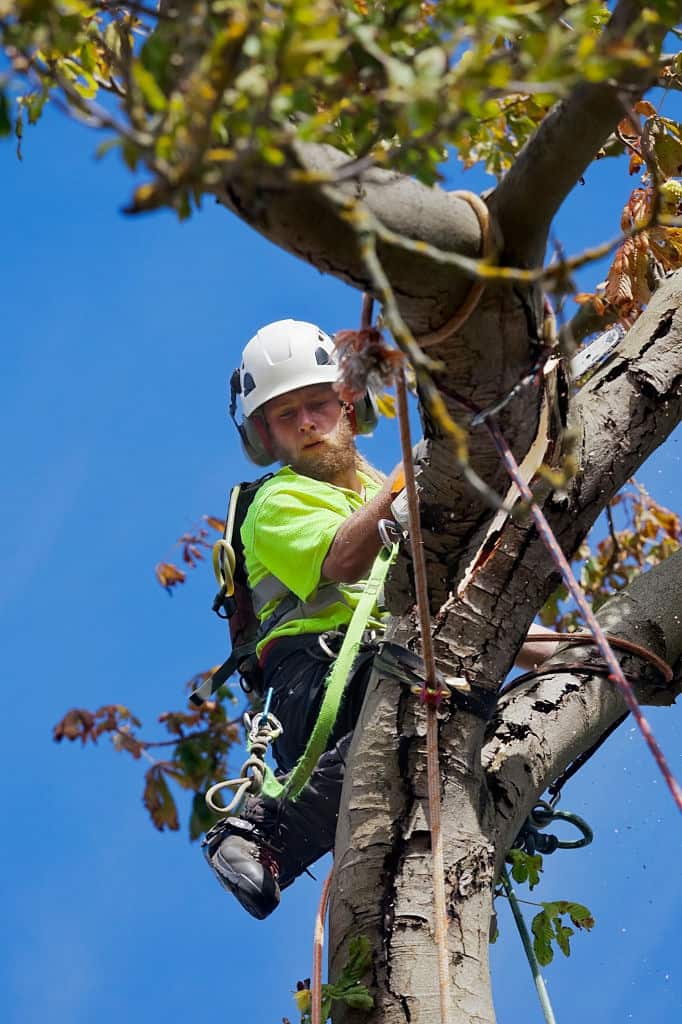
Tree trimming operations require climbing and pruning, often with portable power tools like chainsaws or trimmers. You may have to use an aerial lift to reach tall branches, putting you at risk for falls (or electrocution, if you’re near power lines). In fact, the two leading causes of death while tree trimming are falls from heights and electrocution, so extra training is needed before working at heights or near power lines.
The Benefits Of A Potential Tree Removal Company Service.
Tree pruning is a horticultural practice that involves all the removal of some certain parts of a plant such roots, buds, or branches so as you can shape, removing the deadwood, improving and maintaining health, and increasing the quality and quantity of a plant. Nowadays tree removal is considered a very simple job as many people will get rid of the unwanted trees and branches without any problems and with doing this activity, it becomes a very advantageous way of making your property clean. You will come to find out that you will require hiring a company service in the process of tree removal and pruning so that it will undertake the task with great care and fast so that it can save you many resources.
However, hiring a removal service company is very important because it will save you a lot of time because this company will have experience and knowledge of how to work well hence having the best machines which will make the work easier and time-saving. Hiring a company service will help you minimize the effort you could use when cleaning the firm and thus will save you time and money which you could pay people to clean the land after you have removed all the trees and branches. Having house insurance is very important because these trees will tend to destruct constructions like sewers of your house and instead of using a lot of money to repair these structures, the company will do all the work due to the insurance cover. The hired service will also make sure that your firm is clean as you know that overgrown and unwanted large trees will shed many leaves providing an unattractive look but cleaning the firm will improve the overlook of your landscape.
Nevertheless, tree services will get rid of the branches of the overgrown trees, and this will enhance a better preventive of injuries because they will not fall on you as you go round the firm for surveying and ensuring the firm is well taken care of. Tree services will continually make certain which you, your home and the structures surrounding you’re very stored through casting off all the overgrowing trees and also making sure that the growing bushes have the potential to face up to any situation together with the wind that could make it fall. Lastly, a reputable company service will make sure that safe by removing all the unwanted trees rather than saving you money and time thus guiding and encouraging you on the importance of trees.
This pruning type is referred to as cleaning. For new plantings, see our page on the structural pruning of young trees.
Thinning and raising are two types of mature tree pruning that should be performed periodically to improve the form and shape of the plant, to eliminate interference with objects and structures, and to compensate for structural weaknesses. Research shows that thinning, the removal of live branches to reduce density, significantly reduces wind resistance and subsequent storm damage. Pruning of lower branches, know as raising, also can be used to increase the amount of light for turf grass and ground covers beneath the crown of a tree. Bartlett arborists are trained to evaluate the condition of your trees and determine the type(s) of pruning required to balance your goals and those of managing plant health and safety.
Tips for Pruning Mature Trees
Tree pruning is important at any stage of a tree’s life. Pruning
mature trees takes extra care since, like mature adults, older trees
take longer to recover from injury, illness, and adjustments. Follow
these tips for properly pruning mature trees to help ensure they live
their best life.
What is a Mature Tree
Different types of trees have different levels of maturity. Trees
that have reached a certain age or size is considered mature depending
on what species it is. If a tree can grow to be 70 feet tall, and your
tree is 50 or 60 feet, it can be considered mature. If it’s supposed to
live about 100 years, and you’ve determined it’s 70 or 80 years old,
it’s mature.
Pruning Mature Trees
Just like any tree, improper pruning can lead to injury. Take extra
care with a mature tree, since it won’t be able to recover as fast as
its younger counterparts. While young trees use the energy it gains from
its leaves through photosynthesis for growth, reproduction, and
resisting disease, mature trees use most of its energy for simply
maintaining its strength. This means it doesn’t have enough defense
against decay. Removing too many leaves during any pruning process takes
away that energy, forcing a mature tree to try and replenish what is
lost. This could add too much stress to the tree, not to mention open
wounds susceptible to decay.
Only prune mature trees if:
Branches are decaying, dying, or dead.
Lower branches are obstructing walkways, driveways, or visibility.
Higher breaches are growing into buildings or wires.
There’s storm damage.
The tree is growing too large and becoming a hazard to people or property.
Proper Pruning Techniques
As with any tree, there are proper pruning techniques to follow. There are different types of cuts you can,are when pruning a tree:
Thinning cut. Removes a branch to the trunk, or shortens the branch
back to a side branch large enough to assume growth—typically one-third
the diameter of the pruned branch.
Drop-crotch cut. A thinning cut for branches more than 15 inches in diameter, used mostly for reducing a tree’s size.
Heading cut. Only if removing the entire tree; cut the branch back to a bud or a very small branch.
There’s a right and wrong way to cut a branch and a right and wrong time of year for pruning. Knowing which is which is crucial to the process and future health of your tree. Keep your cuts small and try to only prune when a tree is dormant—usually in the winter. The best way to prune a mature tree is to call in a qualified arborist. Since extra care is required for this job to be done correctly, a professional who understands the needs of the tree and the proper process will make the project safer and easier.
Heavy snow, freezing rain, lightning, high winds, or a combination of any of these severe weather outbreaks can stress your trees – from their root systems all the way to their branches and leaves. Proper tree maintenance can reduce damage to your trees and property, maximizing your safety.
It’s a simple fact: healthy landscape trees endure storms better than unhealthy trees. There are three factors that come into play when you’re preparing your trees for high winds and severe weather: the density of the tree canopy, the strength of the branches, and the health of the root system.
Storm Coming? What You Need to Know To Prepare Your Trees (And Save Your Home from Damage)
No matter the season—winter, spring, summer, or fall—the weather is growing unseasonably unpredictable. In this current climate, taking certain precautions and safety measures into account is an important element in being a homeowner.
In preparation for a big storm, most families will assess their checklist: Do they have extra food? A backup generator? Are smartphones and devices charged? Have batteries been bought? Is there enough water for everyone? Oftentimes, the state of the trees surrounding the home isn’t even a thought.
Toppling trees can cause serious damage, especially when gusts of wind can reach up to 70 miles per hour. When large trees uprooted, there’s not much that could have been done, but dead branches and unstable limbs can be attended to before a storm hits.
Take the time to maintain the trees surrounding your home.
Happy and healthy trees are the trees that are capable of withstanding strong storms. Brittle, damaged, and prone to disease trees are the same ones that will be whipping down your street when the winds get rough. If you’re not sure where to begin, schedule an annual tree trimming with a certified arborist.
Care for the tree’s root system.
For storm prep, it’s not just the branches you need to be concerned about. Tree roots can support a tree even if the wind and elements are severe. Avoid construction projects near trees, and avoid damaging tree roots when you mow the lawn.
Keep power lines clear of trees.
Ensure that tree limbs aren’t near power lines. If a tree blows into a power line during a storm, the situation can become dangerous.
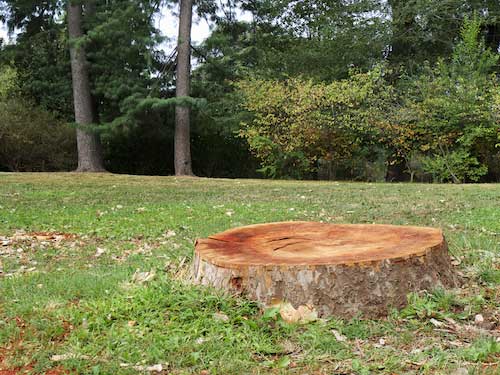
Leaving a stump after a tree has been cut down will leave you with issues of safety and liability, unwanted tree growth, and insect infestation. These are three important reasons to remove the tree stumps in your yard. Another issue with tree stumps is they create an unsightly yard appearance.
6 Reasons Why You Should Remove That Tree Stump
When you hire a professional tree removal service, chances are you will need to decide whether to pay to remove the stump.
Before you have a tree removal specialist cut down the dead tree in your yard, you’ll need to decide whether the worker should remove the tree stump as well. If you’re having a hard time making this judgment call, consider these factors when deciding what to do with the stump.
1. Stumps aren’t pretty. Aesthetically speaking, the sight of a stump definitely isn’t appealing. If you’re meticulous about your yard and landscaping, removing the stump is well worth it.
2. Stumps are hazardous. Stumps are dangerous to your children. When running and playing in your yard, they may not look for the stump and trip over it. And if a neighbor trips, it’s a liability that falls into your hands. In addition, tree stumps can damage your mower if you accidentally hit one when you’re mowing your lawn.
3. Stumps cause new tree growth. Sometimes leaving the stump behind contributes to new sprouts, which can result in many small trees growing around the stump. This is unsightly to your landscaping and quite costly to try to remove because the new shoots may keep coming back, and you may need chemicals to kill them off completely. These small trees also leech nutrients from other plants located near them, so your begonias may not receive all the nutrients they need.
4. Stumps are a pain to maneuver around. Remaining tree stumps become a nuisance, an obstacle you have to maneuver around when weeding or mowing your lawn.
5. Stumps attract insects. When you leave stumps in your lawn, the decaying tree takes a long time to rot away completely. While it’s decaying, the stump attracts beetles, termites, ants, and other wood-boring pests. You may not mind them in your yard, but they can eventually spread to your home.
6. Stumps take up precious yard space. Especially if you don’t have a very large yard, the space you lose from the stump and roots may occupy a lot of space. Just think: You can use that space for a flowerbed or a picnic table.
Typically, you’ll spend extra money to grind down the stumps, but it just might be well worth it.
You’ve done your homework by assessing both your property aspect and your climate before selecting trees that suit your growing habitat. And you’ve taken care to plant your selections according to the directions for the species and work hard to water, prune, and fertilize them, as needed. But even with the best of care, trees can still become sick. Know what to look for when assessing whether or not your tree is healthy. These crucial indicators will guide you toward proper maintenance for years to come.
6 Warning Signs A Tree Is Dying
It is a shame
to see any form of nature destroyed or removed from its natural habitat;
however, when a tree suffers weather damage or it has not been regularly
maintained, removal of the tree can sometimes be the only option.
Unfortunately, as a tree gets older, it decreases its capability to withstand
adverse weather conditions and can slowly die.
Although there may be signs a tree is dying, it doesn’t always mean that you have to remove the tree at its roots completely. When taken care of by a professional tree surgeon, such as our team of tree surgeons in Milton Keynes, you can actually restore the tree, giving it a new lease of life. This is why it is best to know what all of the warning signs are so that you can target the problem before it gets worse.
Signs A Tree is Dying: Get There Before It’s Too Late
The majority of trees are more than capable of outliving humans, with the oldest tree in the world being around 5,062 years old. However, with the constant change in climate and increased risk of deforestation, trees can often be removed even when they’re at their prime.
Making sure that you know all of the possible signs that a tree may be ill, unhealthy and even dying, can help you to save it by contacting our team to complete landscape maintenance. The key warning signs that you should know about are:
Dead Branches
Excess Leaning
Lack of Leaves
Over Grown Branches
Diseases
Damaged Roots
1. Dead Branches
An obvious sign
that a tree is in the process of dying is when the branches begin to look
discoloured and are unable to hold their shape. If you are unsure on how to
tell if the branches of the tree look as though they’re dying, you can always
complete the dead branch test. This is a very simple, quick and easy way of
telling whether your tree is healthy or not.
To perform this
test, head over to the tree and grab a small stick that is still attached to
the trunk or larger branches. Break the twig into two and inspect the inside
colouring, if it takes a little extra tension to break the twig and the inside
is green, then the tree is in good health and does not require any assistance.
However, while a tree with a slightly dark tone may not need tending to, it is important to continue checking its health, as this could be a sign that it is deteriorating. If you feel your tree may need pruning, then you can follow a guide on our previous article about pruning in the winter. Alternatively, you can take a look at PruningCuts.com to understand more about whether pruning a dying tree can be beneficial.
To avoid future issues, we would suggest correcting any watering problems such as bad drainage, add some natural fertiliser and prune regularly. If the test shows that your tree is dying, then it is important that you contact our team for grounds maintenance in Milton Keynes or the surrounding areas.
2. Excess Leaning
It is most unlikely that you will ever see a tree that is entirely in an upright, vertical position, as various natural disturbances such as high winds will make the tree lean slightly out of place. However, if you start to notice that a tree is leaning to one direction and exceeds the recommended 15 degrees, it may be a warning sign of root damage. Safe Bee has a helpful article on warning signs that leaning tree might be about to fall, and shows that if you haven’t called a tree surgeon already, then it’s most definitely time to contact Neal Landscapes.
A leaning tree
can be incredibly dangerous as the risk of the tree falling and causing injury
is greatly increased. Once damaged beyond repair, it will only take a small
amount of force to break at the trunk or fall. Not only does this run the risk
of a large tree plummeting into your building, but it can also fall on a
visitor or their vehicle, leaving you faced with huge reparation or
compensation fees.
3. Lack of Leaves
Luckily, if
this warning sign is noticed early, it can be fixed, and in most cases, will
not result in full tree removal. Lack of leaf growth is one of the most common
health issues within trees, and there are many different causes for this:
Weather – particularly sudden changes in temperature
Overly wet or dry conditions
Pests and diseases – examining the leaves can help you to determine whether this is an issue
If there is an
old tree on your premises, keep an eye out on the amount of leaves that grow
during the Spring and Summer months. During these periods, branches should be
brimming with vibrant life, blossoming with delicate flowers and crisp green
leaves. If this is not the case, along with a lack of bark covering the upper
layer of branches, it is highly recommended to get a full assessment carried
out by a tree surgeon.
4. Over Grown Branches
Similarly to the issue of lack of leaves, with regular maintenance, overgrown branches will not result in a severe problem; however, it can cause decay if left unpruned. Our commercial grounds maintenance in Milton Keynes can provide you with regular pruning as well as check up on trees health, so be sure to book in your service every now and then.
It is common on commercial premises for many different types and sizes of trees to be planted close to each other to achieve an aesthetically appealing, welcoming first impression. Over time, trees continue to grow larger, meaning space becomes incredibly limited, and branches will start to grow over each other causing them to fight for growing space. If branches are forced to grow over each other, they will begin to form friction, which results in rot that can travel through the entire tree. Other problems that occur when trees fight for space include:
Malnutrition
Lack of sunlight
Growing into distorted shapes
Unable to access water
Pests and diseases are able to fester
Opting to take out a contract for regular landscaping in Milton Keynes or in the surrounding areas will avoid overgrown branches causing a severe issue. Your chosen landscaping team will visit your property every month or so to prune any excess branches and ensure that all trees remain in optimum health.
5. Diseases
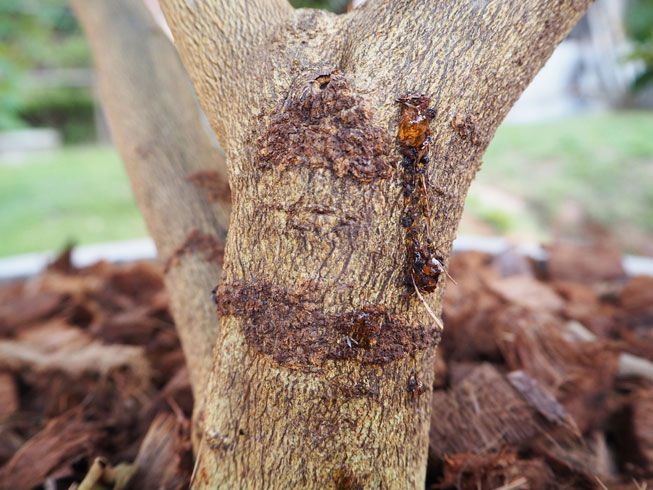
As trees are a living organism, they are no different to humans when it comes to the number of diseases that could prove potentially fatal if left untreated. Depending on the type of illness your tree has, different signs and symptoms will be visible, some of the most common are peeling bark, fluid coming from the base, shoots forming and powdery mildew on leaves. For a more in-depth explanation and signs your tree may have a disease, take a look at Davey’s answer to common signs of tree sickness.
If you are a tree novice and you’re not too sure how to tell if trees on your premises have fallen ill with a disease, then contact the team for further advice. We are more than happy to take a look at your landscaping, whether it be through a visit or an inspection of an image.
6. Damaged Roots
Due to the root being underground, it can sometimes be hard to identify whether a root needs maintenance and whether it is showing signs of dying. However, there are in fact signs that you can see on the surface that warn you it’s time to call a professional tree surgeon. Wilting is the most common sign of damage, as the tree is unable to take up any of the nutrition of the soil, causing it to die slowly.
Other signs
that the tree is dying include some of those that have previously been
discussed, such as leaf dropping or yellowing of the branches. This is why it
is important that you contact a professional if you notice anything unusual
with your trees. Identifying these issues mean that you can get expert advice and
care to protect the roots of the tree and help to maintain its health. Signs of
root damage may also include the following:
Thinning foliage
Poor yearly growth
Yellow or brown leaves
Dead branches
Mushrooms around the trunk of the tree
Maintain A Healthy Tree!
In some cases, tree disease and damage cannot be avoided, and unfortunately, a full removal may be the only route. However, understanding the main warning signs of tree disease and dying can be the difference between a thorough maintenance check-up and full removal. If you are experiencing any of the problems that have been discussed, or believe that your trees need a check over and some maintenance work, then please feel free to contact the team for more information about our reputable services.

 AAA Tree Lopping Ipswich Blog