A tree survey is carried out by a trained arborist and provides a detailed report about the condition of trees in a property. Within the report, the expert indicates the scientific name, as well as whether a tree should be removed or not – if it is deemed that a tree should be removed, the reasons are stated. In some places within the AU, a tree survey is mandatory, while, in others, landowners ask for them whenever they want to make informed decisions on which trees to keep and which to remove.
The Importance of a Tree Survey
As we know the trees are the integral part of our flora and fauna
hence it’s important to have tree surveys done; there are many reasons
why tree surveys are important for example if you are planning to buy
property which is covered by trees and it’s a natural habitat for many
of the species.
For example, there is a possibility that the property you are buying is habitat for endangered species like bats. So it is important to have trees surveys done to check whether the trees on property you are about to buy is likely to have any negative impact on the property such as subsidence.
Similarly if you like to develop land on which there are many trees,
surveys can provide valuable information on condition of trees and
whether there is any health and safety risk because of tress and
animals.
It’s not necessary that only those who are looking for property and
planning to develop their land should do tree surveys, a curious
individual who has a nice grown tree in his garden can also conduct tree
survey to gather information about the age of that tree, type of the
tree and some information about species residing on that tree to take
proper care of his tree and to understand health and safety risks
because of the species residing on his tree.
Many of the enthusiast people conduct tree surveys in their garden to
take proper care of their tree and to save precious life depending on
their trees.
For town planners and land developers tree surveys are conducted to
ensure that trees within their boundaries meet all safety and health
requirements. Trees are a very important part of any ecosystem but they
can occasionally be a risk to human and animal life so tree surveys can
provide information to avoid potential hazards to life because of trees.
Tree surveys conducted by a professional arboricultural and ecological consultant like Arbtech Arboriculturist are meant to provide important and useful information to local authorities, householders, designers and environmental lovers for various reasons.
Very first step to save trees and precious animal life dependent on trees starts from our home!
Windstorms, hail, or heavy rain can bring a tree or branches down on your house or car. Vehicles run into trees. Hidden decay or a lightning strike can cause a tree to split in two. When you need emergency tree service, you want some fast, reliable, and trained in handling delicate emergencies.
Why Hire an Arborist?
Healthy trees serve many purposes in your local community. A way for
homeowners to ensure their trees stay healthy is by hiring an arborist.
Professional, trained arborists know how to properly maintain trees for
the safety of the public and the health of the tree.
Trees are an investment that require proper tree care; however,
pruning or removing trees, especially large trees, can be dangerous
work. Tree work should be done only by those trained and equipped to
work safely in trees.
What is a Certified Arborist?
An ISA arborist certification is a nongovernmental, voluntary process
by which individuals can document their base of knowledge.
Certification provides a measurable assessment of an individual’s
knowledge in the competencies needed for proper tree care.
When a professional becomes an ISA Certified Arborist®, they should
be recognized by their peers and the public as a tree care professional
who has attained a generally-accepted level of knowledge in areas such
as tree biology, diagnosis, maintenance practices, safety, and other
subject and practice areas within the tree care profession as identified
through periodic job task analyses.
They must also continue their education to maintain their
certification. Therefore, they are more likely to be up to date on the
latest techniques in arboriculture.
Services an Arborist can Provide
Arborist can help homeowners maintain their investment by:
Pruning
Pruning can be necessary for various reasons including,
improvement of health, appearance and safety. An arborist can determine
what type of pruning is necessary.
Tree removal
Tree removal can be expensive. Consider hiring an arborist when
your tree is dead or dying, an unacceptable risk, causing an
obstruction, crowding other trees, or located in an area where there’s
new construction.
Emergency tree care
Removing or pruning storm-damaged trees can be dangerous, but a
professional arborist can perform the job safely while reducing further
risk of damage to people and property.
Planting
Getting your new tree off to a healthy start will help the tree
mature to its full size and ensures it will provide environmental,
economic, and social benefits throughout its lifetime. Some arborists
plant trees, and most recommend species that are appropriate for certain
locations.
Other services
Plant health care or preventive maintenance.
Cabling and bracing for added support to branches with weak attachments.
Since the life has discovered on Earth, trees have furnished us with
two of life’s essentials, oxygen, and food. They also provide other
necessities such as medicine, shelter, and tools. Today, their value
continue to increase.
Summer, spring, winter or fall! Every season
brings a change to your yard and with each season the trees and shrubs
change their growth and shape.
Tree trimming and pruning encourages air circulation that reduces disease extent and the possibility of damage from high winds. Tree trimming also removes an unhealthy or dangerous branch that can easily fail in severe weather and allows more sunlight to reach your brake plants. Whether you need tree pruning, tree trimming, or tree removal, you must hire an experienced professional to help you deal with the trees, stumps and shrubs in and around your yard.
Love Your Trees? Choose Your Arborist Wisely.
Along with owning a home comes a long list of upkeep duties. If you
have trees on your property, caring for those trees is going to be an
important task on that list. We know – you’re busy and you have a lot of
“to-dos” already, and proper tree care might not seem like a high
priority. We’re definitely not trying to make your life harder! But good
looking, healthy trees can add a lot of $$$ to your property value and
boost your curb appeal. Not to mention, trees improve our air quality,
reduce your utility bills, help create privacy and make outdoor
activities bearable in summer. On the other other hand, unhealthy,
structurally unsound trees can pose a big threat to your property and
your family.
Luckily, there are skilled professionals whose job it is to take the
worry out of your tree care and cross it off your to-do list. Yet,
hiring the right tree company can be a daunting task. Unfortunately,
there are many companies operating in the area that present themselves
as experienced tree care companies, but who have little to no
experience, or skill, to do the job right. With all the cards for tree
services left on your doorstep, how do you choose the right person for
the job?
If a random guy in a truck with a chainsaw knocks on your door offering to “trim your trees”, just back away and close the door!
Just as you would research a doctor
to care for you, your family or even a pet, researching your tree care
provider is advisable. Hire with confidence by learning how to recognize
quality tree care companies.
A qualified professional tree care company will not solicit your business by taping a business card to your door or mailbox.
They
will not demand payment prior to starting work or sell you on a job
without a written estimate or work order to be seen and signed by you.
They have the equipment to do the job right. A ladder does not constitute the right equipment!
What to look for in a tree care partner:
The company is staffed with experienced and certified professionals. Preferably,
the company will employ certified arborists who have degrees in
arboriculture, urban forestry, biology, botany or a related green
industry field. In addition to degrees and certifications, arborists
should have a good number of years of experience under their belts.
Check to be sure the company you are researching is insured.
Finding out a company is not properly insured after they’ve damaged
your property is never a good surprise. Properly trained crews will pay
attention to your gutters, fences, flower beds and garden art to be sure
none are damaged while pruning or removing a tree. Don’t be afraid to
ask to see current certificates of liability and workers’ compensation
insurance, if applicable.
Take a look at their website. A quality tree care
company is going to be just as invested in your knowledge and education
about trees as they are in providing you good tree care services. The
more you know about trees, the better the partnership you’ll have. Look
for detailed information about who the company is, their philosophy,
their staff, service specifics and content, to help you make better tree
care choices. Be sure you can identify the company’s professional
accreditation, certifications and insurance statement.
Don’t be afraid to ask for references to verify quality of service and work.
Before starting the job, ask for a signed proposal or work order that
provides details about what work will be performed on your property. If
there are additional services that come up from unforeseen problems,
they should be discussed with you before additional work is performed.
Cutting down a mature tree isn’t as easy as just stroking away at it with an axe. There are particular techniques that need to be followed to preserve the wood and ensure the safety of the people cutting down the tree. To know how a tree will fall, the cutter will need to determine the right kind of cut to use.
Before you begin to study the correct tree trimming method, you need to make sure you have the right tools for the job. The equipment you use should be of good quality and must be tested before utilizing it on a tree. The following list covers the main pieces of equipment that would be needed to cut down a mature tree on your property.
Take Down a Tree
The Right Way to Fell a Tree with a Chainsaw.
Trees are an important part of the ecosystem but sometimes they need
to be removed to prevent damage to surrounding areas. When it comes to
felling a tree, the task is as much art as it is science. To exercise
the proper amount of control to achieve the desired results without
risking safety, the experts at Husqvarna offer the following basics on
felling a tree.
Note that it is impossible to address all scenarios, circumstances and contingencies that can and will occur when felling, so this article is intended to give an understanding of basic principles.
Safety & Preparation
Before firing up the chainsaw, you must have a plan in place. The
very first step is to read (or reread) the chainsaw’s Operator Manual
and follow all instructions, precautions and warnings prior to using the
saw. It is imperative to know the answer to the question “what needs to
be done if an emergency occurs’’ and develop a plan for specific
situations. This will help identify potential hazards beforehand and
create an organized response if an emergency occurs.
An on-site first aid kit, cell phone programmed to the nearest
emergency care facility, directions and distance to that facility and
local utility contact numbers are a few basic components to a good
emergency plan. And, whether in the back yard or the back 40, never work
alone.
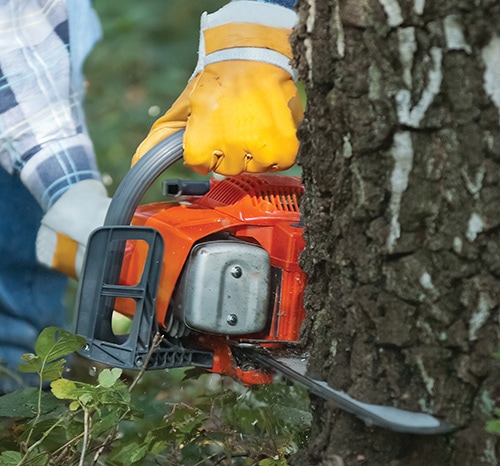
While it is mandatory for professionals, anyone using a chainsaw
should include personal protective equipment (PPE) as part of their
plan. A properly outfitted operator wears protective chaps or pants, eye
and ear protection, appropriate footwear, work gloves and a helmet with
visor. The proper equipment cannot eliminate the risk of injury
completely but it can reduce the severity of an injury should an
accident occur.
Before pulling the cord, it is important that users visually inspect the saw for any damage or leaks. Only use a chainsaw that’s been well maintained and is in proper working order. The chain’s cutting teeth need to be properly sharpened, and make sure the depth-gauge setting is correct.
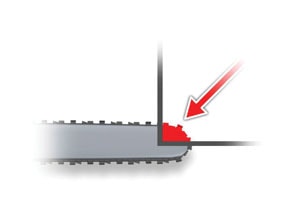
When using a chainsaw, understand the three reactive forces of the saw—push, pull and kickback. Try to avoid kickback, which occurs when the tip of the bar contacts an object or gets pinched during operation. The reactive force causes the bar to “kick” back towards the operator, which can cause injury.
Saw Operation
When using a chainsaw, understanding the three reactive forces of the saw—push, pull and kickback—will help prevent accidents.
Never cut with the upper half of the tip of the bar. Kickback occurs
when the tip of the bar comes in contact with an object or gets pinched
during operation, causing the bar to “kick” up and back towards the
operator, which can result in a loss of control and possible injury.
That is why balance and stance are important to safe operation. The
boxer’s stance, left foot slightly forward and both knees bent, is
recommended to help maintain control of the saw and minimize fatigue
when reactive forces are experienced.
Before
cutting, establish a plan for the direction of the tree to fall as well
as a path for your escape route. When surveying the surrounding area,
identify potential hazards on the ground, in the tree and where the tree
will fall.
Felling Techniques
Directional felling is the process of putting a tree in a preferred
area and not necessarily where it wants to go. A “felling hinge” is the
hallmark of directional felling. It is safe, efficient and steers the
tree as it falls to the ground.
When surveying the tree and surrounding area, identify potential
hazards on the ground, in the tree and where the tree will fall. Clear
leaves, limbs and live saplings or anything that will impede a clean and
controlled cut or complicate the escape route. Look for dead limbs and
hanging branches that could possibly fall when cutting or as the tree
falls. Also, examine the path and area where the tree will fall for
hazards such as potential hang-ups or stumps.
It is exceptionally rare to find a tree that does not lean.
To
determine the lean of a tree, stand back 25 to 50’ and frame the entire
canopy with your hands. Imagine a plumb line running from the center of
the frame down to the base of the tree. The distance left or right of
center will determine the amount of weighted side lean.
The side lean will show which side is the “good” side and the “bad”
side. The side the tree leans toward is considered the bad side of the
tree. The lean will also help determine aim when placing the tree. If a
tree leans three feet to the right, it is necessary to aim three feet to
the left, to have the tree fall in the right location.
Trees with severe lean can be dangerous to fell because the tree can
move in the leaning direction too quickly, splitting at the base and
creating what is known as a “barber chair” break in the tree. In such a
case, the split wood can fly upwards, striking the operator with
terrific force.
The next step is to map out the escape route. This is always opposite
the direction the tree will be falling and should be at a 45-degree
angle from the tree. Remove any obstacles and make note of any potential
hazards such as holes or tree stumps. When the tree begins its descent,
don’t run or turn your back on it.
To
determine the lean of a tree, stand back 25 to 50’ and frame the entire
canopy with your hands. Imagine a plumb line running from the center of
the frame down to the base of the tree trunk. The distance left or
right of center will determine the amount of weighted side lean.
Sounds like a lot of work? Abraham Lincoln is credited with saying,
“Give me six hours to chop down a tree and I will spend the first four
sharpening the axe.” Preparation is central to success.
Next, the hinge will need to be determined. The hinge helps dictate
how and where the tree will fall. Most industry experts will use a
simple formula to calculate both the hinge length and thickness. To
determine thickness, it is recommended to use 10% of the diameter of the
tree at D.B.H (diameter at breast height) or 4-1/2 ft. from the ground.
A tree with a 20-in. diameter will have a 2-in. thick hinge. Hinge thickness is reduced for thicker trees and drier wood fiber.
The length is 80 percent of the tree’s diameter at D.B.H. So, for a 20-in. diameter tree, the hinge length is 16 in.
The hinge of the open face notch helps dictate how and where the tree will fall. To determine thickness, use 10 percent of the diameter of the tree at D.B.H (diameter at breast height) or 4-1/2’ from the ground. A tree with a 20” diameter will have a 2” thick hinge.
Historically, the 45-degree face notch dominated the industry, flat
on the bottom and cutting at a 45-degree angle downward to create the
opening. While this will bring the tree down, there is more risk with
the reduced amount of control in placing the tree. The tree can only
fall 45-degrees before the notch closes and the hinge breaks.
Today, most people recommend using an open-face notch, which is a
70-degree opening. This gives the cutter more control since the hinge
will not be broken until the tree is almost to the ground. The open-face
notch allows the back cut to be made level with the notch, whereas the
45-degree notch will need to be back-cut above the apex of the hinge.
Don’t you fall for the scenic view of a lawn? The green, nourished lawn area appears more appealing to us than tall buildings and hectic streets. The amazing natural scenic beauty that brings a big smile on your face and gives a stunning appearance to a restaurant is a great contribution of Trees. The trees refresh our lives; nurture the child inside us.
When talking about providing your lawn area for commercial purposes like official meets, parties, etc., the trees are unbelievable assets.
Trees enhance the look and feel of the place. Not just the visual appeal, they also offer fresh air and cool shade that make the atmosphere more pleasing. The aroma of the flowers makes others fall for the area. When accompanied with Mountain View or flowing Waterfall nearby, the place becomes a paradise on Earth.
Trees That Please The Landscape
Trees define the landscape, creating the bones of your garden. Choose the wrong one and the appearance of your home may be diminished. With so many different types to choose from, how do you pick a tree that will beautify your home? Whether you’re looking for shade, privacy, or something ornamental, you can find just the right tree to fit your needs.
Choosing a Tree By Its Mature Size
Most people fail to consider the mature height and appearance of a tree when they are selecting one for their landscape. Trees are generally sold in containers, much smaller than their full-grown height. The tree’s shape will also say a lot about whether it is suitable for the area in which you want to place it. Sure, the tree might look great while it’s sitting there in the container, but once it’s planted and grown to the point of concealing your existence, or the roots have become entwined in your septic lines, how great is it then?
Trees that are too large for the landscape will not look appealing. Then again, choose one that is way too small and you may as well be choosing a shrub instead, leaving the landscape looking barren. Any tree placed within a landscape should complement its surroundings and remain within scale to your home as well the rest of the landscape.
Deciduous Trees or Evergreen Trees?
When selecting trees, there are generally two types to choose from: deciduous and evergreen.
Deciduous trees lose their leaves in the fall after putting on a spectacular color display. These types of trees are most popular due to their flowering abilities, foliage color, and interesting shapes. Common deciduous trees include large types, like oaks and maples, or smaller varieties, such as flowering dogwoods and crabapples.
Evergreens do not lose their leaves and remain green year round. These include conifers such as pine, spruce, and cedar trees. Evergreens can add drama to landscapes, especially in winter where they make beautiful backdrops amid a blanket of white snow.
Think About and Research Your Landscape Tree Needs
The best way to ensure the right tree for your landscape is to perform some research beforehand. There are numerous resources available, from books to online resources. Also, take a walk around your property, noting any existing trees and in what areas of the landscape you would like to add more. Determine your overall purpose and the tree’s function.
Perhaps you are looking
for more shade. Will the tree be chosen merely for its flowering in
spring or its fall color? Do you want to add some privacy to your home?
Consider its overall size and shape before making any decisions,
especially when you’re ready to purchase one. This is where all of your
research will pay off; saving you both time and money later on down the
road.
With shade trees, it is important to consider height since they are usually located nearest the home. This means that safety issues need to be addressed. Generally, the oak tree is one of the safest choices you can make. These trees are extremely sturdy. Red maples, best known for their amazing fall foliage, also make fast-growing shade trees and suitable landscaping choices. Sycamore trees are fast growing and ideal as shade trees as well. Furthermore, these trees provide additional interest with impressive, flaking bark. Elm trees with their towering, yet, graceful canopies are excellent choices too.
Not everyone, however,
requires something large. Maybe you live on a small lot or perhaps you
are simply looking for something to shade your patio or deck. If this is
the case, choosing a smaller-sized tree is most fitting provided you
select one having large-spreading canopies, such as a dogwood.
Consider Flowering Trees
Dogwood trees offer striking blooms during spring, interesting branching patterns during summer and beautiful foliage during fall. Other good choices for spring flowering include ornamental fruit trees; the fruit is merely a bonus. My favorites are Bradford pears and apple trees. Flowering landscape trees can be the main attraction of the landscape during the spring season. Weeping cherry trees are spectacular blooming specimens for the spring landscape as are magnolias.
However, did you know that some trees bloom in summer as well? For example, crepe myrtles provide stunning flower color and have a long blooming period, lasting from mid-summer to fall. Maybe it’s fall color you’re looking for. Good choices here include maples, ash, poplars, and some oak varieties. Japanese maples display exceptional foliage color not only in autumn but during summer as well.
An interesting tree for winter enjoyment include birch trees. Birches have interesting branching patterns as well as unusual bark.
Do You Need Privacy?
Privacy is sometimes an important factor when selecting trees for the landscape. Many evergreens are used for this purpose, as they remain full and green throughout the year. Arborvitae trees are attractive year round. These evergreen trees are commonly used for creating screens or privacy fences. Blue spruce not only looks lovely in winter as a specimen plant, but planting more than one will also create appealing windbreaks and additional privacy. Evergreen trees always deserve a welcoming spot in the landscape. Their foliage brightens winter scenes, offering an opportunity to distance ourselves from the gloominess of dark winter days.
Many evergreen trees can actually be pruned down to resemble shrubs and used as foundation plantings to obscure unsightly areas or provide year-round interest. Good considerations here include evergreen yew and holly. Either of these can be grouped to form a hedge, or used as a specimen plant by itself. Hollies provide an additional bonus. The foliage of these evergreens can be used for winter decorations during the holidays, and their lovely red berries attract birds as well.
No matter where you live, there’s a tree for you. Provided you’ve done your research and chosen trees wisely, your landscape will flourish with beauty year round. Nothing makes for a more stunning view than trees that please the landscape.
Besides regular tree pruning and trimming, watching for the signs of disease is an important part of successful tree care. If you’re wondering if you should contact a tree arborist about a diseased tree on your property, then continue reading to learn how bot canker can affect ornamental trees. Bot canker, or Botryosphaeria dothidea, is an opportunistic fungus that is a serious pathogen among ornamental trees. This disease most frequently affects damaged and weakened trees, and environmental factors such as freeze injury, heat, drought, and soil compaction are examples of stressors that can make your trees more vulnerable to bot canker. This fungus commonly affects redbud, willow, elm, oak, hickory, holly, dogwood, cherry, apple, sweetgum, and Leyland cypress trees.
Botryosphaeria Canker Treatment – The Control Of Botryosphaeria Canker On Plants
It’s the greatest feeling in the world when your landscape is complete, the trees are big enough to cast a puddle of shade onto the lawn and you can finally relax after the years you’ve spent turning an old drab lawn into a planted paradise. When you notice that sad little plant in the corner, wilted and covered in dark spots, you’ll know it’s time to get back to work if you know how to recognize botryosphaeria canker on plants.
What is Botryosphaeria Canker?
Botryosphaeria canker is a common fungal disease of trees and woody shrubs, but it only attacks plants that are already stressed or weakened by other pathogens. Cankering can become quite extensive within the cambian layers, heartwood and inner bark of woody plants, cutting off the tissues that transport water and nutrients throughout the plant. Affected tissues develop black, pimple-like fruiting structures or cankers on bark surfaces. When the bark is peeled back, the wood underneath will be reddish-brown to brown instead of a healthy white to pale green. Some trees will weep gummy sap or develop blisters on their bark along with the more obvious widespread wilting of botryosphaeria canker disease.
Control of Botryosphaeria Canker
If caught early, localized botryosphaeria canker on plants can be cut out and the entire plant saved. In the winter or very early spring before bud break, prune any branches or canes back to unaffected tissues and immediately dispose of infected debris. Prevent spreading the botryosphaeria fungus further by soaking pruning tools in a mixture of one part bleach to nine parts water for at least 10 minutes between cuts. Fungicides aren’t generally recommended for botryosphaeria canker treatment, since the fungus penetrates tissues, where chemicals can’t reach. Instead, after pruning out diseased areas of the canopy, pay closer attention to the plant. Make sure that it is properly watered, fertilized and protect it from bark damage.Once your plant is again thriving, you can keep it from developing new problems with botryosphaeria canker disease by continuing to provide it with excellent care and waiting to prune until late winter or early spring, when it’s still too cold for fungal spores to take hold while the wounds are healing. Original post here https://ift.tt/36t7N1M.
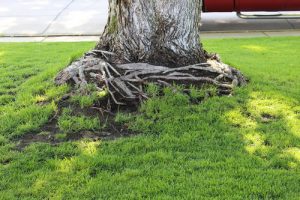
A tree is girdled when something is tightly wrapped around the trunk or stem. A stem girdling root circles or partially circles the base of a tree at or just below the soil surface. Stem girdling roots choke off the flow of water and nutrients between the roots and branches and food produced in the leaves from reaching the roots. They can also compress and weaken the trunk of a tree at or above the root collar flare (the junction between the trunk and the main roots) causing it to lean and lose its stability. Girdling roots may girdle other roots, but there is no known harm in this. Trees having stem girdling roots suffer a slow decline in health and a premature death.
What are Girdling Roots and How do They Effect Trees?
Girdling roots to a tree, is a similar experience to overeating while wearing a belt. When our favorite dish is placed directly in front of us, we cannot help but indulge. Upon indulging, we notice the space between our stomach and belt gradually decreases, resulting in a squeezing sensation. Lucky for us, we can release that tension by removing our belt. Girdling roots require certified arborists assistance to remove this squeezing nuisance that, in turn, could be detrimental to the tree’s health.
Girdling roots are lateral roots that lie directly, or sometimes breach, the soil surface. These roots cut into one side of the trunk, restricting water and nutrient movement throughout the entire tree. While girdling roots generally take five to fifteen years to slowly weaken the tree, resulting in death, environmental factors, or disease paired with girdling roots can result in a much shorter lifespan.
What Causes Girdling Roots
The main causes of girdling roots come from an excessive placement of soil over the roots causing obstruction, nursery transplanting practices, and some factors not yet identified.
Compacted soil surrounding the roots initial planning hole results in difficulty growing outward. The soil forces the roots to circle at the bottom of the planning hole, risking the chance of girdling roots to occur.
Similarly, when a tree is not permitted to grow beyond its nursery container, its roots find other means to grow – circling at the bottom. During the planting process of the new tree, roots must be loosened to initiate outward growth, to combat against girdling.
Detecting Girdling Roots
Detecting girdling roots generally does not require an expert, unless you are a novice.
Similar to overeating and having our stomachs bulge, tree trunks flare upon feeling girdling roots. This abnormal flare occurs around where the trunk meets the ground and can result in the trunk appearing straight or even narrower.
As stated before, girdling roots may breach the soil line in an attempt to circle the trunk above but is not likely. You’re most likely to notice unseasonably small leaves, premature leaf falling, or a smaller canopy.
Treating and Preventing Girdling Roots
To prevent girdling roots, preemptive measures must be considered. When planting a tree, ensure the size of your planting hole accommodates the entirety of the tree and roots going into it. This means digging a hole two to three times the width of the root ball and a height no deeper than the root ball, so soil buildup above the root flare does not occur.
If circling roots within the nursery container occur, break them up prior to planting to ensure outward root growth. When continually watering the new tree, check up on the root flare for any abnormalities.
Finally, if you’ve determined girdling roots must be removed, as always, we recommend consulting a certified arborist. Certified arborists understand the weakening capabilities of girdling roots and the correct removal process to ensure the longevity of your tree.
Consider contacting one of our certified arborists at Wachtel to pinpoint your girdling roots or remove them to ensure the success of your tree.
You finally removed that tree from the yard and now have some additional space. But how should you go about determining what to plant in the tree’s spot? Keep in mind that what you do with the void left from it depends on a number of factors including the tree’s size, how it was removed, as well as the condition of the remaining soil. Many homeowners choose to plant another tree in that location. With that said, there are several issues that must be considered before moving forward. In this blog post, we will dive into some of those.
5 Tips for Planting After Tree Removal
Are you thinking about removing some trees so you can create something new in your garden or lawn area? Taking the steps to remove potentially troublesome trees can be wise and can assist homeowners in protecting their homes against possible damage from falling limbs—or even falling trees. Depending on your follow-up plans, it can also save time and costs associated with tree-related yard maintenance, such as raking leaves or regular pruning.
However, it often happens that the area where a tree stump was located vastly differs from the rest of the healthy lawn due to the presence of wood chips, sawdust, old root systems, and other organic material. Even after the debris from the stump removal is cleared, homeowners may still have trouble growing grass or other plants in the area. Some of these helpful tips from us at Mr. Tree Services might guide you in planting after tree removal so that it doesn’t create more work and frustration down the road.
Understand the Environment
After a tree or stump is removed, the soil that remains will be different from that of the rest of your garden or yard. This is important to keep in mind for any replanting, since it will affect how well any new growth occurs. The last tree also probably changed the soil and depleted it of many necessary nutrients that a young tree depends on, so consider wisely if you want to use the exact same spot.
Note that if you used chemicals or salt to remove the previous stump and roots, you might want to consider avoiding planting in this area altogether. The soil could be profoundly affected for some time after this, making it nearly impossible for any new plantings to survive in this location. It’s worth thinking about your future plans for the area before choosing the method you use to dispose of the stump and roots.
Roots from the previous tree may also create crowding should you choose to select that spot for planting after tree removal. Another thing to consider is whether or not the previous tree was diseased at all. If so, the pathogens could still remain in the soil, so keep that in mind when thinking about tree species.
Time Is Your Friend
One of the best ingredients for planting after tree removal is time. The tree that was removed will most likely still have roots in the soil, and these roots will slowly but surely decompose, but it’s not an overnight process. Ideally, one should wait about a year before planting a new tree in the same spot a tree was removed from. The ecology of that piece of ground will also keep changing for a few years, as microorganisms will be busily working to break down the old tree roots. A new tree will inevitably have to compete with these microorganisms for resources and nutrients, which will make it harder for your new tree to thrive.
Choose an Adjacent Site
What if you don’t have the patience to wait a year or more? We don’t blame you! The good news is that many of the risks of planting after tree removal are mitigated by simply selecting an area adjacent to the old tree. You want to select a spot that’s at least five feet from the old site, which will improve the chances of your new tree taking root and thriving. The absence of the removed tree will also positively influence new growth, since you’ve taken away any competition for sunlight. Don’t be distressed if the exact same spot isn’t suitable for planting—it may be that another site merely a few feet away is just as suitable for your planting needs.
If You’re Going to Plant in the Old Site …
It’s possible that you may have no suitable adjacent area for planting, so knowing how to best prepare the old site is key if you decide to take that route. While the organic matter left behind by the tree removal and stump grinding will decompose and even add important nutrients back into the soil, removing some of this sawdust and woodchip material is always a good idea. You can then mix it with new soil to create a more balanced environment, adding compost as well.
When selecting a new tree to plant, consider choosing a smaller tree with a smaller root ball so that the root system isn’t as crowded as it gets established in the ground. Another potential idea is to select something other than a tree to plant. For example, grass, flowers, or hedges could all be suitable alternatives, depending on the condition of the ground and soil where the tree was removed.
With any tree or plant that goes into the old site, however, make sure to offer it lots of TLC in the beginning to make sure it’s thriving as best as it can. Here’s a pro tip: use the old sawdust from the previous tree as mulch for other areas of your garden.
Talk to an Arborist
Still have questions about planting after tree removal? It can be an overwhelming process to first deal with the removal of an older tree, only to then have to shift gears entirely and think about how to deal with that same spot and how it can handle new growth. Your best bet might be contacting a certified arborist in your area, such as Mr. Tree Services, if you haven’t already been working with one during the tree removal process. We can guide you through the process of selecting the best adjacent site for replanting or will know what tree species will thrive in the old site. With some support, patience, and understanding, you’ll be planting again in no time!
The biggest problem of human being is how to reduce air pollution. Trees absorb odors and pollutant gases (nitrogen oxides, ammonia, sulfur dioxide and ozone) and filter particulates out of the air by trapping them on their leaves and bark.
In the current climate, we’re regularly inundate from all sides about pollution, minimizing our ecological footprint and protecting our environment. At times it can be overwhelming to know where to even start! In addition to our regular duties of reducing, reusing and recycling, have you thought about planting trees? Read on to discover how planting trees can make an enormous, positive contribution to the health of our environment!
Trees Tested as Pollutant Traps
Silver birch, elder, and yew win out in an experiment to see which species best capture the tiny particles from diesel pollution.
Breathing in traffic fumes is accepted as unhealthy, but whether landscaping with vegetation can protect people is a matter of debate. Modeling studies generally suggest that trees do not have a substantial beneficial impact on pollution levels, and may even worsen a situation by trapping pollutants in certain areas.
Now, a study finds that certain tree species are surprisingly efficient in scrubbing toxic particles from the air. Wind tunnel experiments demonstrate that leaves trap considerable numbers of particles with a diameter less than 100 nanometers. The group put nine tree species through their paces, with three clear winners in the top tier, the study, published May 16 in Environmental Science & Technology, finds.
Birch, the best-performing tree, removed 79 percent of these ultrafine particles from the air, while yew and elder each captured around 70 percent. Such trees could be planted at pollution hotspots to quickly improve air quality, the scientists suggest.
“I was pleasantly surprised at what a great job these species are doing at removing some of the finest particles,” says Barbara Maher at Lancaster University in the UK, with silver birch excelling in trapping particles even less than 30 nanometres across. She suggests that the ideal particulate traps would be tree species maintained as hedges, about the height of an adult human.
“We are talking about what I call ‘tredges,’” Maher explains. “They should not be a solid screen, as this would obstruct air flow.” Street trees that form canopies can often worsen air pollution by reducing ventilation and the mixing of air.
The answer is to stop particulates coming out of vehicles, but this can be a contribution.—John Dover, Staffordshire University
Evidence has stacked up for the ill effects of minuscule particulates, with studies linking them to asthma, stroke, heart disease, diabetes, obesity, and dementia. “There’s good evidence to show exposure to traffic pollution reduces the cognitive ability of children, by damaging their central nervous system, and also that ultrafine particles can enter heart tissue and damage their heart,” says Maher.
There’s been a limited number of studies looking at the removal of ultrafine particles by plant species. According to Maher and her coauthors, modeling-based studies that simulated particulate matter and its interaction with plants indicated only a slight reduction in the pollutants, with just a few percent depositing onto roadside vegetation.
To see if trees could do any better, the researchers gathered branches of nine temperate tree species, which included beech, cherry, maple, hawthorn, and ash, from parks or the university campus in Lancaster. They placed a spray of these in a wind tunnel and exposed them to fumes for seven minutes from a diesel engine. The exhaust stream was monitored before and after it flowed past the branches.
Particles got trapped on the leaves, and scanning electron microscope images showed them often enmeshed on leaf hairs. “Hairs on leaves are great. Irregular surfaces are great. Anything spiky on the leaves seems to capture a lot of particles,” Maher says. While birch was the best at grabbing particles a micron in diameter or smaller, nettle and hawthorn were the worst at around 30 percent, although the authors note that these two came loaded with the most particulate matter, which might have impaired their ability to trap more.
Ideally, the particles should remain on the leaves until heavy rainfall. They would then run down into the soil and the leaves will again be primed to take up more pollutants. The downside is that the runoff could lead to soil contamination over time.
“Planting these species along roadsides is only an interim measure,” Maher says. “We wouldn’t want to depend on tredges. They’d just see us through the transition period, as we move from combustion engine to electric vehicles.”
A previous study by Maher and colleagues in Lancaster had shown that planting silver birch on busy streets improved the indoor air quality for homes nearby. Notably, Maher previously reported the presence of iron nanoparticles in human brain tissue, which came from traffic fumes. She therefore emphasizes the importance of really small particles as being especially dangerous because they can cross into the brain.
Ecologist John Dover, an emeritus professor at Staffordshire University in the UK who was not involved in the study, says his group found that ivy and green walls can take up particles when planted along a busy road. He says that while trees are valuable, they can be problematic to grow in towns where there are many below-ground services, given their large root structures. Also, because elder and silver birch are deciduous trees they offer far less protection in the winter without their leaves.
“We need to see not just trees, but hedges, green screens, living walls. We just need more vegetation,” says Dover. “The answer is to stop particulates coming out of vehicles, but this can be a contribution.” He warns that not all trees will be suitable in every location—elder can drop copious quantities of berries, yew berries are poisonous to people, and birch produce pollen that can cause allergic reactions.
Because children are vulnerable to the effects of pollution, given that they are still developing and encounter more particulates for their body size than adults, Maher plans to carry out comparisons at four schools in Manchester that have either tredges, ivy, or no vegetation on campus. Planting will start within the next four weeks, says Maher.
Michael Brauer, environmental health scientist at the University of British Colombia in Canada, warns that “there is a big difference between doing this in a lab setting and doing it in the real world. There is little real world evidence to suggest that planting more trees will remove pollution.” He notes that trees can also worsen pollution by trapping it and worries that advocating for vegetation could muddy the waters in terms of policy actions.
“We know what works,” he says. “Removing or reducing the sources of pollution or physically separating people by distance from the sources.” He also expresses skepticism about the assumption that ultrafine particles are the most important size class to human health, and says the evidence is actually strongest for particles up to 2.5 microns in diameter.
“The situation is a little more complex that [the authors] present,” says Andrey Khlystov, an analytical chemist at the Desert Research Institute. “My personal opinion is that trees are better than nothing, but what is needed is for tree type and the situation to be carefully considered.”
While many homeowners consider squirrels adorable woodland creatures who are entertaining to watch and cause little damage to trees, think again. Believe it or not, squirrels eat tree bark and that can be damaging to the trees on your property. Squirrels are notorious for their voracious habit of chewing on things, and tree bark is no different. Oftentimes, the reasons why squirrels eat tree bark is if food and water supplies are scarce or to build a nest for a soon-to-be-expecting female.
But the cambium layer of the tree – often identified as the growing part of the trunk – is a delicacy for squirrels and once tasted is hard to resist. This layer containers sugars which are irresistible to squirrels while providing nutrients the small animal need. So while they may start out only removing the top layer of tree bark for their family home, once they get down to the cambium layer it’s essentially a buffet.
Squirrel Damage and How to Control It
In their natural environment, squirrels can be cute and amusing to watch. However, when they invade homes, destroy landscaping, eat vegetation, or scare aware desirable birds, their antics quickly become less entertaining or cute. While squirrels are not essentially dangerous in and of themselves, they can carry diseases, such as rabies. There are several simply remedies to help prevent squirrel damage, but success often requires persistence.
Damage That Squirrels Cause to Homes
In seeking to build nests, squirrels can damage homes and structures by chewing openings through the siding and underneath eaves. They also may chew through unscreened chimneys and vents and build nests in these areas. Once in this “nest,” these busy rodents often chew on insulation and wires, which can create a fire risk. Additionally, when squirrels run along utility power wires and cables, they can short out the transformers.
Squirrel Damage in the Garden
Like rabbits, squirrels can cause severe damage to landscaping and plants in several ways. They like to dig in lawns for nuts and to chew on the bark and twigs of trees and shrubbery. They also dig for planted bulbs. But worst of all, squirrels have voracious appetites and can quickly decimate the crop of a vegetable garden or fruit tree. Like humans, they often wait until the fruits or vegetables are ripe enough to eat, which makes the loss of the crop even more heartbreaking for the gardener.
Do Squirrels Pose Risks to Humans?
While squirrels are commonly believed to carry rabies, the Centers for Disease Control and Prevention (CDC) reports that “Small rodents like squirrels…are almost never found to be infected with rabies and have not been known to transmit rabies to humans.”
If you are bitten by a squirrel, flush the wound thoroughly with water, clean it with soap and water, and contact a doctor immediately. It is also advised that you contact your local health department, and, if possible without endangering yourself, trap the squirrel for inspection by the health department.
Do Squirrels Harm Other Animals?
Squirrels do not typically harm other animals that live among humans, but it is very common for squirrels to invade bird feeders, scaring off birds, taking the food, and damaging the feeders. To get to the food, a squirrel also may gnaw to create a larger opening, and it may also gnaw on the perches.
Is It Legal to Shot Squirrels?
Regulations around small game hunting vary from state to state. In some states, squirrels are considered game animals and, if they are causing property damage, the property owner does not need a license to control them. In other states, a squirrel species may be listed as unprotected, but a valid hunting license is still required to take them. And in many areas, hunting is not allowed at all within city limits, regardless of the animal being hunted. For these reasons, it is critical that homeowners know and follow their state and local laws, or consult a pest management professional, before initiating control efforts.
How to Protect Your Home From Squirrel Damage
Squirrels can be excluded or discouraged from entering your home through physical methods:
Trim branches that touch the house or reach within 6 feet of any exterior portion of the house.
Prevent squirrels from traveling along utility lines by asking the utility company to place pieces of PVC pipe over the line. The pipe will rotate if any animal tries to run across it. This should be done only by professionals.
Cover chimneys and vents with a mesh screen to prevent squirrels, or other wildlife, from climbing in.
How to Protect Bird Feeders From Squirrels
Keeping squirrels away from bird feeders is an ages-old battle of wits, and the squirrels often win. It’s best to be willing to learn from trial and error. Here are a few things worth trying:
Use petroleum jelly or specially made baffles on the poles of bird feeders, so squirrels cannot climb up.
If the feeder is suspended, place plastic pipe on the rope or wire to keep squirrels from climbing down to the feeder.
Ensure all feeders are at least 6 feet from the ground.
Purchase squirrel-resistant feeders, such as those that rotate when a squirrel’s weight offsets its balance.
Distract squirrels from the feeders by putting out food, such as corn, specifically for them. This should be placed at least 8 feet away from any bird feeder.
How to Protect Plants From Squirrels
You can protect trees and their fruit by wrapping the trunks with metal sheeting to create a band that is 6 feet long (keep the sheeting loose to allow for tree growth). However, if any of the tree’s branches come within 6 feet of a building, fence, power line, or other trees, this technique will not be effective, as squirrels will simply jump onto the tree from the nearby structure.
Fencing is a good option for keeping squirrels out of gardens. Squirrels don’t like to climb plastic garden netting. A 4-foot-tall fence of this material is usually sufficient, but you may need to bury a few inches of the netting in the ground to prevent them from digging underneath.
Another option is to erect wire fencing made of 1-inch mesh that is at least 30 inches high. For additional protection, extend the fencing 6 inches below ground, then 6 inches outward to prevent burrowing. If necessary, you can discourage climbing by including an electrified strand a few inches above the ground and about 3 inches above the fence line.
To protect bulbs, place 1-inch wire mesh over newly planted bulbs, and cover it with mulch. Nonfood bulbs can also be soaked in squirrel repellent before planting.
Trapping Squirrels
There are situations where it may be best to have a pest control professional trap the squirrels, or you can attempt trapping and relocating them yourself. However, because of varying state and local laws on trap and release of wildlife, trapping is typically is done by licensed professionals.
If you do choose to attempt trapping yourself, always:
Consult your local animal control agency first, so as not to violate any laws. Be sure you understand all regulations on trapping and releasing.
Use wildlife traps that are specifically made for squirrels.
Take precautions to reduce hazards to non-target wildlife or pets.
Try using peanut butter as a bait, which can be attractive to squirrels.





 AAA Tree Lopping Ipswich Blog