Choose a Tree Service Carefully; Avoid Risky Situations

Written by Admin and published on https://www.urdesignmag.com/

One aspect of owning a home frequently overlooked is the need for a professional tree service. Having trees arranged in a yard or landscape design is highly desirable; nearly every home has trees of some kind or another. It is a given fact that if your yard has trees, sooner or later you will need tree services of some type; including tree removal, stump removal, a tree trimming service, or even consultation with a tree nursery and services about diseased or dying trees.

Tree removal costs are frequently high. One reason why homeowners attempt to trim or self-remove trees that were planted too close to a structure and are now hulking over their homes. Tree removal and tree trimming can be dangerous activities if not done properly.

HOW TO SELECT A TREE SERVICE FOR DANGEROUS BACKYARD TREES

Trees make your property green, giving you fresh air to breathe, and can be a focal point when designing your outdoor living space. However, they can also be dangerous. 

It’s crucial to assess your trees after they wither at fall or after a strong typhoon. Walk around and observe any changes in the bark, roots, foliage, and branches. Also, you have to consult a professional tree service company to handle the removal of dangerous trees in your backyard.

So, how do you choose a tree service company? In this post, you’ll learn how to select the best tree service provider to get rid of dangerous backyard trees. 

Choose One Offering Emergency Tree Removal Services

The primary role of a tree removal company is to remove trees if a valid reason is determined. Thus, an arborist or a tree specialist from the company will verify why you’d want the tree removed. If the tree is diseased, old, weak, and poses danger to the people, animals, and buildings around, then they’ll start planning on how to properly remove the tree. But, if there’s still something that can be done to save the tree, then the arborist should inform you of any alternative services such as pruning.

Some people choose to remove a tree because it’s getting in the way of a construction project, or it poses danger. Whatever your reason, a tree service can provide professional help with the team’s expertise and equipment. 

The danger signs that a tree can pose immediate hazard includes leaning trees with heaving or cracked soil and exposed roots on the base. They can also be unsightly and may ruin your overall outdoor home design. Because of anchor root damage or uneven weight distribution, the tree becomes unstable. This situation would warrant contacting an arborist.

Also, after a storm, picking a tree service specialist will help handle the removal of that dangerous trees in your property. As soon as you give them a call, they’ll mobilize their storm damage response team to handle tree problems relating to thunderstorms. 

Here are the things that an emergency tree service provides:

  • Evaluate ice or storm damage. 
  • Immediately start clean-up efforts and get rid of dangerous parts of the tree.
  • Prune tree branches to properly distribute weight.
  • Determine possible hazardous and weather-damaged limbs, branches, and other debris.
  • Get rid of large piles of wood.
  • Chip small branches and debris.
  • Brace the tree trunk using cables that are attached to stakes on the opposite sides of the dangerous tree. 

Ask About Work Permits and Certification

Choosing a legitimate tree removal company is very important. So, you have to be assured that you’re working with a trusted company by asking for their work permit, licensing, and certification. Government agencies will require contractors to apply for a license or permit before they can do any work. 

The International Society of Arboriculture (ISA) is a respectable organization that provides special certification for tree service professionals. A tree removal company that’s recognized by ISA shows that they’re using accepted industry standards and practices by obtaining this certification.

Choose A Bonded and Insured Tree Service Company

A tree that has multiple trunks is also another sign that it’s dangerous. A tree with a trunk that splits or multiple trunks can pose a safety hazard because it’s unstable. The U-shaped or multiple V-shaped trunks are considered the weak points as the connective wood loses strength, most especially for mature or aging trees.

While professional tree removal specialists can handle the job excellently, accidents do happen. That’s why it’s important to choose a tree service company that’s bonded and insured for your protection and peace of mind. You don’t want to be liable if ever someone gets hurt during the tree removal process. 

Request for proof of insurance and confirm the information by calling the insurance company. A credible arborist should be able to take care of property damage, worker’s compensation, and personal insurance.

How to Select a Tree Service For Dangerous Backyard Trees

Check Tree Company Ratings and Reviews

Choose a tree company that’s reputable. One way to check is to read online reviews and ratings. By doing so, you’ll have a good idea if the tree company is worth hiring or not. Because dangerous trees, like construction trees, can be difficult to handle, you only want to hire an expert.

If a tree is damaged by construction, you have to act fast. Contact an experienced tree removal service company to prune the tree to reduce weight, remove damaged limbs, install bracing rods or cables, and other emergency measures to avoid causing damage to properties and endanger people’s lives.

There are many ways to know if you’re dealing with a reliable tree service company. Here are some examples:

  • You can check its rating at major review sites and government agencies like Angie’s List and the Better Business Bureau for any complaints or negative feedback. 
  • Also, you can check their social media fan page to get an idea of how they treat their customers.
  • Ask for references or a list of previous clients who requested similar services to the one you’re planning to have. You can check their previous performance by reviewing their sites or the references they provide.

Get Estimates

It’s best to get more than one estimate unless you’re fully confident with your chosen expert. Some estimates may not be free, so make sure to check beforehand. Also, it’s not always the best idea to accept the lowest bid. You should still double-check their credentials and the work specifications included in the bid. Choose the company that can provide the best price for quality work.  

Choose an Expert

Dangerous trees must be handled by tree experts with proper training and years of experience. You don’t want to compromise your life to get rid of a dangerous tree in your backyard. 

While you’ll be paying for the labor, you’ll benefit from the expertise, insurance, and tree education that a professional arborist can provide. Also, you’ll ensure that removing a dangerous tree will be safer than doing it yourself. 

Conclusion

Choose a tree service company that’s reliable, legitimate, and experienced. Ask if the tree company has insurance, proper equipment, and experienced crew to handle the job right. 

Also, you have to ensure that the company offers emergency services to get rid of dangerous trees immediately after a thunderstorm, construction, or any event that could make your backyard trees dangerous.

Original post here https://ift.tt/2uaMWAx.

from AAA Tree Lopping Ipswich https://ift.tt/3uOnYR2
via IFTTT
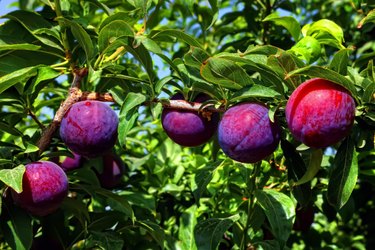
Pruning A Plum Tree Is Very Important

Written by CHRIS DEZIEL and published on https://www.hunker.com/

Plum trees are deciduous, flowering trees. They can be grown in soil of average fertility and moisture levels. Plant them in a spot that drains well and is in full sun. Plum trees need to be pruned once a year so that they’ll retain a healthy shape and produce abundant fruit. The timing is important, since pruning at the wrong time of year can expose the tree to disease.

How to Prune a Plum Tree

Pruning a plum tree can serve two purposes, depending on which time of year you do it. When you prune in the winter, you revitalize the tree and stimulate growth the following spring, whereas when you do it in the summer, you slow unruly growth and limit the size of the tree. The main purpose of pruning is to keep the tree healthy and maximize fruit yield, but the purpose can also be decorative, aimed at making the overall tree attractive in the landscape. In this regard, pruning is similar to trimming, although the two techniques aren’t exactly the same.

Ripe plums on tree.

Proper pruning improves the quality of fruit that a plum tree bears.

A tree that has had regularly pruning from the time it was first transplanted will be a balanced specimen in which air can circulate freely through its branches. Because the fruit has plenty of room to grow and get lots of sunlight, it is bigger, healthier and tastier than the fruit that grows on an untrained tree. In addition, the fruit is easier to reach on a tree that has had regular pruning, because the height has been limited and there are fewer cross branches in the way.

Pruning a mature tree that hasn’t had regular care can be a daunting task. You may have to remove a number of fairly large branches to improve airflow and modify the shape of the tree. Whether you’re pruning a young tree or a mature one, it’s important to use clean tools and to make clean cuts to avoid exposing the tree to fungal diseases and harmful microorganisms.

Pruning techniques change slightly as a tree goes from a young, newly planted specimen, to a mature, fruit-bearing tree, to an established landscape tree.

Pruning a Young Plum Tree

agriculture, the cultivation of fruit trees, a human hand a fruit transplanted kidney

It’s best to prune young trees during the dormant season.Image Credit: Valery Ambartsumian/iStock/GettyImages

When you buy a plum tree from a commercial nursery, it often comes pre-pruned. If not, you should plan on pruning it back during the first dormant season—late winter in most of the United States. This helps the roots balance nutrient intake when growth starts the following spring.

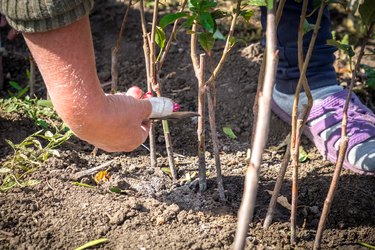
The first pruning is somewhat radical. Choose one branch to keep and cut off the others, leaving a short collar on the stem. Finally, cut back the main branch so that it’s only about 30 inches long. Be sure the cuts are clean and smooth, and use latex to seal the cuts to prevent infection to the tree. Do not prune the sapling during the summer.

During the next dormant season, choose four branches evenly spaced around the main trunk to keep and cut off the rest. This ensures the tree will have a balanced shape as it grows. Cut back the four keeper branches, leaving only one or two buds on each of them, and cut off about a foot from the top of the tree, just above a bud. Besides limiting the height of the tree, this forces the roots to send nutrients into the keeper branches and makes for a bushier tree. Avoid pruning during the second summer.

In the third dormant season, the tree will have grown several more lateral shoots. Choose four or more of these evenly spaced around the trunk as keepers—along with the four original ones—and cut off the rest. Cut another foot from the top of the trunk. Repeat this pattern for one or two more years until the tree reaches its optimal height for fruit production and retrieval.

Pruning a Plum Tree Once It Matures

Pruning a plum tree.

When a plum tree matures, it’s best to do all the pruning in the summer.

Once a plum tree matures, and as long as it remains healthy, it doesn’t need revitalization, and since winter pruning increases the risk of infection by silver leaf, it’s better to avoid it. Summer pruning, on the other hand, now helps maintain the shape and health of the tree. Complete all summer pruning by mid- to late-July to prevent frost damage to the tree.

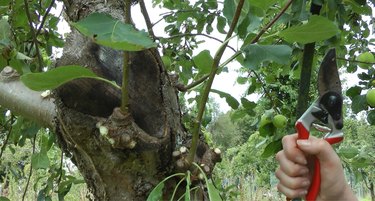
  1. Start by cutting off dead or diseased branches. If a particular branch doesn’t have any fruit growing on it, cut that branch off so the tree won’t waste energy on it. Prune it back to the trunk rather than back to a bud. It’s never going to bear fruit, so you don’t want it to sprout again.
  2. You should also cut off any suckers growing at the base of the trunk. These drain the tree’s energy and will never bear fruit. Cut them off as close to the trunk as possible or, if they are small enough, simply pull them off.
  3. To maintain good air flow through the tree and maximize fruit yield, you want to remove any weak or spindly branches that can’t support fruit.
  4. Eliminate any branches that cross over each other. In such situations, keep the stronger branch and cut the smaller one back to a bud that points in the direction you want the branch to regrow.
  5. Any branches that curve toward the trunk or grow parallel to the trunk also should be removed.

Pruning an Established Plum Tree

Plum tree

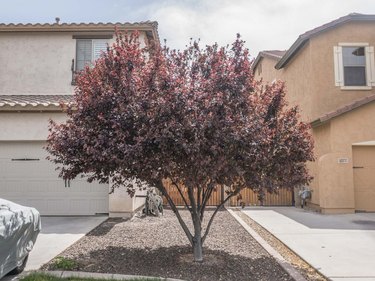
A mature plum tree that is kept properly pruned can be a valuable landscape specimen, even without fruit.

It isn’t unusual for a plum tree to come to full maturity without any pruning at all. Such a tree is bound to be unbalanced, with misshapen or dead branches, and undersized, hard-to-reach fruit. Summer pruning can correct the faults, but you may have to spread it out over two or three seasons to avoid stressing the tree to the point of damage.

You’ll need a stable ladder to reach the top branches, a sharp pair of secateurs and a pruning saw, because some of the branches you need to remove are likely to have diameters in excess of 2 inches. It’s also a good idea to have paint on hand for sealing the cuts to prevent infections. You can buy this paint at a garden center or you can make your own. You should also have a plan for disposing of the branches you cut. You may end up with a good number of fairly large ones.

  1. Start by removing all damaged, diseased and dead branches, cutting them back to healthy wood—which may mean cutting them back to the trunk.
  2. Branches that cross each other are the next to go. They block airflow and access to fruit, and, in places where they rub against each there, the friction can remove bark and expose the tree to infection.
  3. Finally, clear out extraneous growth from the center of the tree. Ideally, the tree should have no more than four main branches spaced evenly around the trunk, and smaller branches should splay out at 45-degree angles from these branches. Remove branches that grow vertically or with a downward slope. If a branch is growing at an unfavorable angle but is otherwise healthy and producing good fruit, you may want to alter its growth direction using ropes and stakes.
  4. Finally, cut the top of an excessively tall tree back by about one-third to focus the energy on lower branches. They will produce fruit that is easier to reach.

Original post here https://ift.tt/3wWAC2e.

from AAA Tree Lopping Ipswich https://ift.tt/3vNB4zn
via IFTTT

Why Are My Tree’s Leaves Turning Brown? Here Are Some Reasons

Written by David Beaulieu and published on https://www.thespruce.com/

Browning leaves are most often seen in the colder months, as trees are susceptible to frost damage that can discolor their foliage. This doesn’t always indicate that your tree itself is dying, but it may temporarily alter your tree’s appearance until warm temperatures arrive and the ground becomes moist.

Causes of Tree Leaves Dying or Turning Brown

brown spotted leaf on tree trunk

Tree care is a critical investment for the future of your landscape. A healthy tree may occasionally have brown leaves, dead limbs, and other common problems, but sometimes it means you have a dying tree. It’s important to take notice of such troubling signs and learn their causes so you can try to address the issue. In many cases, the causes are specific to the type of tree.

Over-Exposure to Sun

Brown leaves are often related to over-exposure to the sun, commonly known as “leaf scorch.” This can be aggravated by problems such as lack of water, too much fertilizer, damage to roots, and exposure to strong wind, all of which can stress the tree and leave it vulnerable to the sun. Young trees are especially susceptible to sun overexposure, so it’s advisable to plant them in the spring or fall when UV rays are less intense.

Volume 0% How to Fix a Refrigerator Light That Won’t Turn On

Transplanting the tree to a location with less sun or providing a shade screen or reflector can help to treat sun over-exposure. In some cases, cheesecloth can be applied to the tree’s branches to add a layer of protection.

Frost Damage

Brown leaves appearing on trees in spring can indicate frost damage. This can ruin the tree’s appearance temporarily, but it’s unlikely to kill the tree. If browning appears in summer, inadequate watering or high winds may be the cause. Leaves with black spots are likely caused by a fungus that thrives in moist conditions, making this a common problem in humid climates.

Magnolia trees are often susceptible to frost damage, especially if they’re young. If you think your tree may be bothered by freezing temperatures, you can wrap it in burlap or an old sheet to protect it during the coldest months.

Transplant Shock

Trees that have recently been transplanted often experience a difficult period of transplant shock, leading to a host of potential problems, including leaf wilt, leaf scorch, yellowing leaves, and leaf rolling or curling. Don’t assume you need to water a tree more just because it has brown leaves when its foliage would normally be green.

Don’t worry if your tree is experiencing transplant shock, as most often it will be overcome with time. Usually, if you consistently give it the right amount of water, the tree will begin to thrive when it starts to take root. To help prevent transplant shock, let the tree acclimate to its new home for several days before placing it into the ground. Also, make sure the planting hole is at least two to three times larger than the root spread and deep enough to allow more space for growth.

In the case of Bradford pear trees, leaves may turn black (not yellow or brown) after transplanting. The culprit may also be fire blight disease, so-called because it causes tree parts to look as if they’ve been burned. If you do suspect you have an issue with this disease, an arborist can treat the bacteria with a specialized spray and remove infected branches.

Insects and Disease

When treating your tree for insects or disease, it’s important to confirm exactly what the issue is before taking action. Once you’ve targeted the condition, most often there is a type of spray that will aid in eradicating the insects or disease.

Emerald cedar, or ‘Emerald Green’ arborvitae, commonly develops brown leaves in summer. This can be due to several factors, including insects, diseases, and even dog urine. Of course, the problem also can be simply due to drought. Brown leaves on the inner part of Emerald cedars are normal during fall and spring, but leaves turning brown at the outer tips of branches can indicate serious problems.

Insufficient watering

Many trees need a significant amount of watering, especially if they’re young or newly transplanted. During the first few months, a daily watering with a hose is necessary for many types of trees if you don’t have an irrigation system in place. If your area is experiencing a particularly dry season, more established trees will also require watering to maintain their health.

It’s possible to give too much water to a tree, so be on the lookout for yellowing or drooping leaves that indicate overhydration, as opposed to dry, brown leaves that are a result of lack of water. If you think you may have over-watered your tree, take a break from daily watering until the leaves start to perk up and the surrounding soil has dried.

Soil compaction

If a tree is planted in compacted soil or clay, the lack of space for the roots to expand makes it difficult for the tree to thrive. Before planting, make sure the ground is loamy and well-drained, and that the soil has been loosened in order for the tree to take root with ease. You can mix in organic material like mulch into the clay or compacted soil to make it more inhabitable for a tree, but this may be difficult to do without the help of a rototiller or excavator.

Over-fertilization

Fertilizer can provide a boost of nutrients and help a tree thrive, but too much of this tree food can actually cause harm. Over-fertilizing can burn your tree’s roots or foliage, and in some extreme cases, the tree may die. It’s important that you make sure the fertilizer you use is compatible with your tree, that you’re applying the correct ratios, and that the feedings are spaced out over the suggested amount of time.

If you believe your tree is experiencing the effects of over-fertilization, trim back overtreated branches and flush the surrounding soil with water. You can also protect the root base with a layer of mulch, flushing once more with another round of water after application. Repeat the watering process as necessary, making sure to give enough breaks to prevent overhydration.

Original post here https://ift.tt/3petM5q.

from AAA Tree Lopping Ipswich https://ift.tt/3petMCs
via IFTTT

Cutting Trees Is A Big Work You Must Do It Safely

Written by Lisa Hallett Taylor and published on https://www.thespruce.com/

Safety isn’t a throwaway word when it comes to felling trees and running chain saws. You must take it seriously. There are a few absolutely essential safety gear items you need to wear for any chain saw work, and especially when felling a tree: – A logger’s helmet to protect you from falling branches, a major cause of logging injuries. – Earmuffs and a face screen to protect your ears and eyes. – Safety glasses to keep the dust out. – Kevlar chaps, which will stop a chain instantly should you happen to drop the bar against your leg.

How to Cut Down a Tree Safely

Cutting Down a Small Tree

Trees are valued landscape features. They give us shade, act as windbreaks, and provide natural beauty to our yards. Well-maintained trees can even add resale value to the home. Yet sometimes those trees do need to be cut down. They might have become an eyesore or a nuisance or they may be blocking the house, other trees, or foliage. In extreme cases, trees can become safety hazards when they are dead or insect-ridden. 

Cutting down a tree by yourself with safety in mind is not as simple as turning on the chainsaw and yelling timber. There are a few crucial tips to be learned for how to cut down a tree safely. Plus, the most important part of cutting down a tree safely is knowing when it is best to hire professional tree experts.

  • 01of 10Check With Your Local Permitting AgencyYou may need a permit to cut down trees, even on your own property. Communities often regulate the removal of trees that are larger than a certain diameter. This is especially true when your property is in an environmentally critical area or near a shoreline or watershed.
  • 02of 10Suit Up With the Right Safety GearProper tree-felling safety gear includes:
    • Helmet
    • Hearing protection
    • Safety glasses
    • Clear face screen
    • Chaps
    • Long-sleeved shirt
    • Pants
    • Steel-toe boots
    • Protective glovesFEATURED VIDEOVolume 0% How to Read a Tape Measure
  • 03of 10Make Sure You Have the Right ToolsStart with a properly sized chainsaw for the job. For smaller trees, chainsaws in the 16- to 18-inch length work best. If the trees are especially small in diameter, you may even be able to use a 14-inch chainsaw. Choose either an electric or a gas-powered chainsaw, based on how much cutting you expect to do and the distance from a power source.Another important tree-cutting tool for safety is a felling wedge. Pounded into notches that you have cut with the saw, a felling wedge helps you steer the tree to fall in a certain direction. Plus, it prevents the saw from becoming stuck in the notch.
  • 04of 10Estimate Where the Tree Will FallIf you think you know how tall a tree is, you just might be wrong. Calculating the height of trees is difficult because you cannot measure it with ordinary measurement techniques. Instead, estimate with an axe handle or any comparably sized stick.
    1. Find a stick that is the length of your arm.
    2. Hold the stick upright, perfectly vertical, at the bottom of the stick. Your arm must be straight and horizontal.
    3. Walk back or toward the tree until the top of the tree matches up with the top of the stick.
    4. Mark where you are standing.
    5. Measure the distance from your standing position to the tree. This distance is roughly the height of the tree.
  • 05of 10Clear the Surroundings to Create a Felling AreaThe area where the tree will fall must be clear of all obstructions such as structures, power lines, outbuildings, vehicles, garages, and even other trees. If the tree falls on another tree, it can be difficult and dangerous to extract.TipGenerally, you’ll want to create a generously sized safety radius of twice the height of the tree.
  • 06of 10Work With a PartnerWhen you cut the tree with a partner, you have both a second set of hands and an observer who can keep an eye on the tree.  
  • 07of 10Devise an Escape MethodYou should never stand on the side of the tree where you expect it to fall. Even so, you still want to look for two escape routes—on your side of the tree—just in case the tree does fall in your direction.
  • 08of 10Be Observant and ListenA tree that is beginning to fall usually will announce itself with a cracking sound. Take frequent cutting breaks, both for rest and so you can see whether the tree is starting to fall—or to lean in an unexpected direction.
  • 09of 10Evaluate Whether the Pros Should Take OverTree-cutting is one of those projects that looks deceptively simple. Yet cutting a tree cleanly, predicting where it will fall, and doing all of this safely is often a job best left in the hands of professional tree experts. Tall trees, large-diameter trees, nearby obstructions, and unusual features of the tree are just a few of the reasons why you may want to hire a tree removal service. Unusual features include large dead branches, dead trees, or trees that lean in one direction.
  • 10of 10Know What Not to DoHazardous do-it-yourself tree cutting techniques are numerous. Some of the most frequently used techniques that can result in injury or death include:
    • Standing on top of a ladder when cutting the tree down or any parts of the tree
    • Miscalculating the fall length and hitting a power line or the home
    • Not watching for loose or dead branches
    • Cutting directly over your head
    • Not being aware of pets or bystanders

Original post here https://ift.tt/2S6jdoQ.

from AAA Tree Lopping Ipswich https://ift.tt/3yXuCrJ
via IFTTT

Interesting And Fascinating Facts About Palm Trees

Written by Lisa Hallett Taylor and published on https://www.thespruce.com/

For tropical landscaping, nothing conjures up the idea of an island escape like a palm tree. If you live in an arid, Mediterranean climate and can find palms at your local garden center, it’s likely that you’re in a region suitable for growing palms.

Before deciding on a variety, however, you might want to learn more about the intriguing history of palm trees, as well as facts that are good to know or will help you decide whether you want to invest in a palm.

11 Fascinating Facts About Palm Trees

closeup of a palm tree
 The Spruce / Ulyana Verbytska

For tropical landscaping, nothing conjures up the idea of an island escape like a palm tree. If you live in an arid, Mediterranean climate and can find palms at your local garden center, it’s likely that you’re in a region suitable for growing palms.

Before deciding on a variety, however, you might want to learn more about the intriguing history of palm trees, as well as facts that are good to know or will help you decide whether you want to invest in a palm.

01of 11Palms Can Be Skyscrapers 

Some palms can reach heights of 70 feet or much more. The Quindio wax palm (Ceroxylon quindiuense) is the tallest species and can grow 160 to 200 feet high. It is the national tree and emblem of Colombia and is now a protected species, which means it can’t be used for logging.Other tall palms include:

Mexican fan palm (Washingtonia robusta), seen in the Los Angeles and Southern California area, can grow up to 98 feet tall.

Date palm (Phoenix dactylifera), a fast grower, can reach up to 80 feet.

02of 11The Palm Is a Symbol of Life 

The Assyrians believed that the ultimate symbol of eternal life was a tree growing beside a stream. The tree they valued most was the palm.FEATURED VIDEOFor a low maintenance plant with over 1,000 species and color varieties, consider the Peperomia Plant. In this video, we explain basic care instructions for the beautiful plant, including helpful tips and tricks to keep it thriving. Known for their red, grey, and purple leaves with striking golden accents, this colorful plant should live in a pot with a good drainage hole. Provide orchid potting mix, with light, but thorough waterings. Place somewhere with indirect sun, and no worries- these plants are non-toxic to humans and pets.Volume 0% How to Grow and Care for a Peperomia Plant

03of 11Palms Are Biblical

On Palm Sunday, a week before Easter, Christians often carry palm fronds as part of a symbolic ritual that commemorates Jesus Christ’s triumphal entry into Jerusalem, as foretold by the prophet Zechariah. According to the Bible, people cut branches from palm trees, laid them across Jesus’ path, and waved them in the air.

04of 11Los Angeles Loves Palm Trees 

Franciscan missionaries are credited with being the first to plant palm trees in California for ornamental purposes. By the turn of the 20th century, Southern California gardeners were hot for exotic palm trees and introduced them to the area.The 1932 World Olympics in Los Angeles is believed by some historians to be the reason for palms being planted along streets and pretty much every public park and gathering place in the city. This beautification project gave jobs to some 400 unemployed men during the Great Depression. Approximately 40,000 Mexican fan palm trees were planted along 150 miles of city streets. Since then, they’ve become an icon of the region, along with the Hollywood sign, beaches, etc.

05of 11Some Palms Can Last a Century…or More 

Depending on the species, some palms can live for more than a century. That means the palm you plant might outlive you. There is also recent evidence that, at the cellular level, palms may indeed be the oldest living trees because their cells are not replaced with new cells, as is the case with other trees.

06of 11It’s Good to Wash Your Palms 

Everyone knows that you water a tree at its base. Palms are no different, but shooting that hose up to its leaves also is beneficial, helping to knock off the dust and to dislodge insects such as scale, mites, and mealybugs that like to hide out in the long stems of some palms. Washing also provides much-needed humidity, since most palms are grown in dry regions.

07of 11Palms Grow in Containers 

Palms make great patio plants, as they grow they can be moved or replanted from a container to a more sunny location. Just make sure you have the right soil for a patio tree, along with a large enough container.

08of 11Young Palms Are Shade Lovers 

Younger palm trees prefer shade and most varieties will tolerate it when mature. Planting new palms under the canopy of other trees will protect their tender fronds.

09of 11Sago Palms Can Be Bonsai Trees 

The sago palm is a dwarf tree that is not a palm but a relative of conifers and Ginkgo trees. It looks amazingly palm-like and is a popular type of plant used for bonsai trees. However, it is poisonous and should not be accessible to pets and children.

10of 11Trimming Palms Can Be Deadly

Trimming palm fronds is part of what keeps tree-trimming companies busy throughout the year, but this can be dangerous or even fatal work. Deaths have occurred when tree cutters have been suffocated by fronds that have slid down onto the worker and immobilized them. When this occurs, it’s almost impossible for a worker to remove the fronds, because his or her body is pinned against the trunk with hundreds of pounds of pressure from the fronds. The fronds can force a worker’s head and chin to his or her chest, resulting in suffocation.If the palms on your property need trimming, hire a company with experience in palm maintenance. When feasible, they should use bucket trucks or mobile cranes. When this equipment is not available or the location does not permit their use, there is a technique for trimming palms from above, so the trimmer won’t be caught beneath a palm tree’s skirt of fronds.

11of 11Not All Palms Have Edible Fruit

The fruits of many palms, such as coconuts and dates, are delicious. Others, such as sago, are poisonous to humans and animals.

Original post here https://ift.tt/2S6jdoQ.

from AAA Tree Lopping Ipswich https://ift.tt/3g0JOM0
via IFTTT

Maintenance Pruning: Trees In Your Backyard

Written by Lee Reich and published on https://www.finegardening.com/

Hundreds of different kinds of trees can be planted in Florida. Despite the great variety of tree types, there are only a few guiding principles you need to remember when caring for most of them. When you select a tree for your landscape, make sure you know what kind of soil it prefers, how much sun it needs, and any special fertilizer requirements. Otherwise, mulching and pruning will help your tree thrive.

Maintenance Pruning

By relying on a few timely, well-placed cuts, you can keep your deciduous trees and shrubs healthy

Gardeners often spend hours pruning their trees and shrubs in order to control size and shape, but 

pruning

pruning can do more than dictate a plant’s stature. Regular selective pruning, or maintenance pruning, is also a way to keep woody plants healthy and productive. One aim of maintenance pruning is to protect your woody plants from pests and disease, which can gain entry into a plant through dead wood, broken branches, and wounds caused by branches that are rubbing together. By thoughtfully cutting back tips, branches, limbs, and stems, you can also encourage youthful growth that produces abundant flowers and fruits as well as prevent the spread of pests and disease. Know­ing where to begin with maintenance pruning can seem overwhelming since there are so many different trees and shrubs to consider. But by following three basic guidelines—knowing what, where, and when to cut—you will be successful in all of your deciduous tree and shrub pruning endeavors.

There’s a right way and a wrong way to cut

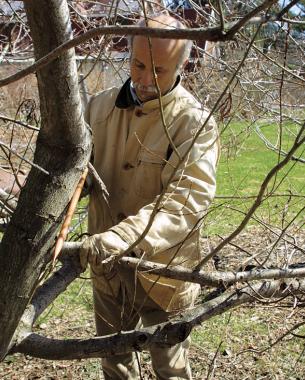
Photo/Illustration: Dolores R. Santoliquido Photo/Illustration: Dolores R. Santoliquido Photo/Illustration: Dolores R. Santoliquido

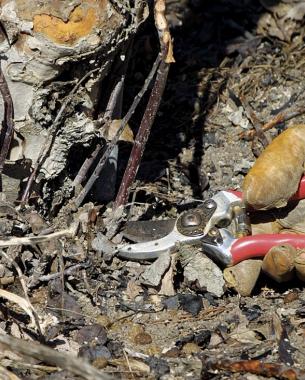
When pruning trees and shrubs, always make an angled cut just above and sloping away from a viable bud. Buds are located immediately above the point where a leaf is attached to a branch or, if the plant is dormant and leafless, above the leaf scar (a mark left on a branch where the leaf was once attached).

Be careful not to cut too close to the bud. This will damage the bud, causing it to dry out and die—leaving a dead stub. And don’t cut too far above a bud, either, because the stub that remains will eventually die, rot away, and provide a possible entryway for disease.

Prune dead wood to thwart disease

Cut dead and diseased branches about 6 inches into live, healthy wood. Photo/Illustration: Steve Aitken A healthy branch will reveal a green layer below the bark after a light scraping. Photo/Illustration: Steve Aitken

To keep your plants in top condition, inspect your trees and shrubs regularly for dead branches, broken branches, and branches that are rubbing together. Wounds from such branches expose irregular surfaces (hence more surface area) that take longer to heal than clean cuts, leaving prime entry points for pests and disease. It’s best to prune them as soon as you notice them.

In all three cases, the pruning goal is the same—to remove the problem. For branches that are ailing or dead, the best practice is to make a cut about 6 inches into live, healthy wood (usu­ally evident by the presence of viable buds). Some diseases spread within a plant; by cutting off the diseased part, you stop the advance of the disease. If you are not sure if a branch is dead or alive, gently scrape the bark with your pruners to reveal the color of the growth layer underneath. Green means that it’s still alive. Brown means it’s time to prune. To further avoid the spread of disease, dip your pruning tools in alcohol or a 10 percent bleach solution between cuts.

In the case of a broken branch or a pair of rubbing branches, simply make a clean cut either back to a crotch (an area where the branch meets another branch or trunk) or to the nearest bud.

Thin crowded stems to encourage new growth

crowded stems pruning

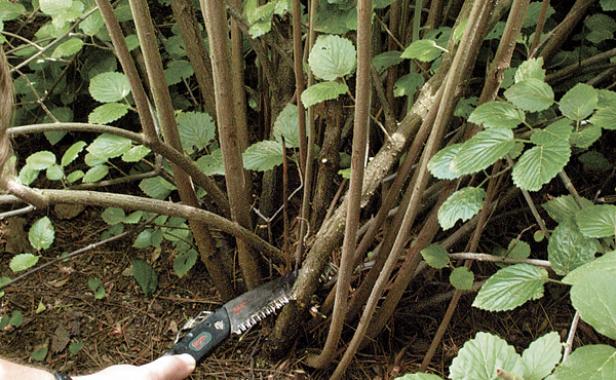
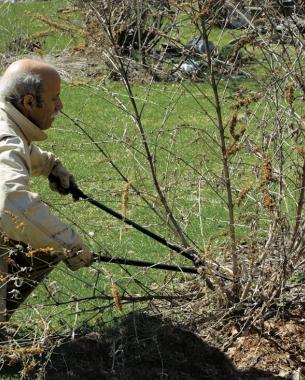
Make room for new stems by removing the old ones. The increased light and air circulation stimulates healthy growth.Thinning, or removing entire stems or branches, is another pruning technique that is done to keep informal shrubs productive and to encourage new growth. First, remove old, decrepit stems that have declined in flower production and have grown too tall (the age at which this happens varies from species to species, so take note of your plant’s performance each year). Prune any candidates back to ground level or to a vigorous shoot near the stem base. This will allow more light into the center of the plant, triggering new shoots to grow. Next, remove some of the youngest stems so that the remaining stems have room to grow. Keep in mind some shrubs grow more new stems from ground level each year than others; the more new stems that grow, the more stems that will need to be thinned out annually. Shrub thinning should be done regularly so that the shrub will uniformly renew itself over time.

Remove suckers at growing points

pruning young

Suckers are vigorous vertical stems that ruin a tree’s appearance. Both types of suckers—water sprouts, which originate in branches, and root sprouts, which grow around the base of trees—appear on fruit trees. Water sprouts create too much shade within the crown (the middle portion) of a tree and are slow to flower or fruit. Root sprouts com­pete with, and eventually overgrow, tree trunks. If a tree is grafted, root sprouts will never have the desired form, leaves, fruits, or flowers of the grafted section.

The best way to remove suckers is to get them while they’re young (under ¼ inch in diameter) and during the early part of the growing season. Simply grab them and give a sharp yank sideways, ripping them away at their growing point. If the suckers are too old to yank off, they must be cut off as close to the growing point as possible. If a sucker is not removed all the way back to its growing point, new suckers will grow from the base of the old one.

Prune deciduous trees when dormant

problem tree branches

Deciduous trees respond best to pruning just before waking up from dormancy in late winter or early spring. Pruning this time of year minimizes winter damage that may occur from pruning cuts and allows you to clearly see a tree’s form and to identify winter-damaged stems. Two indications of winter damage are shriveled or darkened bark and buds that remain lifeless as others swell. Since pruning wounds heal most quickly if timed near bud break, prune trees that are particularly susceptible to infections, like peaches and cherries, just as growth is beginning or even at full bloom.

Prune early-flowering shrubs after they bloom

Early-flowering shrubs form their flower buds on the previous year’s growth, and removing any stems before they bloom means you’re removing potential blossoms, as well. But don’t delay pruning too long after flowering since these shrubs need sufficient time before autumn to fully develop next year’s flower buds. Here are just a few:

Prune late-flowering shrubs before spring growth begins

butterfly bush pruning

Late-flowering shrubs, like those below, form their flower buds on the current year’s growth, so prune them anytime from late fall until just before growth begins in spring.

Original post here https://ift.tt/3fJvcS9.

from AAA Tree Lopping Ipswich https://ift.tt/3z0opLM
via IFTTT

Tree Guide: What to Plant Around Fruit Trees

Written by Elizabeth Waddington and published on https://www.treehugger.com/

Fruit trees are a great addition to a backyard or front yard garden. The spring blossoms are as colorful as the fruit that appears later. You may be looking at the bare ground under your fruit trees and wonder what to plant around them. Companion planting has been around for a long time and is the best way to choose plants to work in around your fruit trees. In companion planting, certain plants grow together help to repel insects and offer nutrients the other plants need. This creates a more conducive ecosystem for your fruit tree and the other plants around it.

Beneficial Plants to Plant Around Fruit Trees

The permaculture practice of ‘fruit tree guilds’ involves specific plantings to support an optimized food yield.

Peach orchards

A fruit tree guild is a group of plants carefully selected to work in support of a fruit tree in your garden. The plants in a fruit tree guild serve a range of different functions. They will happily grow alongside the central tree without overly competing with it, and will help a fruit tree by:

  • Improving environmental conditions; for example, by creating groundcover to reduce moisture loss.
  • Adding fertility by fixing nitrogen, or dynamically accumulating nutrients from lower soil levels.
  • Repelling, confusing, or distracting pest species.
  • Attracting pollinators or other beneficial wildlife.

When creating a fruit tree guild, you will consider plant combinations carefully. You will combine plants to maximize the yield from the tree itself as much as possible. But guild plants can also, and usually will, provide additional yields in their own rights. They can be carefully selected to benefit us, as well as the system as a whole.

One of the most important things to understand about fruit tree guilds is that they are location-specific. What works well in one climate zone, and even in one particular garden, will not necessarily work well in another. Scientific research into this form of companion planting is still in its infancy – but experimentation can help you work out which combinations work well in your garden.

Warning

Be sure that any plants you include in your fruit tree guild are not invasive to your region. Otherwise, you risk harming your tree and neighboring plants.

To help you begin to work out fruit tree guilds for your own specific garden, here are three different fruit tree guilds for different climate types that could serve as a starting point for your own experimentation.

Temperate Climate Fruit Tree Guild

This is an example of an apple tree guild that I have implemented on my own property.

Around the base of the apple tree, I have placed deep-rooted perennials which draw nutrients up from deeper below the ground. These are comfreyChenopodium albumchicorydandelions, and yarrow. Also edible or medicinal plants, these are chopped and dropped to add fertility to the system. They also attract pollinators and other beneficial insects through the summer months. Close by, Elaeagnus shrubs are important nitrogen fixers in the system. In the shrub layer, I also grow gooseberries, and other Ribes (currants).

Herbaceous layer plants in a wider ring around the tree include hostas (in areas of deeper shade), sorrelsMalvaGood King Henry (Blitum bonus-henricus), perennial brassicasboragewoodland strawberriesmint, and more. White clover also creates good ground cover and fixes nitrogen.

And around the drip line of the tree, there is a circle of daffodils and perennial alliums. Daffodils help make sure there are pollinators around when fruit trees blossom – and as spring ephemerals, they help keep nutrients and water within the system. Perennial onions help in pest control, and also, along with the daffodils, suppress grass growth.

A scheme similar to the one mentioned above will work (with some alternations) in many temperate climate fruit tree guilds. But it is a good idea to consider including at least some plants which are native to your particular area.

Dryland Climate Fruit Tree Guild

Many of the plants mentioned above will also be suitable for those living in warmer temperate climate zones. Though there are often options better suited to regions with particularly warm or dry summers.

Here is an example of a fruit tree guild created for a mesquite tree – a useful plant that is also a nitrogen fixer – in an extremely arid, hot dryland climate.

Banana yuccaprickly pearchuperosaTurpentine bushsaltbushwestern mugwort and wolfberry.

This shows how looking at plants that grow naturally in an area can often yield good plants for inclusion in a guild.

Subtropical Fruit Tree Guild

In subtropical areas, guilds will typically be more densely planted than in temperate climate areas. The canopy cover will typically be thicker, with fewer open glades.

One example is a citrus, peach, or persimmon tree with Mimosaguavanatal plumthornless blackberries and blueberrieschayacranberry hibiscusgingerturmericlemongrassoreganothymemilkweeds, and other perennial flowers and herbs. With sweet potatoes, and cucurbits vining around the edges of the guild.

These are just a few examples of what might work in different areas. It is always important to look closely at the climate and conditions in your garden before making choices for a fruit tree guild – but hopefully, these scenarios might spark some inspiration for ways to create effective, food-producing fruit tree guilds wherever you live.

Original post here https://ift.tt/34CZDTM.

from AAA Tree Lopping Ipswich https://ift.tt/3uJJOFw
via IFTTT

Proper Way Of Removing A Hang-up Tree

Written by Admin and published on https://chainsawacademy.husqvarna.com/

A leaner–a tree pushed over in a heavy wind or an improperly felled tree–deserves your utmost respect as it may fall on a person with lethal results. A leaner exemplifies an accident ready to happen and needs fixing as soon as possible. While multiple methods of cutting down a leaner abound, unfortunately only one or two techniques work well enough to use safely. Remove a leaner with the help of a friend and follow all safety procedures.

HOW TO REMOVE A HANG-UP TREE

If you accidentally fell a tree into another – always start by taking a break and thinking through the situation calmly. Removing a trapped tree is always a hazardous undertaking and there is no need to rush. Choose the safest solution to the problem even if it takes longer. There are several options. Do not be afraid to call for help – your safety is more important than anything else.

Below are two methods that you can use to easily bring down a hung-up tree – as long as it is not too big or too entangled in the second tree. But first let’s take a quick look at recommended tools and some very important safety rules.

Tools

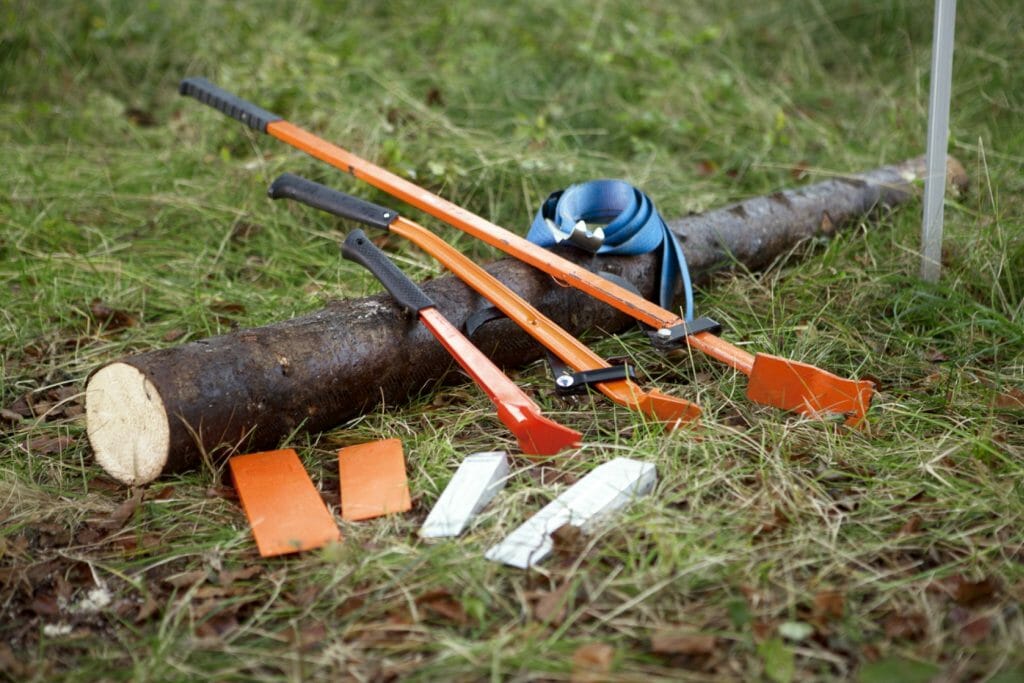
These are tools that will come in handy when removing a hung-up tree:
• Turning strap
• Turning hook. Often comes with the breaking bar.
• Winch (advanced, not covered in this topic)
• Forwarders or tractors fitted with grapple loader or winch (advanced, not covered in this topic)

Breaking bars, wedges and a turning strap lying on a small log on the ground

Safety first!

Working with or close to hung-up trees can be very dangerous. Never leave a trapped tree unmarked. Mark the area with highly visible marking tape if you must leave the area to get other tools or assistance. 

Rolling the tree method

Slightly leaning hang-ups are usually easy to roll down. Use the turning hook or turning strap if you think that the tree is not too stuck. Here’s how to do it.

1. Asses the tree

Forestry worker assessing a tree to decide in which way the tree can be rolled down

Assess the tree to decide in which way the tree can be rolled down.

2. Adjust the hinge

Close-up of a hinge adjusted to make it possible to roll down the tree

You need to adjust the hinge to make is possible to roll down the tree. Start with sawing off the middle of the hinge so that two corners are saved. Then cut off the corner on the opposite side from the direction in which you intend to roll down the tree. Cut this corner with repeated saw cuts diagonally from above. Make sure to leave the corner on the same side that you intend to roll down the tree.

3. Roll down the tree

Forestry worker rolling down the tree using a turning strap attached to a branch as a lever

Take the turning hook (or use the turning strap to attach a branch as a lever) and roll the tree away from you. Lift straight with a straight back and knees bent. If the tree is large or has hung really tightly, you can increase the rolling force by using the turning hook or turning strap with a longer piece from a thin tree.

Step down method

Severely leaning hang-ups can be difficult to roll down, and must be levered or pulled backward. The method is based on removing the tree from the stump or the place where the tree is stuck with the butt end in the ground. The trunk should have a good sliding surface and fall off cleanly.

Be aware that the trunk could sever too early – never stand in the direction of movement or under the trunk.

It is important that the two saw cuts are not made too high up on the trunk as it could “fold down” at the breaking point. If the tree is too tightly hung, you should use a tractor, winch or other machine.

Here’s how to perform the step down method.

1. Create a slider bed

2. Make the backside cut

3. Place a wedge

4. Saw the front side cut

5. Knock the wedge

6. The hung-up tree slides backwards

7. If needed, lever with a pole

8. If needed, repeat the process

Original post here https://ift.tt/3uJ5lye.

from AAA Tree Lopping Ipswich https://ift.tt/3wVOM3B
via IFTTT

Identifying Potential Tree Hazards in Your Backyard

Written by Glenda Taylor and published on https://www.bobvila.com/

Trees are great to have in the front or backyard; they create a beautiful green scenery with their lush foliage and bring a splash of nature to the landscape. Despite their appeal and many benefits, trees can also pose potential dangers to your property and family. Trees falling on houses can cause a lot of damage and even endanger lives.

It’s not easy to predict tree-falling accidents because even seemingly strong trees do tumble under certain conditions. However, we’ve compiled a list of five signs to look out for when trying to identify dangerous trees.

Top Tips for Identifying a Hazardous Tree

How to Identify a Dangerous Tree

It’s not always easy to identify a tree that’s in trouble. In part, that’s because while trees face certain knowable foes like drought and disease, they are also vulnerable to unpredictable dangers—strong winds, for example, or lighting. Still, a responsible homeowner ought to keep his eyes open for signs of a problem. Read on to find out which red flags to be on the lookout for:

Hide and Seek
To begin your inspection of a tree, head right to its base. If the lowest part of the trunk is obscured by ground cover plantings, pull them back to gain a better view. Here, either hollow cavities or the presence of mushrooms could indicate a serious problem. Move on to checking the ground around the tree’s drip line—that is, the circumference under its canopy. Look for roots protruding up from the ground. Visible roots are not problematic in and of themselves, but if there’s other evidence to suggest that the tree is struggling, then protruding roots might mean that the tree is on the verge of toppling over.

Lightning
If you encounter a tree that’s missing a long streak of bark along its trunk, it was probably struck by lightning. Being composed mostly of water, trees are excellent conductors of electricity. When lightning hits the canopy, the bolt careens all the way day down to the roots, boiling sap in its wake and creating explosive steam. If there’s damage to one side of the trunk only, the tree might fully recover. But if bark’s missing on multiple sides, it’s likely that the tree isn’t going to survive.

How to Identify a Dangerous Tree - Bark Detail

Branch Inspection
Since dead branches are the first to fall, it’s wise to remove them from trees growing close to the house. On deciduous trees, dead branches either have no leaves or brown leaves (in the winter, this is tough to judge). With evergreen trees, look for brown needles and the absence of bark. If you successfully identify dead branches—and if those branches are easily accessible—go ahead and prune. Otherwise, call in a specialist.ADVERTISEMENT

Two-Trunk Trees
When trees have two or more trunks, be sure to look closely at the point where they meet. U-shaped connections between trunks are usually not a problem. A tight “V” shape, however, suggests a weak spot. If you’re worried about a particular tree, you can have a steel or elastic cable installed to keep it from splitting apart in high winds. But to be clear, this isn’t a project for the do-it-yourselfer; hire an experienced pro.

Call in the Pros
If any of the red flags discussed leave you uncertain about the health of a tree on your property, it’s best to call in a certified arborist. Besides having training and hard-earned knowledge, arborists also have specialized tools they can use to make sophisticated diagnoses far beyond the scope of this article.

Additional Notes
If you have work done on a tree, don’t let any of the workers climb the trunk by means of leg spikes. With every step, they’d be punching holes in the tree that would make ideal portals for harmful pathogens. The damage done by leg spikes might not be immediately evident, but it could eventually prove fatal to the tree.

Original post here https://ift.tt/2RdkNom.

from AAA Tree Lopping Ipswich https://ift.tt/3wPX10X
via IFTTT

Fruit Tree Spray Schedule: Tips On Proper Fruit Tree Spraying Times

Written by Mark Wolfe and published on https://www.bobvila.com/

When you first chose your fruit trees, you probably picked them from a tree catalog. The shiny leaves and gleaming fruits in the pictures are enticing and promise a delicious result after a few years of minimal care. Unfortunately, fruit trees aren’t the carefree plants you might hope they’d be. Pests and diseases affect fruit trees in every part of the country. Spraying fruit trees is the best way to avoid these problems, and they work best when they are done at the right time of the year. Let’s learn more about when to spray fruit trees.

Solved! The Best Time to Spray Fruit Trees

Here’s how to know when to spray fruit trees for a delicious backyard crop of apples, peaches, or pears.

Q: There are several fruit trees and vines in my garden that I would love to pick fruit from. Unfortunately, the fruit doesn’t grow very well and the leaves look bad. I probably need to spray but don’t know much about it. Can you tell me when to spray fruit trees?

A: Caring for fruit trees is a year-round job that includes pruning, fertilizing, removing diseased fruit, and spraying multiple applications at different times of the year. Timing is critical for each of these tasks. Pruning takes place in midwinter and late summer to stimulate vegetative growth and increase fruit production. Growers should fertilize trees during their growing season because it is during active growth that they absorb and use the nutrients.

To know when to spray fruit trees, you first need to know what threatens the tree and when the threat is active. An insect egg can lie dormant in the bark of an apple tree all winter, only to hatch and feed on the leaves in spring. Or a particular fungal spore might infect a peach tree only while the flowers are open. Knowing the timing and types of threats for each kind of fruit tree helps you to spray for maximum protection and minimal waste.

Dormant spray, insecticide, fungicide, or general-purpose spray? Know what to spray and when to spray it.

Spray applications are timed to control disease and insect pests. Timing coincides with plant and fruit development. Climate and weather play a huge role in the timing of fruit tree growth and development. Growth stages to watch for include dormancy, preblossom, blossom, petal fall, and fruit formation. Each stage has specific, observable characteristics.

Dormancy is the time before buds begin to swell in spring. Preblossom stage includes five distinct growth stages that are observed on the tree buds before the flowers open: silver buds, green tips, half-inch green, tight cluster (of flower buds), and pink (but not yet open) flower buds. Blossom is the stage from the time the first flower opens until the last petal drops. Petal fall is the time after blossom, before the first tiny fruits begin to develop. Fruit formation is the final stage, which lasts until harvest.ADVERTISEMENT

Avoid spraying while flowers are open, since insecticides sprayed at that time kill bees and other pollinators. Read and follow all safety precautions to minimize personal exposure to pesticides. Always follow pesticide mixing instructions. Increasing the concentration of the chemical in the spray solution does not kill insects faster. In fact, doing so kills more nontarget species and increases the likelihood of runoff contaminating local streams and groundwater.

  • Dormant spray, or dormant oil, refers to the timing of an application of horticultural oil. When sprayed on dormant fruit trees, horticultural oil kills overwintering scale insects, mealybugs, mites, aphids, and other pests on the bark of the tree. Depending on the manufacturer, horticultural oil has either a mineral (petroleum) or plant base. One application per year, or less, is typical.
  • Insecticidal sprays kill insect pests, especially those that feed on foliage, bore into trunks, or spoil developing fruit. Most fruit crops require multiple applications through the growing season for protection against different bugs. Avoid spraying insecticides while flowers are present, as these products also kill pollinators.
  • Fungicidal sprays control the spread of fungal and bacterial diseases in fruit trees. You might need to apply fungicide several times throughout the growing season to protect against different diseases. Although fungicide is not rated for control of insects, many of these products can damage or kill pollinators, so avoid spraying fungicide while flowers are open.
  • General-purpose sprays control most insect and disease pests of fruit trees. Simply spray a single product at defined intervals throughout the growing season. There is no need for specialized knowledge of plant diseases or insect life cycles. On the downside, using only general-purpose fruit tree spray increases unnecessary pesticide exposure. There are times when only a fungicide or an insecticide is required, but this product contains both. Further, general-purpose sprays might not control some problematic insects and diseases.
  • Foliar fertilizer sprays of micronutrients like zinc, copper, magnesium, molybdenum, boron, and calcium can aid fruit development where these nutrients are lacking or unavailable due to soil alkalinity. These elements mix with water for applying directly to the leaves, which absorb the nutrients and efficiently move them to developing fruits. Strictly follow label instructions to avoid damaging trees. Major nutrients such as nitrogen, phosphorus, and calcium should be applied to the root zone.

Need a hand with landscape maintenance? Consider hiring a pro. Find trusted local landscapers and receive multiple no-commitment quotes.

Use general purpose fruit tree sprays during the growing season to protect against insects and diseases.

General-purpose fruit tree sprays conveniently cut spray application time in half. A powerful mix of broad-spectrum insecticide and fungicide is the key. Active ingredients might include organic products like pyrethrins and neem oil, or inorganic chemicals like malathion, carbaryl, and captan.

Apply general purpose fruit tree spray at one- to two-week intervals following key plant development observations. The first application is at green tip, followed by pre-bloom, full pink, petal fall, first cover (one week after petal fall), and second cover (two weeks after petal fall). Trees might require additional treatments. Consult the product label for detailed directions because some chemicals can go on a fruit tree up to the day of harvest, but others indicate “do not spray within __ days of harvest.” Each product varies.

Fertilize during early fruit development.

If your fruit trees show symptoms of deficiency in zinc, copper, magnesium, molybdenum, boron, or calcium, a foliar application of one or more of these micronutrients may help. Foliar spray of micronutrients aids fruit development where certain micronutrients are lacking in the soil or are unavailable due to soil alkalinity. Apply foliar sprays of micronutrients on a cool, overcast day at or near the petal drop stage. Be cautious with this approach as unnecessary or excessive application of these nutrients can damage fruit trees.

Foliar fertilizer cannot replace proper soil fertility. The major nutrients that trees need cannot be absorbed in sufficient quantities through foliage, and fertilizer applied to foliage does not travel throughout the body of the plant.

The best time to fertilize fruit trees is in early spring. Apply granular fertilizer across the root zone around the time the leaf buds open. This is the signal that the tree is ready to actively grow. The first flush of growth in spring comes from energy stored in the roots. By the time the fertilizer penetrates the soil into the root zone, the tree is ready to take up the nutrients for optimum growth and fruiting.ADVERTISEMENT

Avoid fertilizing after mid-spring. A spike in soil nutrients during fruit development can cause trees to abort fruit to produce more vegetative growth.

Use dormant sprays in late winter to kill overwintering insect pests on fruit trees.

Apply dormant oil in late winter or early spring if there was intense pest pressure during the previous growing season. This treatment normally goes on every three to five years. Unless pest populations spike, it is not necessary to spray dormant oil every year.

You must complete dormant spraying before buds begin to swell. Air temperature is critical during application to ensure complete coverage and avoid damaging the trees. The temperature must be above 40 degrees Fahrenheit during application. While spraying, be sure to fully coat all surfaces of the tree, paying close attention to undersides of branches and branch crotches.

Use fungicidal sprays during the growing season to protect fruit trees against diseases.

Targeted, stand-alone fungicide treatments significantly improve fruit quality when applied at the proper time. Fruit disease spores infect their hosts when environmental conditions are ideal. Some fungal spores activate during cool, wet spring weather. Other diseases spread in hot, humid summer conditions. It is important to anticipate plant diseases and begin treating them just before they arrive.

Each kind of fruit tree has its own ideal fungicide spray schedule based on the diseases that threaten it. Fungicide applications are most critical during the green tip through petal fall stages of apple and pear trees. Peach trees and plum trees require spring, summer, and fall disease control treatments for best results. Find application timing on the product label for the prevention of specific diseases.

Use insecticidal sprays during the growing season to protect fruit trees against insects.

Apply insecticidal sprays at 2-week intervals from green tip until bloom, and from petal drop until harvest for general insect control. It is possible for insects to build up tolerance to even the best insecticide if it is used repeatedly. The solution is to alternate applying insecticides with different active ingredients. If you primarily use a general-purpose spray to kill insects and diseases, alternate the scheduled treatments using a different kind of insecticide to eliminate the risk of pests building up tolerance to either chemical. Read the active ingredients on the label to be sure.ADVERTISEMENT

Use combination sprays during the growing season to target both insects and diseases.

Combination sprays are two different pesticides sold individually, normally an insecticide and a fungicide, mixed into the same sprayer and applied at the same time. Like mixing your own general-purpose fruit tree spray, this practice is a way to customize an application and save time. Combination spraying is a way to do an all-in-one spray with a single application if your normal procedure is to alternate pesticides.

Original post here https://ift.tt/2X0podt

from AAA Tree Lopping Ipswich https://ift.tt/3pfkG8g
via IFTTT