How To Get Rid Of Surface Tree Roots Everywhere

Written by Admin and published on https://backyardables.com/

A tree’s underground root system can extend up to 20 feet deep in ideal soil conditions, and spread over an even greater area. These tree roots can continue to grow even after the trunk is history and, if close to your sewer line or foundation, cause serious damage. Eliminate underground issues with either the chemical or natural treatment described here—just remember to use caution and keep both herbicide and rock salt out of reach of pets and kids. Now read on to get to the root of the problem.

How To Kill Tree Roots Without Killing Tree (Sewer, Yard, and Driveway)

When tree roots are growing up out of your lawn, clogging your pipes, or lifting up the sidewalk it’s nice to be able to kill those roots without killing the tree. Here is how to kill tree roots without killing the tree. To kill and remove a tree root without killing the tree, first, use a shovel or pick to dig around the root. Cut the root from the tree. Dig and pull out as much of the root as you need. Most tree roots will die if cut, however, some roots will need to be treated with a tree killer. Paint tree killer onto the cut root. Don’t get any tree killer on any roots that are still connected to the tree. There are many reasons you might need to kill the roots without killing the tree. I am going to explain in detailed steps how to kill tree roots for each of the most common tree root problems without killing the tree.

How To Get Rid Of Roots In Sewer Line and Drain Pipes

Tree roots are notorious for entering pipes and clogging them to get access to the water and nutrients inside. Sewer pipes and drain lines are the most affected. Mainly because they often have openings for roots to enter.The most permanent solution killing roots in sewer pipes would be to replace them, however, that can be very costly. To temporarily kill tree roots in sewer pipes or drains use a tree root killer like Rootx or Copper Sulfate. Pour it down your toilet or drain and it will kill all the roots in the pipe without killing the rest of the tree.For more information on the best tree root killers check out my tree root killer guide. If your drain or sewer is completely clogged call a plumber.  They can mechanically cut the roots out to unblock your pipes. Treat with a tree root killer after because often cutting roots will onset rapid regrowth.Even though the roots in the sewer or drain pipe will be gone, the openings for more roots are still there. So you will need to continue to treat your pipes every year to continue to kill roots growing in your sewer or drains.Many old sewer and drain pipes used to be made with materials that break down and corrode over time like clay and cast iron. Installing new sewer pipes shouldn’t allow roots to enter if properly installed.

How To Get Rid Of Tree Roots In Yard and Lawn

There is nothing more annoying than a tree root sticking out of your lawn. It looks bad and it could damage your lawn mower. The reason roots do this is that they are trying to get access to all the water at the surface from your sprinklers.A more permanent solution would be to plant a raised flower bed around the tree but you can remove the root as well.If you’ll rather have that root gone then use a shovel or pick to dig around the root. Cut the root from the tree. Dig and pull out as much of the root as is sticking out of the ground.Once cut most tree roots will die, however, some roots will need to be treated with a tree killer. You can see a list of trees that need to be treated and ones that don’t here.Treat trees like poplars, elms, and cottonwoods with a tree killer to prevent a new tree from growing.Paint the root with a tree killer like Tordon onto the cut root. Make sure not to get any tree killer on any roots that are still connected to the tree. Common herbicides like roundup will not work.Replace the dirt and grass and you shouldn’t have to worry about a root in your lawn for at least a couple years.

How To Kill Tree Roots Lifting Driveway, Sidewalk, and Pavers

Trees planted next to a driveway or sidewalk will almost always lift and crack the cement. It’s a shame to kill the tree but that may be your best option. You can cut the root so it won’t do further damage and I will explain how to do that below.If the best option is to kill the tree before you do plant some trees further away from the driveway or sidewalk. Once they are grown you can cut down the tree that is causing problems.The best way to get rid of tree roots that are lifting up your driveways it to cut them from the tree. Dig a trench next to where your driveway or sidewalk is getting lifted. Cut the roots doing the damage. This will prevent further damage to your driveway for a least a couple years until a new root grows back.One way to prevent the tree root from growing back in the same place would be to get some hardibacker board or cement board.  Place it as a barrier next to your concrete where the root was going under the cement.That way the root will have to go under the board. This may not be a permanent solution but it should buy you more time from that root growing back under you cement.Applying a tree killer to the root is not necessary. Getting your driveway back to normal is going to be really difficult and you may want to just leave it as is or hire a professional concrete lifter. You could cut out the concrete and re-pour new cement. Honestly, that may be the best way to fix the damaged area.When tree roots are lifting pavers then you can pull up the pavers and just re-level the ground and replace the pavers. Unless the root is at the surface, then you will need to dig out the root cut it from the tree and replace the pavers.

How To Stop Trees From Sending Up Shoots

Aspens, Poplars, Cottonwoods and Elms are the worst I know of for sending up shoots in your lawn. Getting rid of them will very for each type. Most trees will send up shoots when the tree is under stress.The best and first method is to make sure your tree is getting adequate water, sun, and nutrients. There are some products that say they will stop suckers from sprouting in your lawn. Be very careful about using those products because they may kill your tree and I am doubtful they are effective.Most arborists will recommend the best way to get rid of tree suckers in your lawn is to just cut them with pruners. But let’s be real a mower is way faster.

Aspens 

Aspens are some of the largest living organisms in the world. They are one tree all connected at the roots. If you use an herbicide you may risk killing the large aspen trees in your yard. That only really leaves you with two options. You can dig up and remove roots or just mow your lawn every week to keep them down.

My cousin just spent hours digging up some of his aspen roots that were sending up shoots. He found that it just stimulated rapid regrowth and he had the same problem after a couple months.The best solution for getting rid of aspen shoots in your yard is to just keep them mowed. I know that’s not what you wanted to hear. Unless you want to completely get rid of your aspen trees that’s the only real option.

Poplars & Cottonwoods

Poplars and cottonwoods are very closely related trees. They both send out seeds and send up shoots from their roots. The safest way to kill suckers shooting up in your yard without killing the main tree is to just cut them with pruning shears.It is hard to tell if they are growing from a seed or from the roots. Your best option is to just use pruning shears. I have read reviews where someone used a tree killer to kill one of his cottonwood trees and all the rest died.Needless to say, he was pretty heartbroken. So be careful unless you don’t care if your other poplars and cottonwoods die as well.

Elms

I have a ton of elms in my yard and they are constantly sending out seeds. The nice part is they don’t usually send up suckers from their roots. So you are free to kill them with chemicals.It’s defiantly quickest to just mow the ones that are popping in your lawn. Any that you miss you can spray with an herbicide. Just mix and spray the leaves. I mix a gallon of an herbicide in a sprayer and am quickly able to kill all the elm tree sprouts that I missed with the mower. In a couple weeks they will completely die.Cut down and treat elm trees larger than about 4 feet with a tree killer that works like Tordon or 2-4-D.That’s how you get rid of tree roots without killing the tree. Whether you have tree roots growing in and clogging your sewer pipes, lifting up your driveway or cumbering your lawn you should know the best way for how to kill tree roots without killing the tree.

Original post here https://ift.tt/2SiZ2Ej.

from AAA Tree Lopping Ipswich https://ift.tt/2T8E6Qd
via IFTTT
Ignoring Tree Maintenance Can Be Costly And Dangerous

Written by Jessica Greaves and published on https://blog.homestars.com/

Tree trimming and tree maintenance is an issue every homeowner must face at some point. Many people choose their home partially based on the surrounding land and treescape. With this comes the responsibility of caring for trees and vegetation on the property. Damaged, rotten or fallen limbs can occur quickly in the event of a storm, or over time based on tree care, environmental conditions, and age. To prepare and ensure the beauty and health of one’s property, homeowners need to understand why they may need the service of a professional arborist – and – what a responsible, licensed, and expert tree service can do provide.

4 Dangers of Ignoring Tree Maintenance

4 Dangers of Ignoring Tree Maintenance

Just like the rest of your home, the trees on your property need to be maintained throughout the year. Regularly keeping up with maintenance will ensure you’re not caught off guard by a fallen tree branch. By taking the time to look out for broken limbs or signs of disease, you’ll avoid putting your home, family, and property at risk. Here are the top four dangers of ignoring tree maintenance.

1. Injuring People

By far the worst thing that can happen by ignoring tree maintenance is injuring another person. When a tree becomes damaged, sick or unstable, its branches are much more likely to fall off and injure someone. This could be a member of your household, a neighbour, or a passerby. A damaged tree may lose a branch quickly and without warning, making them a real hazard. This is why it is so important to keep up with your tree maintenance and to connect with a tree service company if you have any concerns about a tree on your property.

If you have damaged or unstable trees on your property, your best option is to have them removed by a tree service company before they cause serious bodily injury. A damaged limb can fall off at any moment, and if a tree’s roots are rotten, it could completely fall over without warning. It is your responsibility as a homeowner to take a proactive approach and protect those who will be on and around your property.

2. Damage To Home & Property

tree fallen on house

Just as ignoring tree maintenance can result in injuries to people, it can also cause major damages to your home and surrounding property. Not only is this damage a big inconvenience to your life, but it can also be quite costly. While your home insurance may offer coverage, this will greatly depend upon the amount of time and effort you put into tree maintenance.

Falling tree branches can easily knock out city power lines, crush your car, damage your roof, and even break windows. Just think of all the home service pros you will have to contact because of one fallen tree branch. Save yourself the time, money and hassle and be sure to have a tree service company properly inspect your trees. As an extra precaution, be sure to also inspect older trees on your property after a large storm.

3. Legal Issues

neighbours fighting over fence

A fallen tree branch could result in an assortment of legal issues if you’re not careful. All homeowners are responsible for maintaining the trees on their property. This includes two legal responsibilities: making reasonable inspections and ensuring your trees are safe. Failing to do so can result in you being financially and legally responsible for any damages caused by a fallen tree on you or your neighbours’ property.

Conversely, if a tree from a neighbours’ property damages something on your land, they can be held responsible if they failed to maintain their trees. If your neighbours’ property has damage as a result of a tree on your property, your insurance should cover the costs so long as you can demonstrate maintaining your trees. If it is clear you did nothing about an obvious problem, you can be held accountable for covering any damages.

There are some cases where a homeowner could be held responsible even with proper maintenance. If the tree damage is a result of you attempting to cut down a tree without the help of a professional tree removal company, the damage is your responsibility. Additionally, if you have a dying, unstable or diseased tree and have knowingly done nothing about it, when the tree falls it will be your responsibility to cover the damages. If you know you have a tree that is a potential hazard, it is your responsibility to take care of the tree and prevent any damages.

4. Damage To Other Trees

backyard tree

If you have one damaged or sick tree on your property, it’s likely you will have more. Disease and insect infestations can spread like wildfire to other trees. If left ignored, all of your trees could become sick and eventually die. This can result in limbs falling off and trees falling over. These falling branches can land on other trees and further damage them. Eventually, you will have a domino effect of tree damage.

To avoid spreading sickness and causing more damage than is necessary, make sure you regularly have your trees inspected. If you find not all is right with your trees, be sure to do something about it. A tree service company can perform both of these tasks for you so don’t have to worry about missing anything.

Ignoring your tree maintenance can result in major problems for your home, your property and your wallet. Do not risk the lives of those around you because you cannot be bothered to inspect your trees. Do the right thing and have a tree service company come by to take a look at the health and safety of your trees. This way if a tree branch falls on your neighbours’ lawn, you know you’re covered.

Original post here https://ift.tt/3z8OBUw.

from AAA Tree Lopping Ipswich https://ift.tt/2TEIFSG
via IFTTT

How to Plant a Tree the Right Way: Steps to Get it Right Every Time

Written by Admin and published on https://www.diynetwork.com/

With a little luck and good timing, sometimes simply sticking a tree in the ground and walking away can be enough for it to survive. But knowing how to plant a tree the right way, will ensure success every time. 

Trees have been described as the lungs of the earth for good reason. Without them, there would be no life on this planet. That’s reason enough to plant as many as we can. But when you learn just how important they are for so many reasons, you begin to understand my passion for trees and why we need more.

The Right Way to Plant a Tree

Healthy roots and cultivating the surrounding soil are keys to success in planting a new tree.

Plant Properly

You can plant trees the easy way — just dig a hole and drop it in — but your big investment may not make it through the spring or summer if you don’t get it right the first time.

plant tree properly

Tree Selection

The type of tree you choose should be based on the attributes of the location and what functions you want the tree to serve. Remember that a tree is a long-term investment.

Consider these factors before you plant:

  • Size
  • Privacy
  • Shade
  • Color
  • Fruiting

When selecting a tree at the nursery, here are some things to look for:

Does the tree have desirable branch angles?
Are there dead or dormant branches?
Is the sapling the appropriate size for the container it’s in?
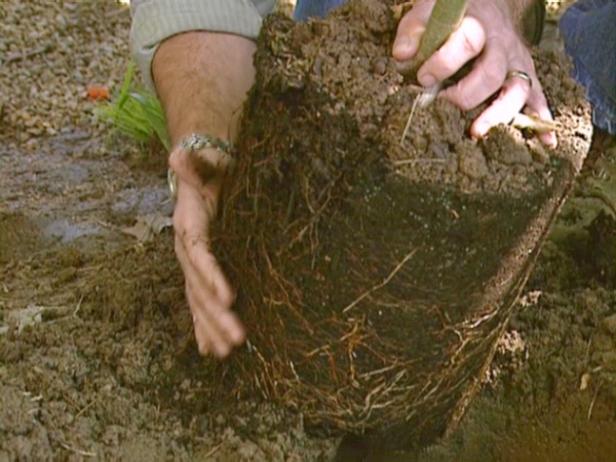
Is the tree root-bound? Carefully remove the tree from its container (or ask your nurseryman to help you) and check the condition of the roots. Look for evidence of “girdling.” Roots circling around the perimeter of the container, surrounding the trunk, can eventually choke and kill the tree.

a tree is a long term investment

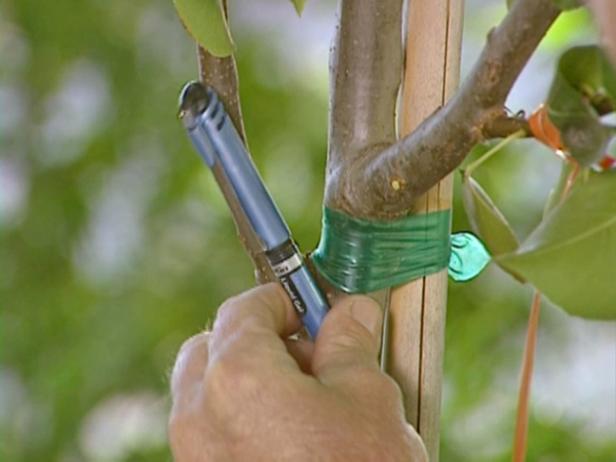
For optimum growth and development, a tree’s branch angles should be at 45 to 90 degrees in relation to the trunk. More acute angles (like this one) may cause fractures as the limb grows and thickens.

Location for Planting

Plant the right tree in the right location to save yourself unforeseen trouble down the road. Trees grow large–up and out. Know your needs. Are you planting near the driveway, pool or another tree? All are important considerations since trees shed leaves, branches, fruit or seeds, etc. Root invasion (such as into underground pipes) can cause costly damage to your property and shorten the life of a tree.

Planting Technique

Before you dig, make sure that the spot you’ve chosen for your tree does not have any underground lines that would endanger you while planting.

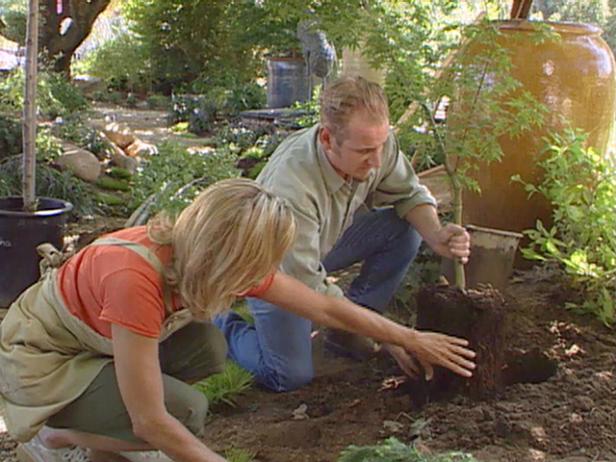
A common mistake when planting a tree is to simply dig a large hole and add amended soil into the hole. This tends to cause a “container effect” on the tree’s roots as they grow to the edge of the amended soil then begin girdling around the perimeter of the space. This can ultimately lead to the tree falling over in a high wind because the tree hasn’t been able to properly anchor itself with its roots. A better technique is to break up or cultivate the soil in a circular area around the location where the tree is to be planted. First, dig a whole that’s the depth and diameter of the plant’s container. Remove and discard grass and weeds from the planting site. Then break up and the soil around the hole so that it’s loose.

planting a tree pedestal style

Here are the basics steps for planting your tree “pedestal style” as shown in the demonstration.

Loosen the Root Ball

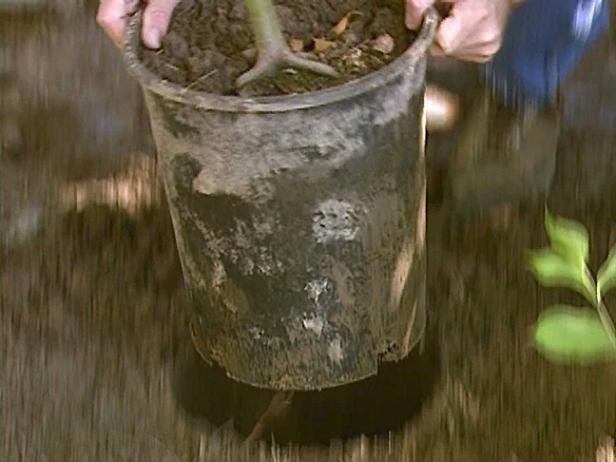
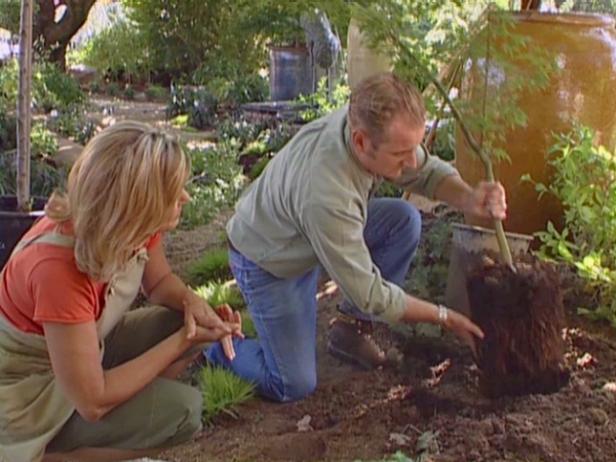
With the hole dug and the soil around the hole thoroughly cultivated, carefully remove the tree’s root ball from its container, and using your hands, gently loosen any outside roots from the sides and bottom, taking care not to break or damage the root ball.

prepare root ball for planting

Place the root ball in the center of the hole.

Place the Tree

Place the tree in the center of the hole on the undisturbed pedestal so the root crown (where the trunk meets the roots) is about 1-1/2 to 2 inches above the surrounding ground level.

place root ball in center of hole

If your tree came tied to a nursery stake, remove the stake.

Remove the Stakes

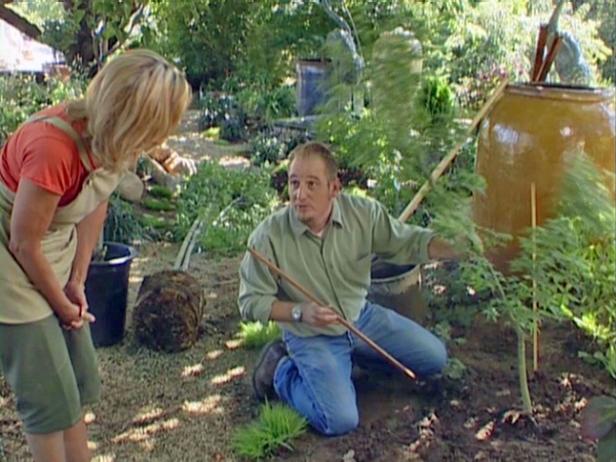
Another common mistake, according to Beeler, is over-staking trees. If your tree is sturdy enough to hold itself upright, do not re-stake it. If the tree needs help to stand upright, use two stakes and ties. Place the stakes on opposite sides of the tree, planted outside the area you just cultivated, approximately 18 inches from the trunk. Place tree tape loosely around the trunk and attached to the stakes with ties. The ties should be loose enough to allow the tree to move back and forth slightly in high wind.

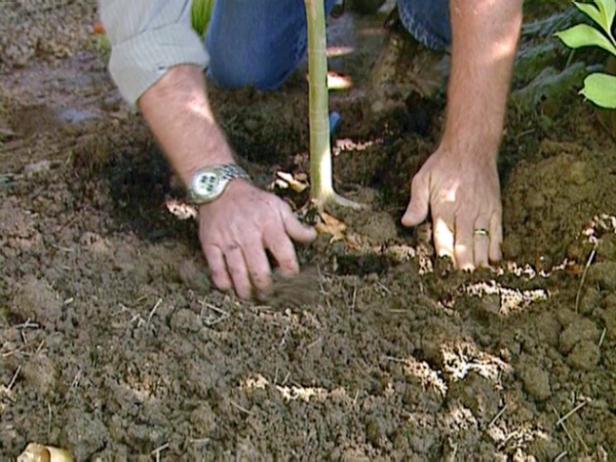
Backfill the hole with the soil you removed. Discard any grass and weeds from the soil. Do not add soil amendments.

a common mistake is over staking trees

If your tree came tied to a nursery stake, remove the stake.

Finishing Touches

Create a circular berm around the base of the tree to help contain water and channel it to the tree’s roots.

Water thoroughly right after planting, soaking the planting area. This will help get the roots established and settle the soil.

Spread mulch or wood chips about 6 inches deep over the entire planting area, leaving a bare 4- to 6-inch area directly around the trunk.

avoid planting tree too deeply

Finish backfilling the hole, but remember not to cover the top of the root ball, which is the root crown stake.

If you did have to stake your tree, periodically check the stakes and ties to ensure that they are not harming the trunk or branches. The tree should be able to stand on its own after one year.

Tree Survival Tips: What to Avoid

Here are two of the more common situations that cause newly planted tree saplings not to survive–and tips for avoiding each problem.

Drowning. Check root moisture for newly planted trees. Don’t be fooled by surface soil conditions: check the soil 4 to 6 inches deep. The soil should be moist, not soggy. One effective means for watering, and one which wastes less water than using sprinklers, is to place the end of hose against the trunk and let the water drip all day or night.

Suffocation. Avoid planting too deeply. The root crown (where trunk meets the roots) should be 1-1/2 inches to 2 inches above ground level.

Original post here https://ift.tt/3g4vAuZ.

from AAA Tree Lopping Ipswich https://ift.tt/3pt2msB
via IFTTT

Different Options Of Removing A Tree Stumps

Written by Jessica Greaves and published on https://blog.homestars.com/

Trees and tree stumps are part of the natural scenery, and one should learn to enjoy them as they are. However, there are times when it becomes necessary to cut a tree. Many people kill or cut a tree but leave the stump. Sometimes it is alright to let it be, but there are times when the tree stump can become a big nuisance!

Removing Tree Stumps

Removing Tree Stumps

If you have an unsightly tree stump in your yard that’s getting in the way, you’ve probably thought about having it removed. While you can always hire a professional to take care of it for you, for those who want to give it a shot on their own, we’ve found 5 ways to remove tree stumps.

1. Burn the Stump

remove tree stump by burning

Image courtesy of Den Garden

For this method, you will be creating a small fire to burn the stump out of the ground. This is a relatively easy method that requires some time and supervision.

Materials:

  • Chopped wood to burn
  • Matches or lighter
  • Shovel
  • Sawdust

Steps:

  1. Before you can begin, it’s important to know if you’re allowed to have a fire on your property. There may be restrictions in your area especially if you live where draughts area concern. You can check online or give your local fire department a call to check.
  2. Once you have the okay to go ahead, you will need to build a small fire around and on top of the stump. The stump should be at the centre of the fire.
  3. Light the fire and keep it burning. Burning the stump to the ground will take several hours so it’s important you have the time set aside to keep an eye on it and add more wood.
  4. Once the stump is gone you will need to shovel out the ash and discard it.
  5. You can then fill the hole with sawdust. You may need to add some sawdust to refill the hole every few months as the ground naturally settles.

2. Chemical Stump Remover

remove tree stump with chemicals

Image courtesy of Eagles Fear to Perch

This method is a bit more involved than burning the stump, but it works just as well. You will need to put in a bit more effort and the wait time is longer for the stump to be completely gone.

Materials:

  • Drill
  • 1 can of tree stump removal powder
  • Axe or shovel
  • Lighter or matches

Steps:

  1. Using a drill with a large bit, drill holes into the top of the stump. The holes should be evenly spaced out and the number of holes will depend on how big your stump is. Space them out a few inches and drill down about 12 inches deep.
  2. Take your stump removal powder and add it to the holes. Be sure to read and follow the stump removal powder instructions as products can vary.
  3. Stump removal powder is made up of potassium nitrate which causes the wood to soften and rot. It’s very important you keep any pets or children away from the stump while the powder is working.
  4. The powder will take a few weeks to work. Keep an eye on the stump and when it looks soft enough to remove it’s time to remove it for good.
  5. Use an axe or shovel to chop up the softened stump into pieces and throw them away. Keep removing the stump until it is as close to level as you can get it.
  6. Burn the remaining bit of the stump using the method above.
  7. Once the stump is gone, you can shovel out the remaining ash and fill the hole with sawdust.

3. Dig Out the Stump

digging out tree stump

This method is best for smaller trees with roots that are not very deep or large. If you have a very large tree stump you may want to consider a different removal method for it.

Materials:

  • Shovel
  • Root saw
  • Grub hoe
  • Sawdust

Steps:

  1. Use your shovel to dig around the circumference of the stump. Keep digging until the roots are exposed and easy to see. You want to expose them as much as possible so removal is easier.
  2. Now that you can see the roots, it’s time to chop them up and pull them out of the ground. Try to clear as much of the roots as possible. You will need to use a root saw to do this. A regular axe will not work as it can shatter if it hits a rock. Be careful when using tools you’re unfamiliar with.
  3. Using a tool called a grub hoe, you can then dig out the remaining roots.
  4. Now that most of the roots are gone, you can use a shovel to remove the rest of the stump. You may need to dig a little more to get it free, but it should come out easily by this point.
  5. Remember to fill in the empty hole with sawdust or another filler.

4. Grinding the Stump

using stump grinder to remove tree stump

This is the most advanced and difficult method. You will need to borrow or rent a stump grinder for this method. Make sure you are comfortable using one before you consider going forward.

Materials:

  • Stump grinder
  • Gloves
  • Safety glasses
  • Ear protectors
  • Shovel
  • Sawdust

Steps:

  1. A stump grinder is a machine that looks similar to a lawnmower but it is used exclusively to grind up stumps and their roots. The stump grinder will reach about a foot beneath the ground. Be sure to wear safety gloves, glasses and ear protectors.
  2. Follow the instructions that come with the stump grinder and begin grinding. You will need to move the stump grinder around the circumference so that all the roots are ground as well.
  3. Once the stump is gone, you will need to shovel out the leftover bits of ground-up wood.
  4. Fill the hole with sawdust to finish the project.

5. Call in the Pros

professional tree stump removal

If the above methods seem too time-consuming or difficult, you can always call in the pros to take care of it for you.

Materials:

  • Computer
  • Phone
  • HomeStars

Steps:

  1. Go to HomeStars’ Tree Removal category and browse companies in your area. Make sure to read reviews and look at each company’s Star Score.
  2. When you’re ready to hire, submit a service request to either one company in particular, or use this form and HomeStars will find 3 reputable tree removal companies in your area and provide them with the job details.
  3. Hire a company and sit back and relax while they take care of the rest.

Now that you know what your options are when it comes to tree stump removal, the only thing left to do is pick a method. Good luck removing your stump!

Original post here https://ift.tt/34TEPHV.

from AAA Tree Lopping Ipswich https://ift.tt/3g1iFKd
via IFTTT

Pro Guide: How To Make A Proper Pruning Cut

Written by JOE LAMP’L and published on https://www.growingagreenerworld.com/

The proper pruning cut necessary to remove large branches correctly is the three-cut method. The first cut undercuts the limb a foot or two out from the trunk. An undercut made correctly eliminates the chance of bark ripping as the branch is removed. The second cut is the top cut, which is made a little farther out on the branch than the undercut. Unless a chainsaw is being used, in which case the top cut should be made directly above the bottom cut. This allows the branch to drop smoothly. The final cut is made just outside the branch collar to remove the stub.

Make the Proper Pruning Cut

One of the primary reasons to prune tree limbs is to open the canopy of your landscape, allowing more sunlight to reach the grass and low growing shrubs. It also makes for a more balanced, aesthetically pleasing look.

However, there is a right and wrong way to prune those limbs. When done right, trees quickly recover but the wrong cut can create a snowball affect of negative consequences.

Three Step Approach

I suggest a three-step approach to pruning tree limbs. Make the first cut about one or two feet out from the tree trunk. This cut starts on the underside of the limb and goes into it, but only about half way. This is a very important step in the process.

The second cut is out beyond the first cut another foot or two. This cut goes down and all the way through the branch. The branch is likely to break away as you make your way through the limb. Because you’ve already made the first cut, the bark will not continue to tear down into the tree trunk.

Without the first cut, as the branch breaks away from the weight of the limb, any remaining parts of the tree (the attached and uncut bark) goes with it, tearing the bark from the tree as well. This creates a big potential problem, allowing a large open wound and entry point for pests and diseases.

The final cut is right at the branch collar where the branch meets the trunk. You’ll notice a flared area here. Make the final cut so that the flair is just evident. If cut properly, this flair will heal over and eventually fill in with new bark or scar tissue. You’ll know the tree is healing properly when you notice what looks like a doughnut forming where you made the cut.

Timing

The best time to remove tree limbs is in late fall through late winter (during its dormant season). Disease pathogens are inactive and therefore not a serious risk to damaging your trees. However, a fresh cut or wound during the warmer months can be an easy entry point for diseases and pests.

Be aware that there are some trees that “bleed” excessively when cut. This is sap oozing from the fresh cut. Although it looks serious and unsightly, it causes no harm. Some trees that are especially prone to bleeding include beech, birch, elm, maple and yellowwood.

You may be inclined to dress fresh cuts or wounds with tree paint or wound dressing, sold and marketed as such. My suggestion is that it is rarely necessary and most of the time actually slows down the natural healing process. Trees are amazing at adapting to adverse conditions so my advice is to make a clean cut and leave it alone.

Pruning tree limbs can be a great improvement to the look and health of your total landscape if you follow the guidelines mentioned above. Taking shortcuts or pruning at the wrong time can lead to more problems later.

Original post here https://ift.tt/3fOav6l.

from AAA Tree Lopping Ipswich https://ift.tt/3x3Zll3
via IFTTT

A Guide to Preserving Trees in Development Projects

Written by Jasper Boekelman and published on https://emeraldtreecare.wordpress.com/

Saving trees makes sense. It improves profit margins, builder reputation and sales. Careful planning, solid communication and a basic understanding of what keeps trees growing will make customers happy for a lifetime.

By their very nature, trees and green space provide benefits and add value to developments. The ability of trees to improve and maintain the quality of water, soil, and air and to remove pollutants from the air is well known. Trees also provide shade and help lower temperatures during hot weather. Trees enrich people’s lives and beautify landscapes. Preserving trees has positive effects on the image and attractiveness of developments and enhances developers’ reputations and profits.

Importance Of Tree Preservation During Construction

IMG_1578
IMG_1583
IMG_1591
Screen Shot 2018-09-14 at 12.37.29 PM
Screen Shot 2018-09-14 at 12.37.41 PM

Drive along the residential streets of Westchester or Fairfield county and you are bound to see  cement trucks, excavators and cranes hard at work expanding homes and making them more livable for todays’ families. If you are lucky enough to be planning a home renovation, then you are also aware that the list of “to-do’s” is literally endless. Permits, inspections, architects, plan revisions and don’t forget, picking out every last finish.  What may start out feeling fun and exciting, can quickly turn daunting.

However, we are not here to overwhelm you, rather, we’d like to take a moment and point out one important piece that very often gets overlooked, Tree Preservation.  When deciding to undertake a renovation project the main motive is normally to ‘Add Value’, then why is it so easy to forget about the irreplaceable value a mature tree adds to your landscape? Did you know that mature trees carry a value of up to $10,000 each! But it’s not even about the dollar amount; they provide shade, privacy, better air quality, and protection from storms, making them a priceless addition to any home’s landscape.

You might be wondering: How can a tree 10 feet from my house be impacted by construction? Well it’s not about those parts of the tree you can see and admire, the trunk and the crown, it’s what lies beneath, the roots.  The very ends of a tree’s roots, known as the Critical Root Zone, are the most important aspect of a tree’s vitality.  The Critical Root Zone is identified by tracing a circle on the ground that mirrors the edge of the tree’s crown (See diagram below). Depending on the size of the tree, the Critical Root Zone can be anywhere from 5 to 30 feet away from the base of the trunk.  We bet you probably didn’t realize that… And can also bet that most construction contractors don’t know that either.

crz

So now imagine this precious circle around the base of your tree, and how the weight of excavators, fork lifts and pallets can compact the soil and prevent water, air and nutrients from getting to the primary feeding zone of your tree. Or that construction debris and potentially harmful chemicals may be compromising the soil surrounding the critical root zone.  AH! Scary! The risk is real.

Here at Emerald Tree and Shrub Care, we are experts in preserving mature trees from a number of hazards, including, construction. The key is, enlisting our services before your project starts. Below are the steps we take to ensure your trees remain strong and healthy through the entire building process:

  • Partner with the building company early on. Determine the timeline, scope of the project and areas that will be effected.
  • Have an arborist walk the property and identify the preservation needs for different trees and plants.
  • Perform fertilizations and inoculations on trees and shrubs that need an extra boost of nutrients to handle the additional level of stress.
  • Install an irrigation system, even if it’s just temporary plan, to ensure the trees remain properly hydrated.
  • Mark the perimeter of each Critical Root Zone with flags, and then have tree crews install snow fencing as a visual and physical boundary for all workers on the property.
  • Install several inches of wood chips or mulch to protect the Critical Root Zone from contamination during the construction process.
  • Periodically check in at the project site to ensure fencing is not compromised and construction crews are staying clear of critical areas.

Original post here https://ift.tt/3vUj9qK.

from AAA Tree Lopping Ipswich https://ift.tt/2TJ2qbW
via IFTTT

Do’s And Dont’s For Your Tree Branch That Covered By Ice

Written by Admin and published on https://www.arboraesthetics.com/

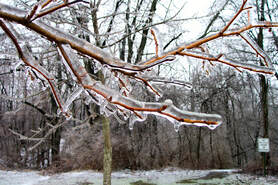
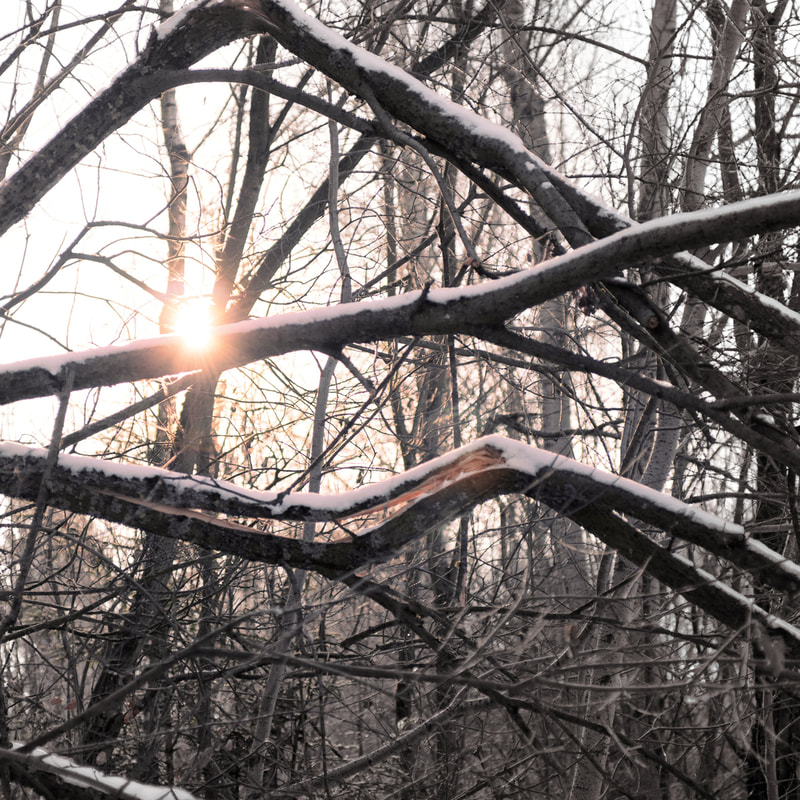
First, some of the “do’s.” If the lower branches on evergreens are bending, these can be propped up with boards to keep them from snapping. If the branches have bend so they are already touching the ground, they should be left in place as the ice weight is now being supported by the ground. However if the branches are at risk of bending further, place a wooden support under the branch and gentle lift the branch up a little. The prop does not have to be high enough to restore the branch to its original position; it just has to support the weight.

ICE COVERED BRANCHES – DO’S AND DON’TS

Picture

With ice forecasted in the Omaha area, it’s likely your main concern is how your commute  might be impacted. Trees generally aren’t at the forefronts of our minds until something bad happens – a broken branch, a split trunk, or in extreme cases, a tree lying on a roof.

While you’re out salting your sidewalk and notice your tree’s branches are coated in ice, there are more “DO’S” than “DON’TS” involved in keeping your tree healthy. (Hint: Prevention is key!) Let’s get the short list out of the way first:

DON’T SHAKE ICY TREE BRANCHES!

Simple. Trees coated in ice can be brittle and you’ll do more harm than good. You can even damage a tree’s circulatory system. While you might think the ice is weighing the tree down and should be removed, the branches are flexible and bent slowly to accommodate the extra weight. They should sustain this pressure without issue. Younger generally trees fare better in ice storms than older trees.

Now let’s talk about what you can DO to increase your tree’s resilience in an ice storm. Prevention is everything!

DO:

Split tree branch
  1. STRUCTURALLY PRUNE. Prune trees starting at a young age to prevent crossing branches and narrow branch angles. We tend to see a lot of damage in pear trees and the recently trendy autumn blaze maple because of their narrow branch angles. A trained, Certified Arborist can prune a tree at a young age (no younger than 5 years old) to encourage it to grow a strong “leader.” Co-dominant branches and included bark are weak branch structures that can be prevented, but must be addressed at a young age.
  2. AVOID PLANTING TREES THAT ARE MORE SUSCEPTIBLE TO ICE DAMAGE.
    1. Trees with very upright branching structures like arborvitae
    2. Multi-stem or “clump” trees like river birch
    3. Faster growing species like maple, versus slow-growing oak
    4. Trees that naturally tend to grow with narrow branch angles like pear, autumn-blaze or silver maple
  3. PRUNE DAMAGED BRANCHES WITH CARE. If a branch fails in an ice storm, how you remove the damaged branch goes a long way toward how the tree recovers. If a branch rips, do not rip the branch further or cut into the trunk if it has ripped all the way back at the base. Trees have their own natural abilities to “seal” around damage to prevent the spread of decay, but improper pruning cuts can interfere with these mechanisms. 
  4. CALL A CERTIFIED ARBORIST. A Certified Arborist is trained in the art and science of caring for trees. We KNOW things! If you don’t have the proper tools or just don’t know the best way to go about removing a damaged branch, call in a professional. Trees don’t come with manuals, and that’s why we’re here to help.
  5. HAVE YOUR TREES INSPECTED REGULARLY BY A PROFESSIONAL. Having your trees inspected on a regular basis is important. Annually is best. An experienced Arborist has a keen eye that can spot structural issues, minor cracks and signs of weakness before the homeowner can.
  6. CALL THE UTILITY COMPANY IF NEEDED. Don’t be shy. If a limb is close to a power line (within 10 feet) – it’s better to be safe than sorry. Call your local utility company. Energized branches look no different than non-energized branches! 

Original post here https://ift.tt/3fQA4VJ.

from AAA Tree Lopping Ipswich https://ift.tt/3gcgzWr
via IFTTT

Importance Of Tree Inoculations or Trunk Injections

Written by Admin and published on https://emeraldtreecare.wordpress.com/

There are a variety of pests and diseases that can do irreparable damage to the trees that you have on your residential or commercial property. Nutrient deficiencies can also take a toll on your trees if you’re not careful. If you would like to avoid having to deal with these things, we can show you how to make tree pest control more of a priority. Specifically, we offer an environmentally responsible tree care product that’s designed to protect your trees from pests, diseases, and even nutrient deficiencies when used properly.

Benefits of Tree Inoculations or Trunk Injections

What are Inoculations Used For?

Just like humans, trees too require vaccines and immunizations to protect them from harmful diseases, insect infestations and fungal infections. The process of giving medicine to a tree for any reason, is called an inoculation or a trunk injection. There are really tons of problems that tree inoculations could be the solution for, however some of the most common reasons to inoculate or inject a tree include:

  • Dutch Elm Disease
  • Emerald Ash Borer
  • Pine Wilt
  • Oak Wilt
  • Pythium Diseases
  • Protection from Damaging Insects
  • Apple Scab

Why Trunk Injections Should Be Done By a Professional?

The first reason to have an arborist evaluate your tree and perform the trunk injection is because they are trained to diagnose tree problems and the identify the best possible treatment.  Some tree diseases and even insect infestations cannot be cured with an inoculation.  It’s important to have the proper diagnosis and treatment plan set fourth by a certified arborist.

Certain prescriptions can be harmful if mishandled.  Not only is the proper water to product ratio required, but gloves and protective goggles should be worn at all times.

The most effective area to inject the trunk is all the way at the bottom near the roots.  In some instances, an air spader should be used to uncover the portion of the flare found just below the dirt.  This is where the cambium layer can easily be reached, allowing quicker and more direct access to the vascular system of the tree.

An inoculation requires drilling holes about 1.25″ into the surface of a tree which leaves the tree exposed and vulnerable.  These holes should be done with great care, so that the tree can heal quickly once the medicine has been administered.  Creating holes that are too wide, too deep, or at the wrong angle could have harmful effects to a tree’s health.

Should I Have Tree Injections Done?

The answer is, have your tree evaluated by an arborist before committing to any treatment plan.  If and why you inject your tree depends greatly on your geographical location, the age and type of tree as well as what the known threats are at the time.  There are countless benefits to Inoculation Treatments, the biggest being that it is the quickest and most effective way of administering a prescription to a mature tree.  A mature and healthy tree has an immeasurable value to you and the environment.  The oxygen it transmits, the shade it provides and the beauty it lets off for years and years to come cannot be measured.  Our advice is to consider preventive treatments so you can enjoy your trees for years to come, and provide a safe and risk free environment for you and your family.

Original post here https://ift.tt/2RlUtsf.

from AAA Tree Lopping Ipswich https://ift.tt/34LVixw
via IFTTT

Why Does My Tree Have Mushrooms On It?

Written by Jasper Boekelman and published on https://emeraldtreecare.wordpress.com/

To get a better understanding of how mushrooms affect trees, we need to become familiar with what a mushroom is. Mushrooms are a type of fungus – or the plural version, fungi. The external structure that we see above the ground disperses spores which are involved in the reproduction process of fungi. Not all fungi growing on your tree are harmful, some are actually beneficial, but most mushroom-producing species are decomposers of wood.

Mushrooms are the visible fruiting bodies of a fungus that may attack living tissue, but usually confines itself to feeding on dead organic matter, such as rotten wood. This is largely beneficial, as the breakdown of wood returns its constituent matter to the soil to enrich it. When you see mushrooms growing on a living tree, however, this is a warning sign that all is not well with that tree.

Mushrooms Growing On My Trees, What Does It Mean?

armillaria-mellea9

Often times, after heavy periods of rain, some trees may sprout mushrooms at the base of the trunk.  They grow fast, and are a very important sign that something could be wrong with your tree.  Mushrooms are known as fruiting bodies; meaning they are a specimen that produces spore of a fungus.  There are many different types of fungus, but the one to be most wary of, with regards to your trees, is the Armillaria Species.  Armillaria is a parasitic fungi that causes root rot and could prove deadly to hardwoods like Oak, Elms, and Honey Locust Trees.

A couple of ways to identify these fruiting bodies, which are often called honey mushrooms, is to examine their appearance.  If the mushrooms on your tree are yellowish in color, with a white rim around their stems and a flat shaped cap, you likely have Armillaria.  A second way to confirm if your mushrooms are honey mushrooms is their smell. Honey Mushrooms got their name because of the sweet smell they let off.  Unfortunately, there is typically very few signs of this root rotting fungus until the mushrooms sprout, and by then it is too late.  Your tree might appear completely healthy, but that does not mean you can ignore this alarming symptom.  Armillaria invades the roots and wood of the tree, extracting all the nutrients for it’s own survival.  Once infected, the structural integrity of the tree is completely compromised and there is rarely an option for treatment, removal being the only solution.

It’s very important that you call a certified arborist for an inspection as soon as you spot mushrooms on the base of your tree.  One infected tree can pose great danger for the rest of the trees on your property.  Special precautionary steps, such as removing as much of the roots as possible, should be taken to avoid the spread of this invasive pathogen.

Original post here https://ift.tt/2SdR7YG.

from AAA Tree Lopping Ipswich https://ift.tt/34MUybF
via IFTTT

Reasons Why You Should Plant a Tree In Your Yard

Written by Matt Mostyn and published on https://www.ovoenergy.com/

Trees are the oldest living organisms on the planet. Not only are they aesthetically beautiful, but they offset environmental impacts and create a healthy, clean environment for us to enjoy.

The benefits of planting trees are far reaching so we’ve compiled a list of what we believe to be the most important benefits of all. Grab your shovels and your gardening gloves, and get ready to be inspired.

Top 8 benefits of planting trees and, why we’re planting more of them

Who doesn’t love a good tree? Tall, stately, elegant and beautiful, their quiet presence in our lives just makes us feel good. 

But they’re not only here to look pretty. They’re absolutely vital for the health of our planet, in all kinds of ways. And since their debut 300 million years ago, they’ve marked a turning point for the Earth, helping to transform it into a thriving utopia for all creatures great and small.

benefits of tree planting

While there are currently around 3 trillion trees on our planet, the total number of trees on Earth has fallen by around 46% since the beginning of human civilization (about 11,700 years ago). That’s why it’s more important than ever to celebrate – and remind ourselves of the benefits of – the humble and beloved tree. 

So here they are – our top 8 reasons why we love trees, and why we need to plant more of them:

 1. Trees help to fight the climate crisis

Trees are a bit of a miracle, in more ways than one! But one of their best qualities is their ability to act like sponges for carbon. They absorb carbon by removing it from the air and locking it in their wood and roots – and they can do so for decades, or even centuries. 

A single tree can absorb as much as 22kg of carbon each year, and it can lock away 1 ton of the stuff by the time it reaches the age of 40. Annually, an acre of trees absorbs the same amount of carbon as if you drove your car 26,000 miles.

Tree-planting power

Planting billions of trees across the world is one of the biggest and cheapest ways of taking carbon out of the atmosphere to help tackle the climate crisis, according to scientists. One recent study estimates that forests and other natural ecosystems could help reduce carbon by more than one-third and keep global warming below 2 °C by 2030.

About 15 billion trees are lost each year due to deforestation, forest management and changes in land use. But a worldwide planting programme could capture up to 100 gigatons of carbon – equivalent to a decade of man-made carbon emissions. 

Over a 10 year growth period, each tree will absorb around 60kg of carbon – so overall, the trees we plant on behalf of our members will absorb around 54,000 tonnes of carbon. That’s about the equivalent of the carbon footprint created by 49,000 people flying from London to New York! 

2. Trees purify the air

Trees don’t just munch carbon – they also produce oxygen. In fact, one tree can produce enough oxygen for four people!

But they don’t just enrich the air we breathe. They also purify it. Trees are able to absorb pollutant gases such as nitrogen oxides, ozone, ammonia and sulfur dioxide. It’s another reason why a walk in a forest makes us feel so good.

When it comes to towns and cities, trees can combat many of the effects of air pollution, if planted in large enough numbers. With more than 3 million people dying worldwide each year from illnesses linked to air pollution, that’s a potentially powerful solution. In the UK alone, pollution removal through vegetation is estimated to save us around £1 billion in avoided health damage costs, with 27,800 fewer life years lost and 1,900 fewer premature deaths per year.

3. Trees lower the air temperature

benefits of planting trees

Trees aren’t called nature’s air conditioners for nothing! Heavily built-up urban areas can trap excess heat, so trees are often planted in cities to help control temperatures.

But how do they cool the air? In two different ways. Firstly, a tree’s canopy acts like a parasol, blocking out up to 90% of the sun’s radiation and cooling the ground beneath us. And secondly, they use a process called evapotranspiration to block radiation from the sun before it hits the ground.

When the sun’s rays hit a tree’s canopy, they cause water to evaporate from the leaves, creating a cooling effect that can decrease local air temperatures by several degrees. Yes, just like us, trees ‘sweat’ when they’re hot – and that action plays its own small but very welcome role in regulating the temperature of our environment.

4. Trees help prevent flooding

Like most living things, trees need water to survive – and they can drink a lot! In a single day, a large tree can consume 100 gallons of the stuff. That fact means they help limit flooding from heavy rain – especially in low-lying areas like river plains. 

By helping the ground absorb more water, and by holding soil together with their roots, trees can also reduce the risk of erosion and property damage from flash floods. And with extreme weather and the risk of flooding on the rise, that can only be a good thing!

5. Trees help sustain wildlife

With many species under increasing threat from climate change, native trees play a vital role in sustaining life. They create habitats for all kinds of wildlife – from squirrels and bats, to bees, owls and woodpeckers. 

Trees add to local biodiversity, becoming both a food source and a natural habitat for wildlife.  Adding a single tree to a pasture, for example, could raise the number of bird species from near zero to 80. And in greater numbers, they attract even more endangered and at-risk species. 

That’s also important when you consider the value of wildlife for us humans. From pollinating our plants to eating pests like mosquitoes and mice, trees support wildlife’s survival, and encourage it to thrive. Read our guide to rewilding to learn more about why it’s important to restore the native ecosystems in our wildlife.

6. Trees are good for our health!

planting trees with kids

Trees have been proven to do everything from helping lower stress to raising property values, and believe it or not, even fighting crime. Yes, trees really are super-heroes.

Studies have shown that patients with views of trees heal faster and with fewer complications. Children with ADHD show reduced symptoms with access to nature. And exposure to trees and nature has also been proven to reduce mental fatigue and help concentration. So maybe skip that third coffee and go in search of your nearest oak!

As for the crime statistics, violent and antisocial behaviour has been shown to be more common in neighborhoods and homes without trees. It’s thought that trees and landscaping have a calming effect, helping to reduce levels of aggression and fear.

It’s part of our nature to like trees – and science has proven that just looking at them can make us feel calmer, happier and more creative. This may be a result of something called biophilia, which means an innate affinity for nature – but it goes even further. 

When we’re exposed to certain chemicals released by trees (known as phytoncides), research reveals everything from reduced blood pressure and anxiety to increased pain threshold, and even an increase of anti-cancer proteins. The tree-huggers were right all along!

7. Trees improve soil quality

When it comes to agriculture, trees play a vital role. They reduce soil erosion, improve fertility and give soil more moisture. Fallen tree leaves also turn into valuable nutrients for tree growth, and support microorganism development.

Trees are also pretty handy for mopping up soil pollutants. One maple tree can remove 60 milligrams of cadmium, 140 mg of chromium and 5,200 mg of lead from the soil per year. 

Studies have also shown that farm runoff contains up to 88 percent less nitrate and 76 percent less phosphorus after flowing through a forest.

8. Trees can lower your energy bills

And finally, yes, you read that right. Trees can actually help to reduce your energy bills! 

That’s because when they’re planted strategically, they give you shade in the summer, reducing the need for fans and air-conditioning. For maximum effect, plant trees to shade the east and west sides of your home. 

In winter months, trees act as a windbreak, helping protect your home from the cold. Evergreen trees planted on the north side of your home and shrubs planted around the foundation will reduce the cooling effects of winter winds

It’s estimated that planting trees and shrubs can save you up to 25 percent on your energy bills. Welcome to another one of nature’s gifts!

Original post here https://ift.tt/3gfsdQK.

from AAA Tree Lopping Ipswich https://ift.tt/2T1bGYn
via IFTTT