Written by Savatree and published on https://www.savatree.com/.
Since the beginning, trees have furnished us with two of life’s essentials, food and oxygen. As we evolved, they provided additional necessities such as shelter, medicine, and tools. Today, their value continues to increase and more benefits of trees are being discovered as their role expands to satisfy the needs created by our modern lifestyles.
Climate change, global warming, climate protests – these are not just buzz words, these are the words used by the younger generation to raise their concerns about our environment and it is time that everybody started listening to their message. There is a growing movement around the world that is focusing on protecting the earth for future generations and every action counts. You don’t need to protest on the streets to make a contribution to the survival of our planet, planting trees can go a long way towards restoring the health of the earth.
Importance and Value of Trees
Since the beginning, trees have furnished us with two of life’s
essentials, food and oxygen. As we evolved, they provided additional
necessities such as shelter, medicine, and tools. Today, their value
continues to increase and more benefits of trees are being discovered as
their role expands to satisfy the needs created by our modern
lifestyles.
Community & Social Value
Trees are an important part of every community. Our streets, parks,
playgrounds and backyards are lined with trees that create a peaceful,
aesthetically pleasing environment. Trees increase our quality of life
by bringing natural elements and wildlife habitats into urban settings.
We gather under the cool shade they provide during outdoor activities
with family and friends. Many neighborhoods are also the home of very
old trees that serve as historic landmarks and a great source of town
pride.
Using trees in cities to deflect the sunlight reduces the heat island effect caused by pavement and commercial buildings.

Ecological & Environmental Value
Trees contribute to their environment by providing oxygen, improving
air quality, climate amelioration, conserving water, preserving soil,
and supporting wildlife. During the process of photosynthesis, trees
take in carbon dioxide and produce the oxygen we breathe. According to
the U.S. Department of Agriculture, “One acre of forest absorbs six tons
of carbon dioxide and puts out four tons of oxygen. This is enough to
meet the annual needs of 18 people.” Trees, shrubs and turf also filter
air by removing dust and absorbing other pollutants like carbon
monoxide, sulfur dioxide and nitrogen dioxide. After trees intercept
unhealthy particles, rain washes them to the ground.
Trees control climate by moderating the effects of the sun, rain and
wind. Leaves absorb and filter the sun’s radiant energy, keeping things
cool in summer. Trees also preserve warmth by providing a screen from
harsh wind. In addition to influencing wind speed and direction, they
shield us from the downfall of rain, sleet and hail. Trees also lower
the air temperature and reduce the heat intensity of the greenhouse
effect by maintaining low levels of carbon dioxide.
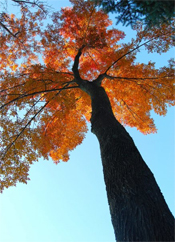
Both above and below ground, trees are essential to the eco-systems
in which they reside. Far reaching roots hold soil in place and fight
erosion. Trees absorb and store rainwater which reduce runoff and
sediment deposit after storms. This helps the ground water supply
recharge, prevents the transport of chemicals into streams and prevents
flooding. Fallen leaves make excellent compost that enriches soil.
Many animals, including elephants, koalas and giraffes eat leaves for
nourishment. Flowers are eaten by monkeys, and nectar is a favorite of
birds, bats and many insects. Animals also eat much of the same fruit
that we enjoy This process helps disperse seeds over great distances. Of
course, hundreds of living creatures call trees their home.
Leaf-covered branches keep many animals, such as birds and squirrels,
out of the reach of predators.
Personal & Spiritual Value
The main reason we like trees is because they are both beautiful and
majestic. No two are alike. Different species display a seemingly
endless variety of shapes, forms, textures and vibrant colors. Even
individual trees vary their appearance throughout the course of the year
as the seasons change. The strength, long lifespan and regal stature of
trees give them a monument-like quality. Most of us react to the
presence of trees with a pleasant, relaxed, comfortable feeling. In
fact, many people plant trees as living memorials of life-changing
events.
Trees help record the history of your family as they grow and develop
alongside you and your kids. We often make an emotional connection with
trees we plant or become personally attached to the ones that we see
every day. These strong bonds are evidenced by the hundreds of groups
and organizations across the country that go to great lengths to protect
and save particularly large or historic trees from the dangers of
modern development. How many of your childhood memories include the
trees in your backyard or old neighborhood? The sentimental value of a
special tree is simply immeasurable.
Learn more about the Expert Tree Service by SavATree
Practical & Commercial Value
Trees have supported and sustained life throughout our existence.
They have a wide variety of practical and commercial uses. Wood was the
very first fuel, and is still used for cooking and heating by about half
of the world’s population. Trees provide timber for building
construction, furniture manufacture, tools, sporting equipment, and
thousands of household items. Wood pulp is used to make paper.
We are all aware of apples, oranges and the countless other fruits
and nuts provided by trees, as well as the tasty syrup of North American
sugar maples. But did you know the bark of some trees can be made into
cork and is a source of chemicals and medicines? Quinine and aspirin are
both made from bark extracts. The inner bark of some trees contains
latex, the main ingredient of rubber. How many more uses can you name?
Property Value & Economic Value
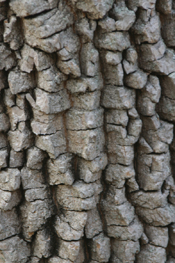
Individual trees and shrubs have value and contribute to savings, but
it is the collective influence of a well-maintained landscape that
makes a real economic impact and has the greatest effect on property
value. Direct economic benefits come from a savings in energy costs.
Cooling costs are reduced in a tree-shaded home, and heating costs
lowered when a tree serves as a windbreak. According to the USDA Forest
Service, “Trees properly placed around buildings can reduce air
conditioning needs by 30% and save 20-50 percent in energy used for
heating.”
Property values of homes with well-maintained landscapes are up to
20% higher than others. Here are some eye-opening facts and statistics
regarding the effect of healthy trees and shrubs:
- Homes with “excellent” landscaping can expect a sale price 6-7% higher than equivalent houses with “good” landscaping. Improving “average” to “good” landscaping can result in a 4-5% increase.– Clemson University
- Landscaping can bring a recovery value of 100-200% at selling time. (Kitchen remodeling brings 75-125%, bathroom remodeling 20-120%)– Money Magazine
- A mature tree can have an appraised value between $1000 and $10,000.– Council of Tree and Landscape Appraisers
- 99% of real estate appraisers concurred that landscaping enhances the sales appeal of real estate.– Trendnomics, National Gardening Association
- 98% of realtors believe that mature trees have a “strong or moderate impact” on the salability of homes listed for over $250,000 (83% believe the same for homes listed under $150,000).– American Forests, Arbor National Mortgage
Original post here https://ift.tt/2I7BHjx.
from AAA Tree Lopping Ipswich https://ift.tt/34B9jO3
via IFTTT

 AAA Tree Lopping Ipswich Blog